Unlock Your Charisma · Social Intelligence
Read People Like a Pro
Baseline then change, interest vs politeness, status cues, and when not to over-read.
Reading people at work is not decoding a secret body-language alphabet — it is noticing how this person usually shows up, then noticing when that pattern shifts, and treating a single cue as unfinished until a cluster or a clean question confirms it. Seven concepts install the frames: baseline before change, interest versus politeness, status, when not to invent a story, asking before guessing motive, cue clusters, and the thinner signal set in chat.
- Unlock Your Charisma
- Medium level
- 7 concepts
1Baseline first, then notice the change
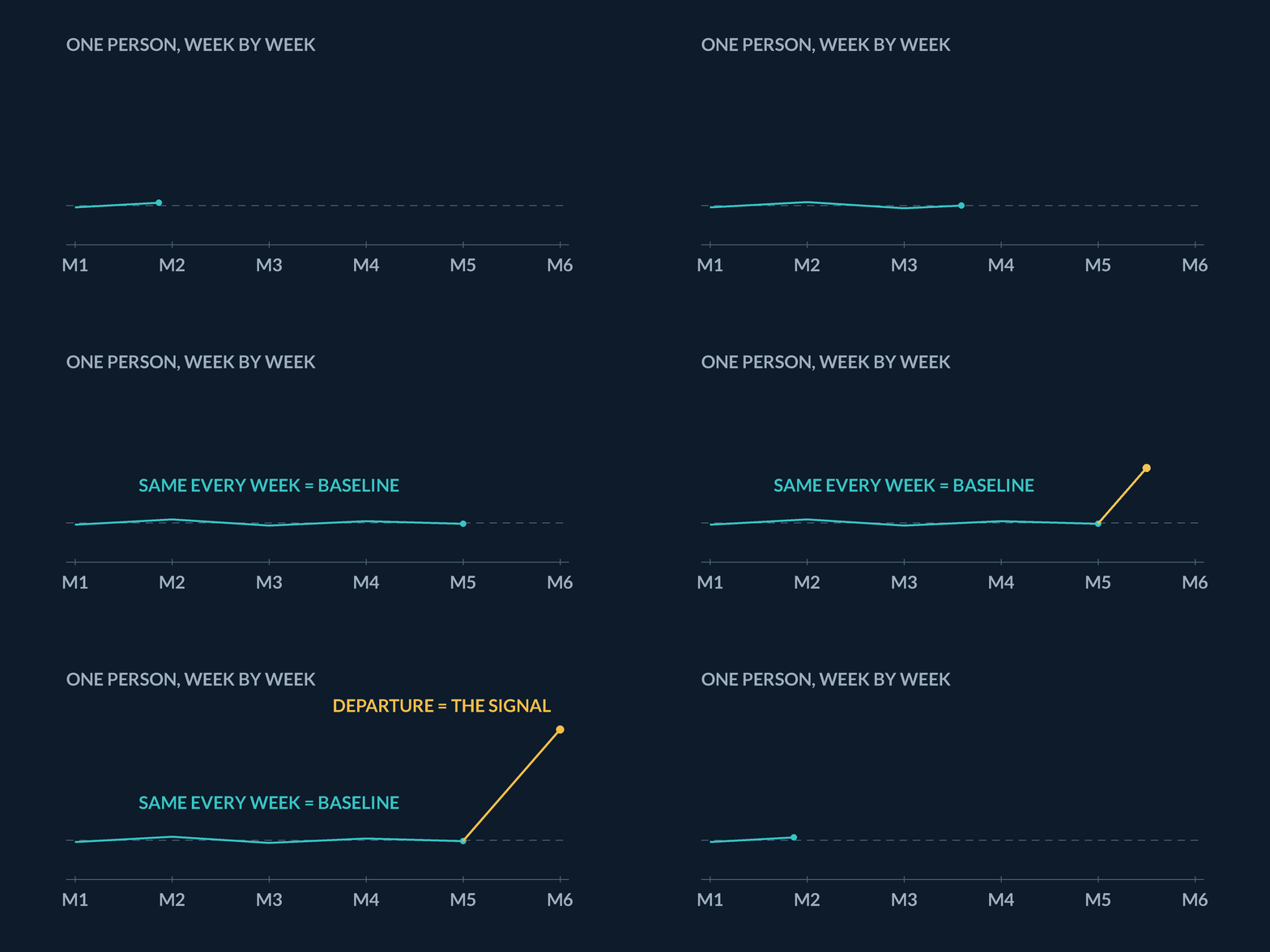
A read starts with how this person normally behaves in this room — how much they talk in standups, whether they fold their arms when thinking, how quickly they answer a Slack ping — not with a textbook claim that crossed arms mean disagreement. Without a baseline, every gesture is noise dressed as insight.
The useful signal is change from that baseline. A quiet Bengaluru engineer who usually sits back and then suddenly leans in and asks three follow-ups is saying more than a naturally talkative colleague doing the same thing. Same behaviour, different meaning, because the departure from their normal is what carries weight.
The failure mode in a Hyderabad delivery review is applying a universal decode: 'he crossed his arms, so he hates the proposal.' Maybe he is cold. Maybe that is how he always sits. Until you know his baseline, you have a posture, not a read.
| Situation | Frame |
|---|---|
| First week with a new stakeholder | Watch how they usually show up before assigning meaning to one gesture |
| Someone quieter than usual in a review | Flag the change from their normal, not a stereotype about silence |
| Arms crossed during your pitch | Check against their habit first — cold room, thinking pose, or actual pushback |
A teammate who usually asks three questions in every design review asks none today. What is the strongest first read?
- They hate the design and are silently opposing it
- Something is different from their baseline — ask a clean check-in before inventing a motive
- Crossed arms always mean disagreement, so wait for them to speak
- Ignore it; quiet people never have opinions
The signal is the departure from how they usually show up, not a finished story about dislike. Inventing opposition from silence, leaning on a body-language myth, or dismissing quiet people all skip the baseline-then-change step.
2Interest versus politeness: warmth is not commitment
Indian workplace courtesy is warm by default — a stakeholder can nod, smile, say 'sounds interesting', and still have zero intention of sponsoring the work. Politeness looks like agreement if you treat every warm signal as a yes.
Real interest shows up in costly moves: a specific follow-up question, time offered on the calendar, a named next step with a date, or a request to see the next draft. Politeness stays cheap — generic praise, a soft goodbye, 'let's keep in touch' with no owner.
In a Mumbai client pitch, the room nods through every slide and still ghosts the proposal email. Mid-pitch, ask for a dated next step — 'Would a thirty-minute follow-up next Tuesday work to decide go or no-go?' — and watch whether they engage or deflect. Warmth without a next step is often politeness.
Figure. Politeness is cheap to give — a nod, generic praise, a warm goodbye cost the speaker nothing. Real interest spends something scarce: a dated next step, calendar time offered, a request to see the next draft. The bar lengths are qualitative cost, not a measurement. Warmth without a costly move is usually courtesy, not commitment.
| Situation | Frame |
|---|---|
| Lots of nodding, no questions | Treat as courtesy until they spend time or ask something specific |
| They ask for the next draft by Friday | That is interest — costly move, dated ask |
| Warm goodbye, no calendar hold | Get a dated next step before counting it as buy-in |
| Mid-pitch check | Would a short follow-up next Tuesday work to decide go or no-go? |
A stakeholder says 'this looks great' and ends the call with a warm goodbye and no next step. What should you do?
- Treat it as approved and start the build
- Ask for a dated next step before counting it as commitment
- Assume they hate it because they did not praise every slide
- Send a thank-you note and wait indefinitely
Warmth without a dated next step is the politeness pattern. Starting the build on a soft goodbye, inventing dislike, or waiting forever all skip the commitment check.
3Status cues: who the room looks at before answering
Formal titles tell you the org chart; status cues tell you where decisions actually sit in the room. Watch who others glance at before answering a hard question, whose joke lands, and whose quiet 'hmm' freezes the discussion.
In a Pune vendor call, the account manager may speak most, but if every pricing hesitation ends with eyes on the quiet finance lead, that is where the real gate sits. Pitching only the talkative person and ignoring the quiet gatekeeper is how deals stall after a warm meeting.
Status is also temporary: the person who owns the budget for this decision may not be the most senior person on the invite. Read the room for this meeting, not for the company forever.
Figure. The account manager does most of the talking, but when a hard pricing question lands, every pair of eyes flicks to the quiet finance lead before anyone answers. Titles give the org chart; converging glances give the real gate for this meeting's decision — and pitching only the talkative person is how deals stall after a warm meeting.
| Situation | Frame |
|---|---|
| Hard question lands; everyone glances at one person | That person is the real gate for this topic — address them too |
| Talkative host, quiet finance lead | Warm the host, but get the quiet gatekeeper's specific concern |
| Someone's soft 'hmm' stops the room | Treat that as a veto signal worth unpacking, not background noise |
In a vendor review, the account manager talks most, but every pricing pause ends with eyes on a quiet finance lead. Who should you make sure is bought in?
- Only the account manager, because they speak most
- The finance lead as well — the room treats them as the gate on pricing
- Whoever has the loftiest job title on LinkedIn
- Nobody — wait for them to volunteer objections
Eye-checks before answering are a status cue for where the decision sits. Pitching only the talkative host, chasing titles offline, or waiting for volunteered objections all miss the gate the room already revealed.
4When not to over-read: one cue is not a story
Over-reading is how useful social skill turns into paranoia — one glance at a phone becomes 'they disrespect me', one short Slack reply becomes 'they are angry', one yawn in a late call becomes 'they hate the idea'. A single cue is unfinished data.
Hold the story until you have either a cluster of cues pointing the same way, a change from baseline, or a clarifying question answered. Until then, park the inference as a hypothesis, not a fact you act on.
In a late Chennai sprint call after a festival weekend, yawns and short answers are often fatigue, not politics. Acting on the dramatic story — sending a defensive email at midnight — creates the conflict you thought you detected.
Figure. One glance at a phone is equally consistent with fatigue, an on-call ping, plain habit — and, only as one possibility among several, disliking the idea. Acting on the dramatic reading alone manufactures the conflict it claims to detect. Hold the story until a cluster, a baseline change, or an answered question narrows the fan.
| Situation | Frame |
|---|---|
| One short Slack reply | Hypothesis only — wait for a cluster or ask a clean question |
| Phone glance mid-meeting | Could be an urgent ping; do not invent disrespect from one glance |
| Yawn in a late call | Check fatigue and timing before reading it as rejection |
| Urge to send a defensive message | Park the story until you have more than one cue |
A colleague replies 'ok' to your detailed proposal on Slack. What is the disciplined move?
- Conclude they are angry and write a long defensive follow-up
- Treat 'ok' as unfinished data — ask a clean clarifying question or wait for more cues
- Assume full approval and start spending budget
- Forward the thread to your manager as proof of hostility
One short reply is a single cue, not a finished motive. Defensive essays, silent budget spend, and escalating hostility all treat unfinished data as a verdict.
5Ask before inventing a motive
When a read feels sticky and you still only have a thin cue, the professional move is a clean clarifying question — not a novel about why they did it. Invented motives feel insightful and are often wrong, and acting on them damages trust.
A clean question is short, specific, and free of accusation: 'I noticed we went quiet on the timeline — is the date still workable, or is something blocking it?' That offers two readings and invites a correction. 'Why are you being so negative about this?' puts them on trial.
In a Delhi stakeholder review, silence after you name a date can mean calendar conflict, missing dependency, or simple thinking time. Asking beats guessing, and guessing out loud in the hallway beats nothing only if you never treat the guess as fact.
No diagram — the skill is one sentence of phrasing. Picture the fork: a thin cue arrives, and you either draft a motive novel in your head or ask one clean, two-reading question out loud: 'Is the date still workable, or is something blocking it?'
| Situation | Frame |
|---|---|
| Room goes quiet after a date | I noticed we went quiet on the timeline — is the date still workable, or is something blocking it? |
| Short reply to a long proposal | Wanted to check — was that an 'ok for now', or do you want a shorter version? |
| Stakeholder seems cooler than last week | Checking in — has anything changed on priorities since we last spoke? |
| Urge to diagnose their personality | Ask about the work fact in front of you; leave the novel unwritten |
After you propose a launch date, a senior stakeholder goes quiet. Which follow-up is cleanest?
- Why are you hesitating? Do you not trust the team?
- I noticed we went quiet on the date — is it still workable, or is something blocking it?
- I'll assume you hate the date and pick another without asking
- Say nothing and later tell peers they sabotaged the plan
It names the observation and offers two concrete readings without accusation. Trial-style questions, silent assumption, and hallway novels all invent motive instead of asking.
6Trust a cluster, not a lone cue
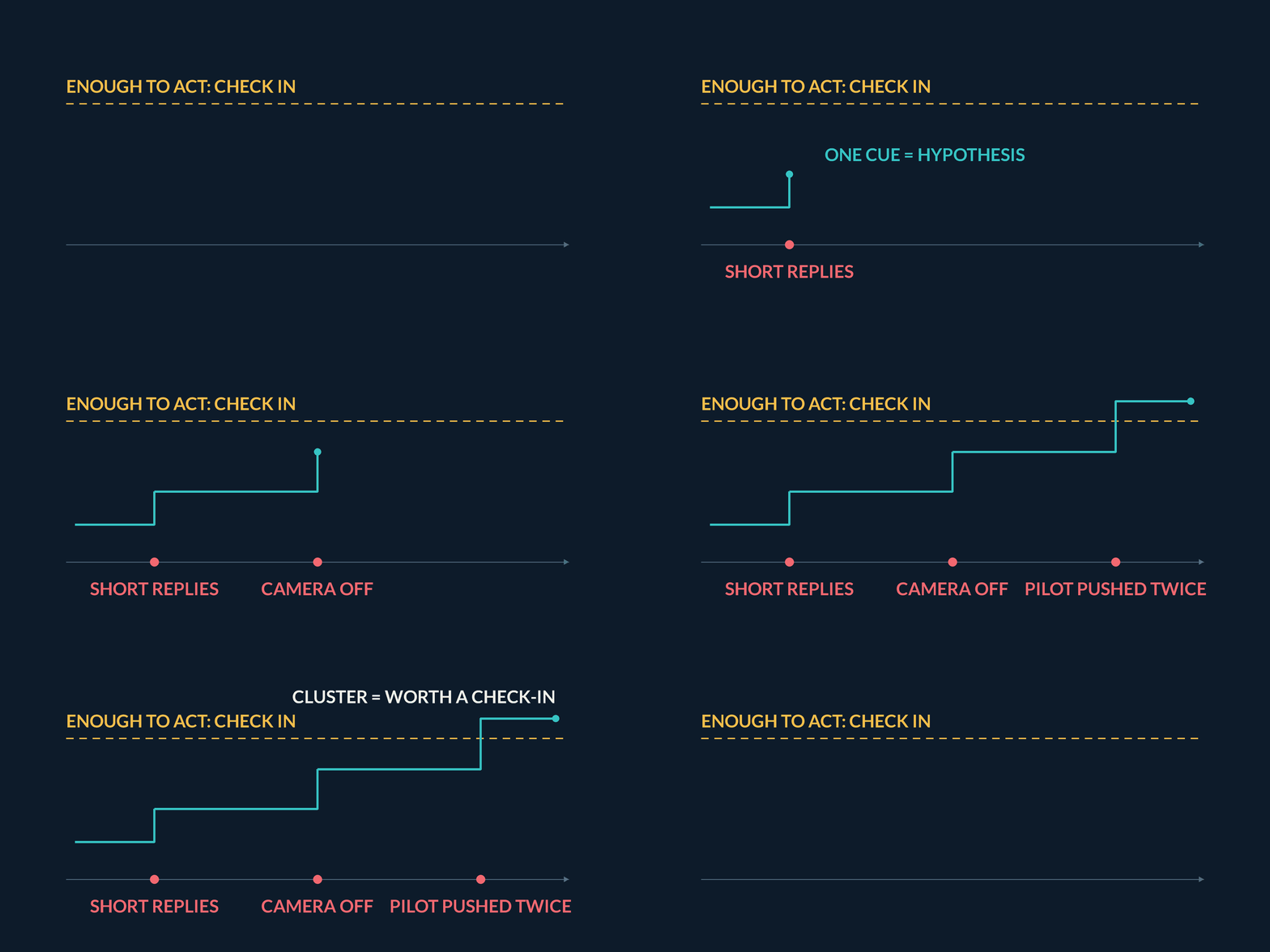
A responsible read waits for several cues pointing the same direction — baseline change plus short answers plus declined next step, for example — before you treat the read as strong enough to act on. One cue is a hypothesis; a cluster is closer to a working conclusion.
Clusters can also clear a false alarm. Someone glances at a phone once (thin cue) but then asks two sharp questions and books a follow-up (strong interest cluster). The cluster overrides the dramatic story about disrespect.
In a Bengaluru product sync, if a partner's messages get shorter, their camera stays off for a third week, and they defer the pilot date twice, you have a cluster worth a direct check-in. One short message alone never was.
| Situation | Frame |
|---|---|
| One short message | Hypothesis only — do not act yet |
| Shorter messages + camera off + deferred date | Cluster — schedule a direct check-in |
| Phone glance + sharp questions + booked follow-up | Interest cluster — drop the disrespect story |
| Mixed cues pointing different ways | Ask; do not force a single narrative |
Which situation is strong enough to justify a direct check-in about commitment?
- One 'ok' on Slack and nothing else
- Shorter replies for two weeks, camera off in syncs, and the pilot date deferred twice
- A single yawn on a late call
- They used a period instead of an exclamation mark
Several cues point the same way — that is a cluster worth acting on with a clean question. A lone 'ok', a yawn, or punctuation drama are unfinished data.
7Digital and chat reads: thinner signals, slower conclusions
Chat strips away tone, face, and timing nuance, so the same discipline applies with a higher bar: punctuation, reaction emojis, and reply speed are even thinner cues than a glance in a room. Reading 'ok.' as fury is a common Indian-office Slack injury.
Prefer behavioural reads over tonal ones online: did they answer the question, assign an owner, put a date, share the file? Those moves survive the medium. Tone guesses do not.
When a thread feels off, switch channel before escalating the story — a two-minute call often clears what three paragraphs of careful WhatsApp cannot. And never screenshot a thin cue into a group chat as proof of attitude.
Figure. In the room a read draws on face, tone, timing and words together. Chat keeps the words plus a sliver of punctuation and emoji — the exact sliver people over-read into fury or contempt. Prefer behavioural reads online (did they answer, assign an owner, put a date) and raise the bar before concluding anything about tone.
| Situation | Frame |
|---|---|
| Short 'ok.' on Slack | Check the behaviour — did they do the thing? — before reading tone |
| Slow reply during festival week | Assume load and leave before assuming attitude |
| Thread feels tense | Switch to a short call before writing a novel in chat |
| Urge to forward a screenshot | Ask the person first; thin cues are not evidence packets |
A teammate replies 'ok.' to your Slack ask and later uploads the file you needed. What is the best read?
- They are furious — the period proves it
- Behavioural read: they completed the ask; do not invent tone drama from punctuation
- Escalate to your manager with a screenshot
- Ignore the file and keep pressing them about their attitude
Online, behaviour beats tone. Completing the ask is the load-bearing signal; punctuation forensics, screenshot escalation, and attitude lectures all over-read a thin medium.
Notes
- Reading people starts with a baseline for that person, then noticing change — not with stereotypes.
- Polite interest and real interest look different in follow-up questions and time offered.
- Status cues (who others look at before answering) tell you where decisions really sit.
- Over-reading one gesture as a whole story is how charisma becomes paranoia.
- When unsure, ask a clean clarifying question instead of inventing a motive.
Formulas
- Baseline then change
- Interest vs politeness
- Ask before inventing motive
Exam traps & shortcuts
- Watch for change from their normal, not for textbook body-language myths.
- If you only have one cue, you do not have a read yet.
Reference tables
Each row is a recurring social moment, the load-bearing frame, and the habit it replaces.
| Moment | Load-bearing frame | Replaces |
|---|---|---|
| Odd gesture in a meeting | Baseline first, then notice the change | Universal body-language myth |
| Warm nods, no next step | Ask for a dated commitment | Treating courtesy as buy-in |
| Room glances at one person | Treat them as the gate for this decision | Pitching only the talkative host |
| One short reply | Hypothesis — wait for a cluster or ask | Inventing a full motive |
| Sticky uncertainty | Clean clarifying question, two readings | Hallway novel about their character |
| Several cues align | Cluster — now a direct check-in is fair | Acting on a lone glance |
| Tense Slack thread | Read behaviour; switch to a call | Punctuation forensics |
Recap
Seven lines that keep a people-read useful instead of paranoid.
- Baseline then change
- Know how they usually show up; the departure is the signal, not a textbook gesture.
- Warmth is not commitment
- Interest spends time, asks specifics, and dates a next step — politeness stays cheap.
- Follow the eyes
- Who the room looks at before answering is often where the decision sits.
- One cue is unfinished
- A single glance or short reply is a hypothesis, not a verdict.
- Ask, do not invent
- A clean clarifying question beats a novel about their motive.
- Trust clusters
- Act when several cues point the same way; mixed cues get a question, not a story.
- Chat is thinner
- Online, read behaviour over tone, and switch to a call before escalating.
Practise Read People Like a Pro
Reading is free and needs no account. Practice, mocks and progress live in the app.
- A 5-question practice set that ends the chapter
- 7 quick checks with worked explanations
- Timed mocks scored with the real marking scheme
- Readiness tracked per topic, kept on your device