Unlock Your Charisma · Voice & Expression
Build Trust with Your Voice
Pace, volume floor, filler control, and finishes that sound sure rather than unsure.
People decide whether to trust what you say partly from the words and partly from how the voice carries them — pace, volume, finish, warmth, and the spaces between sentences. Seven concepts turn those into controllable habits for Indian workplace rooms: standup updates, client calls, and video reviews where a thin or rushing voice undercuts a solid point.
- Unlock Your Charisma
- Easy level
- 7 concepts
1Pace that lands: one idea per breath, not a rush to finish
A nervous speaker speeds up to get through the turn, and the room hears urgency rather than confidence — syllables blur, key numbers vanish, and listeners start nodding without actually holding the point. Trustworthy pace is not slow for its own sake; it is one complete idea per breath, with a short silence before the next idea starts.
In a Bengaluru product review, 'we-shipped-the-checkout-fix-yesterday-and-conversion-is-up-two-points-and-we're-monitoring-Safari' lands as noise. The same content at a landed pace becomes three units: shipped yesterday; conversion up two points; Safari still under watch. Each unit gets its own breath.
The practical test: if a colleague could not write down your last sentence without asking you to repeat it, you were too fast. Slow the next unit, do not apologise for the last one.
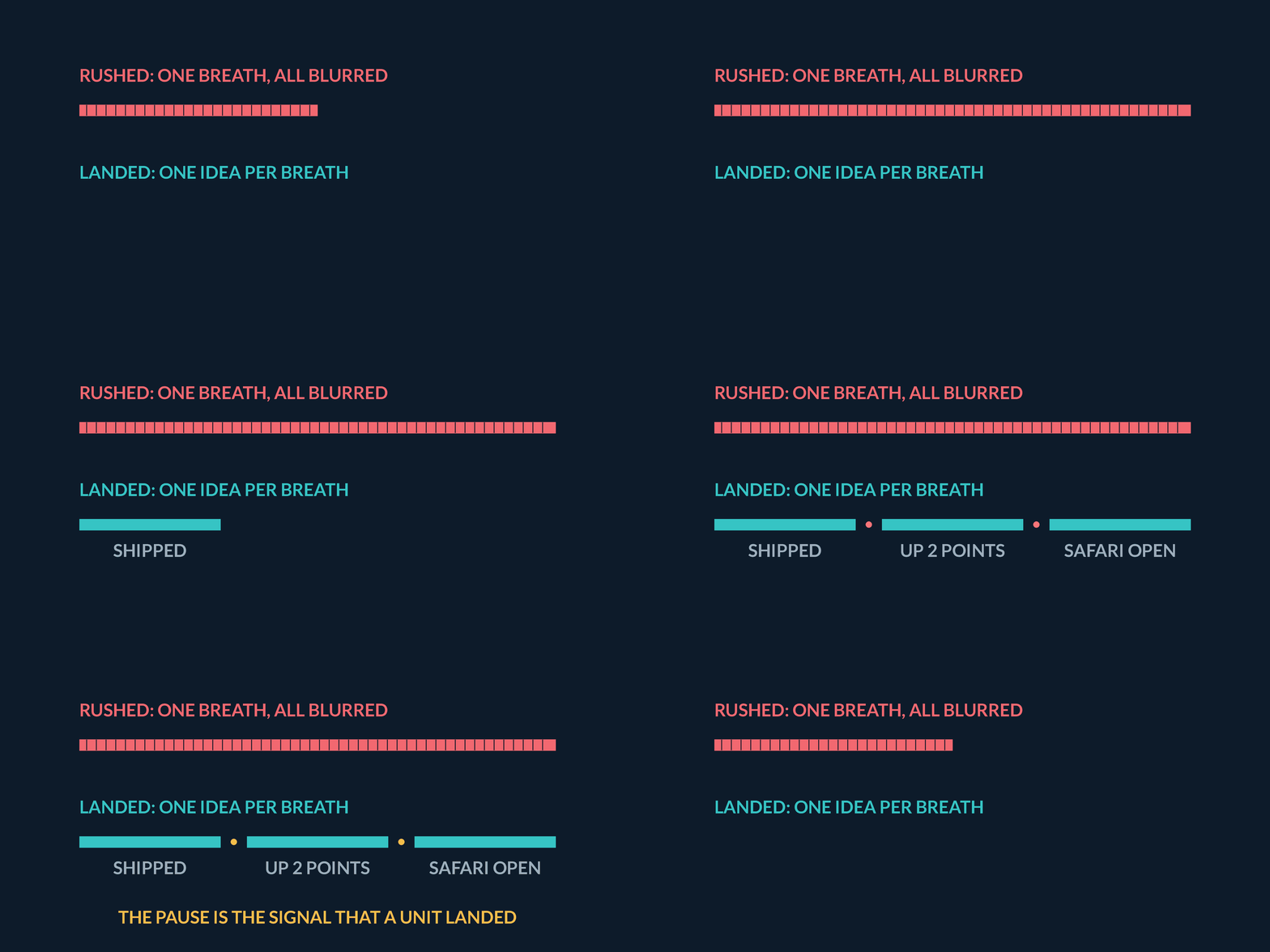
Landing a rushed update
- Split into unitsBefore you speak, name the two or three ideas you will say — not the full story, just the units.
- Say one, then pauseFinish the sentence, close the mouth for half a beat, then start the next idea. The pause is the signal that a unit landed.
- Watch the room, not the clockIf faces look blank or someone leans in asking 'sorry, what was the number?', restart that unit slower — do not pile on more detail at the same speed.
You have three status points for a sprint review and notice yourself rushing. What is the best fix mid-turn?
- Apologise for speaking too fast and restart the whole update from the beginning
- Finish the current idea, pause half a beat, then say the next idea as its own unit
- Drop two of the three points so you can finish sooner
- Speed up slightly so the uncomfortable silence never appears
Trustworthy pace is unit-then-pause, not apology theatre or cutting content. Speeding up removes the pause the room needs to hold each idea.
2Volume floor: audible without performing
Soft speech is often read as uncertainty even when the content is solid — listeners lean forward, miss half the sentence, and later report that the point 'wasn't clear', when the real failure was audibility. A volume floor means the quietest word in your sentence is still easy to hear at the back of a small meeting room or on a laptop speaker.
This is not projecting like a stage actor. In a Hyderabad conference room of eight people, the floor is conversational but supported: chest open, chin level, last words of the sentence still audible. Trailing off on the final clause — common when someone is unsure of their right to the floor — is what drops below the floor.
On a Mumbai client call with poor audio, the floor matters more, not less: if your natural volume is already soft, move closer to the mic and keep the finish of each sentence as loud as the start.
Figure. Both sentences start equally audible. The supported voice keeps its last words as loud as its first, riding above the floor the whole way; the trailing voice sinks through the floor on the final clause — exactly where the ask usually sits. The floor is not stage projection: it is the quietest word still easy to hear at the back of a small room or on a laptop speaker.
| Setting | Floor habit | Failure mode |
|---|---|---|
| Small room, 6–10 people | Conversational but supported; last words still clear | Trailing off so only the front row hears the ask |
| Laptop speaker / open headphones | Same volume start to finish; sit closer to the mic | Starting strong, fading on the commitment line |
| Noisy open office / café call | Raise the floor, not the peak — keep even | Shouting key words then dropping back to a whisper |
In a small conference room, which habit keeps you above the volume floor?
- Speaking softly so you never seem aggressive
- Keeping the last words of each sentence as audible as the first
- Saving volume only for the one sentence you think matters
- Leaning back from the table so your voice has more space
The floor is about the quietest part of the sentence staying audible. Soft-as-default, uneven peaks, and leaning away all drop the finish below what the room can use.
3Filler control: silence beats umm as thinking time
Fillers — umm, uh, like, basically, you know — buy the speaker a beat of thinking time and cost the listener trust when they stack. Occasional fillers are human; a chain of them before every substantive clause trains the room to wait for the real sentence and to doubt whether one is coming.
The replacement is a silent beat. Mouth closed, eyes still on the room, one half-second of quiet, then the sentence. In Indian English workplace speech, basically and actually often pad the same slot as umm — cut those when they carry no correction or emphasis.
A Pune eng sync is a good practice ground: when someone asks a hard question, the instinct is to fill the air immediately. Holding a clean silence for one beat before answering reads as considered, not blank.
Figure. The same sentence, two openings. The filler chain — umm, basically — spends the listener's patience before content arrives and trains the room to doubt a real sentence is coming. The silent beat buys the same thinking time in less space: mouth closed, eyes on the room, then the sentence. Occasional fillers are human; the chain before every substantive clause is the habit to retire.
| Slot | Common filler | Cleaner move |
|---|---|---|
| Before a hard answer | Umm / uh / basically | Silent half-beat, then the first real word of the answer |
| Between two ideas | Like / you know | Full stop, breath, next idea |
| While searching for a word | Actually actually / sort of | Pause; if needed, 'give me one second' once, not a filler chain |
A stakeholder asks a sharp question you need two seconds to frame. What should you do?
- Fill with 'umm, basically, so actually...' until the answer forms
- Hold a silent half-beat, then start with the first real word of the answer
- Laugh softly and say 'good question' three times to buy time
- Ask them to repeat the question so you never have to pause
A clean silence is thinking time that still reads as composure. Filler chains and performative delay train the room to distrust the eventual answer.
4Downward finish vs upward finish: how the sentence ends
How a sentence ends tells the room whether you are stating or seeking permission. A downward finish — pitch settling at the end — marks a completed claim. An upward finish — pitch rising as if asking a question — marks uncertainty even when the grammar is a statement.
'We should delay the release until Friday?' said with a rising finish invites the room to treat it as a tentative suggestion. The same words with a downward finish land as a recommendation you are willing to own. Neither finish is always right: questions need the rise; recommendations and commitments need the fall.
In a Delhi NCR leadership review, engineers often report status with an upward finish out of deference — 'the migration is done?' — which sounds like they are unsure of their own work. Finish status and asks downward; finish genuine questions upward.
Figure. Same words, two endings. Pitch settling down at the final word marks a completed claim the speaker owns; pitch rising marks a request for permission — right for genuine questions, wrong for status and recommendations. 'The migration is done?' undoes its own content. Finish status and asks downward; keep the rise for real questions.
| Move | Finish | Example |
|---|---|---|
| Status or recommendation | Downward | The migration is done. We should ship Thursday. |
| Genuine question | Upward | Do we still need the security sign-off this week? |
| Commitment / ask | Downward | I need design review by Wednesday. |
You are stating a release recommendation you believe in. Which finish fits?
- Rising pitch at the end, so the room feels invited to disagree
- Downward pitch that completes the claim, then pause for response
- Trailing off into silence before the last word
- Laughing through the final clause so it feels lighter
A recommendation you own finishes downward. A rise turns it into a permission-seeking question; trailing off or laughing softens ownership the same way.
5Warmth without hedging: kind tone, clear claim
Warmth and hedging get confused in many Indian workplaces. Softening every claim with 'I think maybe we could possibly…' feels polite and reads as uncommitted. Warmth is tone and regard for the other person; hedging is watering down the content of the claim.
Warm and clear: 'I'd recommend we delay the launch — the payment edge case is still open, and I don't want support flooded on Monday.' The tone stays respectful; the claim stays specific. Hedged and thin: 'I was just wondering if perhaps we might want to maybe look at delaying, but only if everyone thinks so.'
In a Chennai client call, warmth shows in pace, volume, and acknowledging their constraint; clarity shows in one clean recommendation. You can do both in the same sentence.
Figure. Warmth is regard for the person — pace, respect, naming their constraint. Hedging waters down the claim itself. 'I think maybe we could possibly…' sits warm and hedged and commits to nothing; 'I'd recommend we delay — the payment edge case is still open' sits warm and clear. One sentence can hold both, because the dials are independent.
| Intent | Warm and clear | Hedged and thin |
|---|---|---|
| Recommend a delay | I'd recommend we delay — the payment edge case is still open | I was just wondering if maybe we could possibly consider delaying |
| Flag a risk | The risk I see is rollback time under peak load | There might be some kind of risk or something around load, I'm not sure |
| Make an ask | I need two hours of QA tomorrow morning | If it's not too much trouble, maybe QA could somehow look when free |
You need design sign-off by Wednesday. Which line is warm without hedging?
- I was just wondering if design could maybe somehow look when they get a chance?
- I need design sign-off by Wednesday — happy to walk through the screens tomorrow if that helps.
- Sign off by Wednesday or we miss the release. (flat, no offer of help)
- Whatever works for design is fine, no rush really.
It states a clear ask and offers a helpful path, which is warmth. The hedged version waters down the ask; the flat ultimatum drops regard; 'no rush' abandons the real deadline.
6Phone and video voice: same habits, narrower channel
On a phone or video call the room loses most of your body language, so voice habits carry more of the trust load — pace, volume floor, and finish become the whole presence signal. The same content that worked in a room can sound thin on a laptop speaker if volume drops or fillers multiply.
Practical setup is part of the skill: headphones with a mic beat laptop speakers in a noisy Bengaluru open office; looking at the camera when you make the ask restores a face-to-face feel; muting when you are not speaking stops keyboard noise from undercutting your next turn.
When the other side's audio is poor, slow one notch and raise the volume floor rather than shouting peaks — even volume survives compression better than spikes.
Figure. In the room, presence is split across posture, face and voice. On a call the body drops out and the face shrinks to a thumbnail, so the voice carries most of the trust signal — which is why pace, the volume floor and the downward finish matter more on a call, not less. Segment sizes are qualitative shares, not measurements.
Before a high-stakes call
- Fix the channelHeadphones with mic if the room is noisy; camera at eye level; close tabs that notify mid-sentence.
- Set the voice floorOne test sentence at meeting volume — last word as clear as the first — then keep that floor for the whole call.
- Land the ask on cameraWhen you state the recommendation or ask, look at the camera for that sentence, finish downward, then pause.
Joining a client video call from a noisy open office, what is the best first move?
- Rely on the laptop mic and speak softly so colleagues nearby are not disturbed
- Use headphones with a mic, set an even volume floor, and mute when not speaking
- Shout key phrases so they cut through the noise
- Turn the camera off so voice quality matters less
A narrower channel needs a cleaner setup and an even floor, not soft inaudible speech or shouted peaks. Camera-off does not fix trust carried by voice.
7Breathe between units: the pause that makes you sound sure
Breath is the physical mechanism behind pace and filler control. Speakers who run out of air mid-clause gasp, rush the finish, or drop volume — all of which read as nerves. Breathing between units means finishing a sentence, taking a quiet in-breath through the nose, then starting the next unit.
This is not a dramatic stage breath. In a Gurgaon all-hands update, the visible habit is simply not stacking three clauses on one exhale. Two short sentences with a breath between them beat one long sentence that collapses at the end.
When anxiety rises, the breath shortens first. Naming the next unit silently while you inhale — 'conversion number, then ask' — keeps the turn structured instead of filling the air with umm.
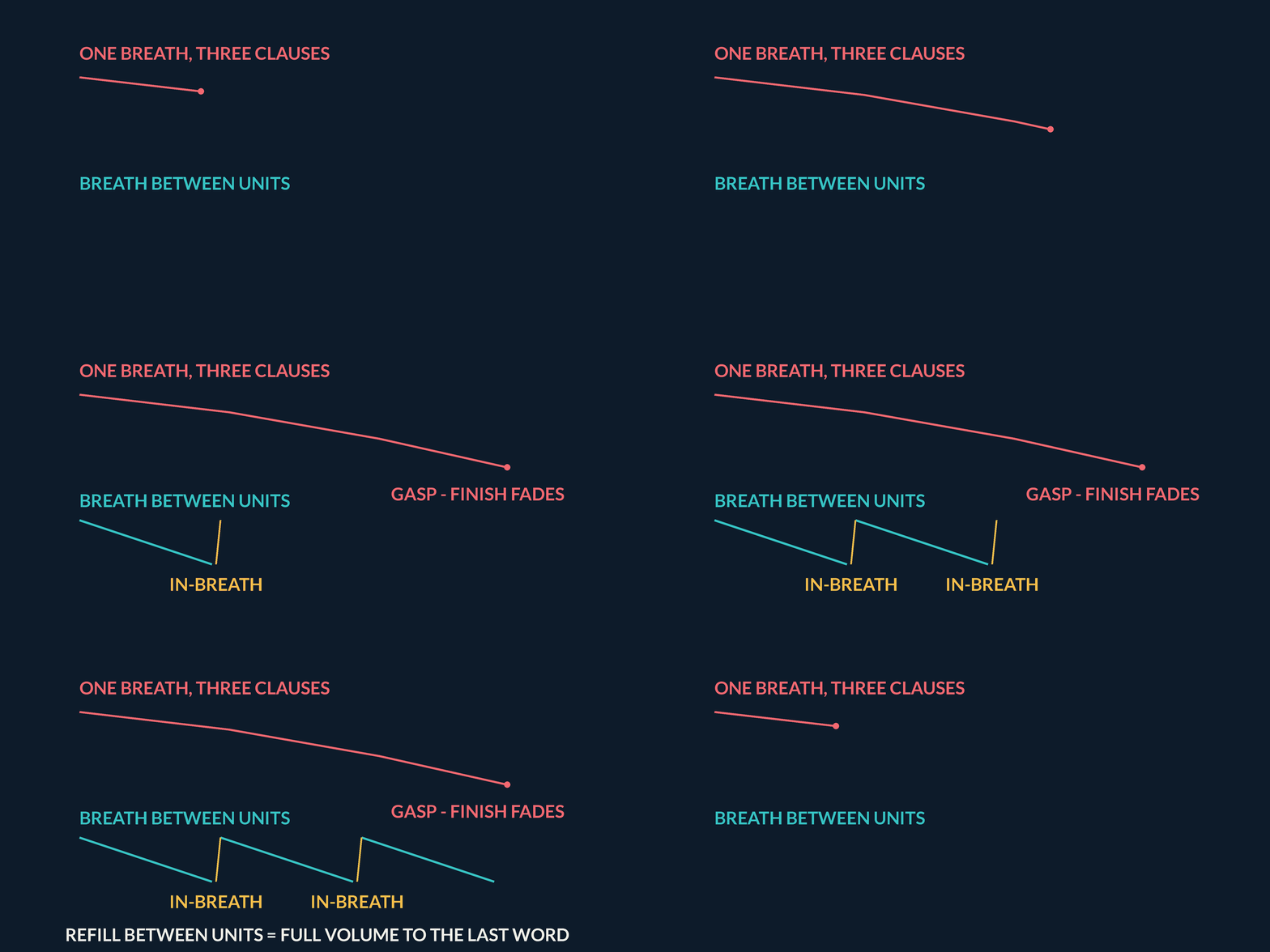
Breath between two units
- Finish the sentenceComplete the clause and close the mouth — do not trail into the next idea on the same breath.
- Quiet in-breathNose in-breath, half a second, shoulders quiet — no theatrical sigh.
- Start the next unitFirst word of the next idea at full volume floor, downward finish when that unit ends.
You feel air running out mid-update. What should you do?
- Push through to the end of all three points on the same breath
- Finish the current sentence, take a quiet in-breath, then start the next unit
- Insert a long 'sooo...' to cover the inhale
- Stop speaking and wait for someone else to take over
Breath between units restores pace and volume without filler cover or abandoning the turn. Pushing through on empty air collapses the finish.
Notes
- Trust rides on how you sound as much as what you say.
- A steady pace and audible volume floor make the content land.
- Fillers ("um", "like", "basically") are fine rarely; clusters make you sound unprepared.
- Downward finishes sound decided; upward finishes sound like questions even when they are not.
- Phone and video need slightly slower pace and clearer consonants.
Formulas
- Volume floor
- Finish down on decisions
- Cut filler clusters
Exam traps & shortcuts
- Record one standup update weekly and count fillers.
- End asks with a question mark; end decisions with a period in your voice.
Reference tables
Each row is a voice move that raises trust, the habit that carries it, and the failure mode it replaces.
| Move | Habit | Replaces |
|---|---|---|
| Pace | One idea per breath, pause between units | Rushing the whole turn to finish faster |
| Volume | Even floor; last words still audible | Trailing off on the ask or commitment |
| Fillers | Silent half-beat instead of umm chains | Basically / umm / you know before every clause |
| Finish | Downward on claims; upward on real questions | Rising finish on recommendations |
| Warmth | Kind tone, specific claim | Hedging that waters down the content |
| Calls | Mic setup + even floor + ask on camera | Soft laptop audio and fading finishes |
| Breath | Quiet in-breath between units | Stacking clauses until the voice collapses |
Recap
Seven habits that make a workplace voice sound sure without sounding loud.
- One idea, then pause
- Pace is units with silence between them — not a race to the end of the turn.
- Hold the volume floor
- The quietest word, especially the last one, must still be easy to hear.
- Silence over umm
- A clean half-beat is thinking time; filler chains train the room to wait and doubt.
- Finish the claim downward
- Recommendations and commitments settle; only genuine questions rise.
- Warm tone, clear content
- Regard for the other person is not the same as watering down the ask.
- Calls need the floor more
- Narrower channel: mic setup, even volume, ask delivered looking at camera.
- Breathe between units
- Finish, quiet in-breath, next unit — the physical base of pace and trust.
Practise Build Trust with Your Voice
Reading is free and needs no account. Practice, mocks and progress live in the app.
- A 5-question practice set that ends the chapter
- 7 quick checks with worked explanations
- Timed mocks scored with the real marking scheme
- Readiness tracked per topic, kept on your device