Unlock Your Charisma · Hard Conversations
Say No and Stay Likable
Clear no plus alternate, delay without ghosting, and protect the relationship.
A clear no protects both the work and the relationship; a soft yes you cannot keep damages both. Six concepts cover a clear no with an alternate, dated delays, warm tone with firm content, smaller yeses only when meant, liking the person while refusing the ask, and retiring the 'I will try' trap.
- Unlock Your Charisma
- Easy level
- 6 concepts
1Clear no, plus an alternate when you can
A clear no names the refusal without fog: 'I cannot take that on this week.' An alternate — another time, another person, a smaller scope — is kindness when it is true, not a required apology tax.
In a Bengaluru product team, 'I cannot own the migration doc this sprint; Ankit has bandwidth, or I can do a two-page outline next Tuesday' refuses the full ask and still helps the asker move.
If you have no alternate, still say the no. A false alternate — promising a person who was never asked — is just a delayed mess. Honesty without a substitute beats a substitute that is not real.
Figure. The refusal itself is one clean sentence — 'I cannot take that on this week.' An alternate — another time, another person, a smaller scope — is added only when it is true. When no alternate is real, the no stands alone: promising a person who was never asked only reschedules the disappointment.
| Foggy reply | Clear no + alternate |
|---|---|
| I will try to see | I cannot take that on this week; I can pick it up after Thursday's release |
| Maybe later? | Not this sprint — Priya is closer to that codebase if you need it sooner |
| Let me think | I have to say no to the full scope; I can review a draft for thirty minutes on Friday |
A manager asks you to own an extra deck this week and your plate is full. Best reply?
- I will try my best.
- I cannot own the full deck this week; I can review a draft for thirty minutes on Friday, or we can move one of my current tasks.
- Sure, somehow.
- Why is it always me?
It refuses clearly and offers a real alternate or trade-off. 'I will try' and 'sure somehow' are soft yeses; venting skips the useful no.
2Delay is fine if dated; ghosting is not a delay
Sometimes you need time to check capacity or ask your lead. That is a delay, and a delay needs a date: 'I will confirm by tomorrow 3 pm whether I can take this.' Silence until the asker chases you is ghosting.
Ghosting feels softer in the moment and costs more later — the asker plans around a maybe, then discovers a no when it is too late to reroute. Indian office WhatsApp culture makes ghosting especially easy; treat unread as unfinished business.
If the eventual answer is no, the dated delay still helped: they knew when they would hear, and they can escalate or reassign without reading your mind.
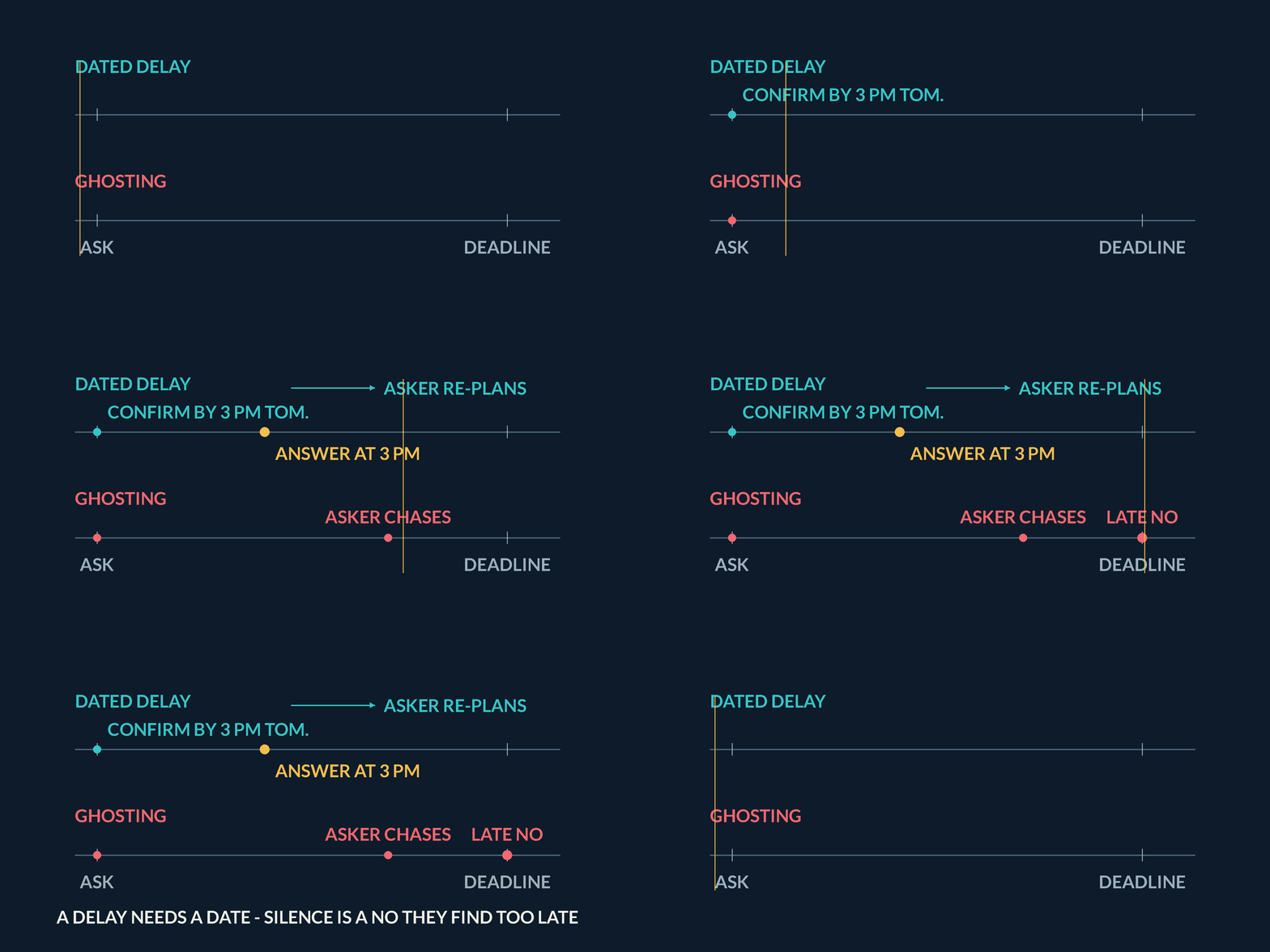
| Move | Sounds like | Effect |
|---|---|---|
| Dated delay | I will confirm by tomorrow 3 pm | Asker can plan; you keep credibility |
| Open delay | Let me see / I will get back | Often becomes a chase |
| Ghosting | Seen, no reply for days | Asker assumes a soft yes, then hits a late no |
A peer asks if you can join a client call Friday and you need to check your calendar. What do you say?
- Seen-tick the message and reply whenever
- I will confirm by tomorrow 11 am whether I can join Friday
- Maybe, not sure
- Ignore it until Friday morning
A dated commitment to reply is a real delay. Seen-ticks, maybes, and Friday-morning silence are ghosting patterns.
3Warm tone can stay; fuzzy content cannot
People confuse kindness with ambiguity. You can sound warm — thank them for thinking of you, acknowledge the importance — and still keep the content firm: no, not this week, not this scope.
Fuzzy content with a warm tone is how 'I would love to help but things are a bit crazy so maybe we see' becomes a presumed yes. Firm content with a cold tone is unnecessary; firm content with respect is the target.
In a Chennai services team, 'Thanks for looping me in — I cannot take ownership this week, and I do not want to slow you down by half-committing' is both warm and unmistakable.
Figure. Tone and content are two separate dials. Warmth — thanks, regard, acknowledging their constraint — lives on the vertical dial; what you actually commit to lives on the horizontal one. 'I would love to help but things are a bit crazy so maybe we see' sits warm and fuzzy, and gets heard as a yes. The target is warm and firm: kind delivery, unmistakable refusal.
| Combo | Example | Verdict |
|---|---|---|
| Warm + firm | Thanks for asking — I cannot own this week | Target |
| Warm + fuzzy | Would love to, things are crazy, let's see | Reads as soft yes |
| Cold + firm | No. Figure it out. | Clear but burns goodwill needlessly |
Which refusal keeps warmth without fuzz?
- Would love to help but things are crazy so maybe later somehow
- Thanks for thinking of me — I cannot take this on before the 20th
- No. Sort it yourself.
- Hmm, not sure, ping me again someday
It thanks the asker and states a firm limit. Warm fuzz and cold bluntness miss the warm-plus-firm target.
4Offer a smaller yes only if you mean it
A smaller yes — thirty minutes of review, a template, an intro to someone else — is powerful when true. It is harmful when it is a guilt payment you will resent or miss.
Check capacity before you shrink the ask into a promise. If even the smaller version is not real this week, say the full no and stop. Partial promises that slip become trust damage, same as missed full yeses.
In a Pune startup, 'I can do a fifteen-minute screen-share tomorrow at 4 to unblock you, but I cannot write the full spec' works only if 4 pm is actually free on your calendar right now.
Figure. A smaller yes works only if the slot is real. 'I can do a fifteen-minute screen-share tomorrow at 4, but I cannot write the full spec' is honest only if 4 pm is free on the calendar right now. If even that is false, say the full no — do not invent a mini-promise to soften it.
Before offering a smaller yes
- Check real capacityLook at the calendar for the specific slot, not the wish to be helpful.
- Name the smaller scope aloudReview, intro, template — not 'a bit of help' with no edge.
- If even that is false, full noDo not invent a mini-promise to soften a no you already decided.
You cannot write a full spec and your next three days are packed. What should you do?
- Offer a two-hour review tomorrow anyway to seem helpful
- Say a clear no; offer a smaller help only if a real slot exists
- Say yes to the full spec and hope
- Say nothing and hope they ask someone else
Smaller yeses are only kind when true. Fake mini-promises, full soft yeses, and silence all create later damage.
5You can like the person and still refuse the ask
Many professionals fuse relationship with agreement: saying no feels like rejecting the person. Separating the two is the skill — 'I value working with you, and I cannot take this task' holds both truths.
If you only say yes to people you like, you will drown in their requests and eventually resent them. If you only say no coldly, you will be accurate and lonely. Charisma here is accurate warmth.
In a Delhi corporate team, a senior who can refuse a favourite peer without awkward theatre models the norm for everyone else. The relationship is not the payment for unlimited yeses.
No diagram — this is a reframe, not a mechanism. Hold both sentences at once: 'I value working with you' and 'I cannot take this task.' Neither cancels the other; fusing them is the habit this concept unpicks.
| Fusion error | Separated line |
|---|---|
| If I say no they will think I dislike them | I value working with you, and I cannot take this on this week |
| They are close so I must say yes | Because we work well together I want to be honest — I have to decline |
| Saying no means I am not a team player | Declining this keeps me reliable on the commitments I already made |
A friend on your team asks for help you cannot give. Which line is healthiest?
- Yes, of course — I will figure it out somehow
- I value working with you, and I cannot take this on this week
- If you were a real friend you would not ask
- No reply; friendships should not need nos
It separates liking the person from refusing the ask. Soft yes, moral attack, and silence all damage the relationship differently.
6Retire 'I will try' — it is often a delayed no
'I will try' sounds cooperative and often means 'I already know I cannot, but I do not want this conversation.' The asker hears a soft yes and plans against it. When the work does not appear, both sides feel betrayed.
Replace it with one of three honest moves: clear no, dated delay, or a smaller yes you can keep. Those three cover nearly every case without the fog word 'try'.
In Hyderabad delivery teams, 'I will try' is almost a dialect of politeness. Treat it as a personal red flag: if you hear yourself say it, rewrite the sentence before you hit send.
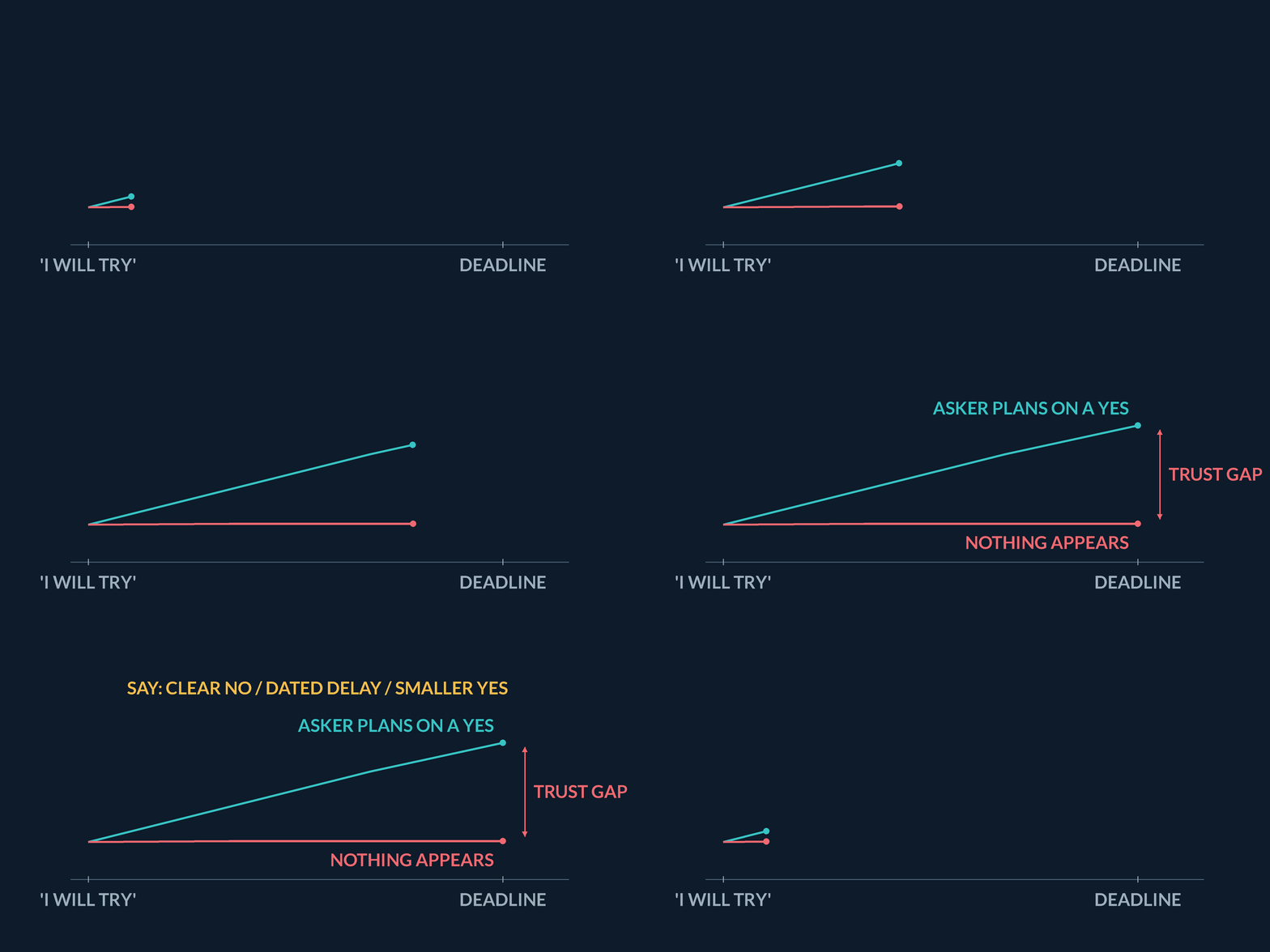
| You almost say | Say instead |
|---|---|
| I will try to finish it tonight | I cannot finish it tonight; earliest is Thursday noon |
| I will try to join the call | I will confirm by 2 pm whether I can join |
| I will try to help with the deck | I can review slides 1–5 for twenty minutes; I cannot rebuild the narrative |
You know you cannot finish a task tonight. What should you type instead of 'I will try'?
- I will try my best tonight
- I cannot finish it tonight; earliest realistic is Thursday noon
- Sure, hopefully
- Let's see how it goes
A clear capacity line beats 'try', 'hopefully', and 'let's see', all of which read as soft commitments.
Notes
- A clear no is kinder than a soft yes you will resent or miss.
- Pair the no with an alternate when you can — time, person, or smaller scope.
- Delay is fine if dated; ghosting is not a delay.
- Warm tone can stay; fuzzy content cannot.
- You can like someone and still refuse their ask.
Formulas
- Clear no + alternate
- Dated delay
- Warm tone, firm content
Exam traps & shortcuts
- Practice "I cannot take that on this week" out loud.
- Offer a smaller yes only if you mean it.
Reference tables
Each row is a refusal moment, its load-bearing frame, and the habit it replaces.
| Moment | Load-bearing frame | Replaces |
|---|---|---|
| Cannot take the ask | Clear no + real alternate | I will try / maybe |
| Need time to check | Dated delay with a reply time | Ghosting or open 'let me see' |
| Want to stay kind | Warm tone, firm content | Warm fog that sounds like yes |
| Can help a little | Smaller yes only if the slot is real | Guilt mini-promises |
| Ask from someone you like | Value the person, refuse the ask | Unlimited yeses to protect the bond |
| Polite reflex | No / dated delay / smaller yes | I will try |
Recap
Six lines that keep nos likable and true.
- Clear no + alternate
- Refuse the ask in plain words; offer time, person, or smaller scope only if real.
- Dated delay
- If you need time, name when you will confirm — silence is ghosting.
- Warm tone, firm content
- Respect can stay; ambiguity cannot.
- Smaller yes if meant
- Check the calendar before you shrink the promise.
- Like person, refuse ask
- Relationship is not payment for unlimited yeses.
- Retire 'I will try'
- Replace with no, dated delay, or a keepable smaller yes.
Practise Say No and Stay Likable
Reading is free and needs no account. Practice, mocks and progress live in the app.
- A 5-question practice set that ends the chapter
- 6 quick checks with worked explanations
- Timed mocks scored with the real marking scheme
- Readiness tracked per topic, kept on your device