Unlock Your Charisma · Presence
First Impression Hacks
Open strong in the first thirty seconds — in rooms and on video — then exit cleanly.
The first thirty seconds of a meeting, a client call, or a corridor introduction decide how much attention you get for the next thirty minutes — not because people are shallow, but because they have to allocate scarce attention fast. Seven concepts cover opening strong, naming yourself cleanly, using the eye-contact window, matching the greeting register, avoiding the first-thirty-seconds trap, exiting cleanly, and managing the digital first impression on video.
- Unlock Your Charisma
- Easy level
- 7 concepts
1Open strong: energy before content
The opening of an introduction is judged on energy and clarity before anyone evaluates what you said. A mumbled 'hi, uh, I'm...' with eyes on the floor loses the room before the content starts; a clear greeting with a steady pace and a slight lift in volume lands as someone who belongs in the room.
Strong does not mean loud or theatrical. In a Bengaluru product standup, strong means you start on the first syllable at conversational volume, finish the greeting without trailing off, and leave a beat before the next sentence so it does not rush into a dump of background. Soft and clear beats loud and rushed.
The failure mode is saving the energy for the 'important' part and treating the greeting as throwaway — listeners decide whether to listen in the greeting itself, so a weak open makes the later content land on half-attention.
Figure. Listener attention over the first minute. The two openings start level; by the end of the greeting the levels are set, and everything after lands on whatever attention the open earned — the gap never closes on its own.
| Moment | Weak habit | Strong frame |
|---|---|---|
| Volume | Starts soft, rises mid-sentence | Conversational volume from the first word |
| Pace | Rushes into background | Greeting, short beat, then the point |
| Eyes | On laptop or floor | On the person or camera for the greeting |
You join a Hyderabad client kickoff and need to introduce yourself. Which opening lands strongest?
- A soft 'hi everyone...' while still settling into your chair and looking at your notes
- A clear 'Good morning — I'm Ananya from the payments team' at conversational volume, then a short beat
- A loud, fast dump of your full project history before anyone greets back
- Waiting silently until someone asks who you are
It puts energy and clarity on the greeting itself, at a volume that reads as belonging without theatrics. Soft-and-distracted loses attention early; a loud history dump skips the greeting; waiting silently cedes the open entirely.
2Name and role in one clean line
People remember a name better when it arrives with a role that explains why you are in the room. 'I'm Priya' alone forces the other person to ask a follow-up; 'I'm Priya, I own the onboarding funnel for the India launch' gives them a handle to place you without a second question.
The frame is short: name, then one role phrase tied to the meeting's purpose — not a CV summary. In a Chennai vendor call, 'I'm Karthik, technical lead on the integration' is enough; listing every previous employer and title turns the introduction into a pitch nobody asked for.
If your role title is opaque outside your company — 'SDE-2', 'IC4', 'Associate' — translate it into what you do for this meeting: 'I build the API the vendor will call' beats an internal level that means nothing to the other side.
No diagram — the line is verbal: name, then one role phrase tied to why you are in this room. 'I'm Priya, I own the onboarding funnel for the India launch.' The situation-frame table carries the variants.
| Situation | Frame | Avoid |
|---|---|---|
| Internal meetup | I'm [name], I own [scope] for [project] | Name only, or a full CV |
| Client / vendor call | I'm [name], [plain-language job for this call] | Internal levels (SDE-2, IC4) with no translation |
| Cross-team intro | I'm [name] from [team] — here for [reason today] | Listing every project you have ever touched |
On a first call with an external design partner, which self-intro is most useful?
- I'm Rohan.
- I'm Rohan, SDE-2 at the company.
- I'm Rohan — I own the checkout UI the partner's designs will plug into.
- I'm Rohan, I've been here four years, previously at two startups, and I've worked on payments, growth, and infra.
It pairs the name with a plain-language role tied to this call. Name-only forces a follow-up; an internal level explains nothing to an outsider; a CV dump is longer than an introduction needs to be.
3The eye-contact window: hold, then release
Eye contact works in a short window, not as a stare. Hold for roughly the length of one sentence or a greeting — long enough to register warmth and attention — then release to a natural break (notes, screen, a nod) before coming back. Continuous unbroken staring reads as intensity, not confidence.
In a Pune one-on-one, looking at the other person for the greeting and the first answer, then glancing at a notepad while they talk, then returning for your reply, feels engaged. Looking at your laptop the entire time while they speak feels like you are waiting for your turn rather than listening.
On video the window is the camera, not your own tile. Looking at their face on-screen while you speak looks like you are looking down or sideways on their end; a brief look into the lens for the greeting and for key points is what lands as eye contact to them.
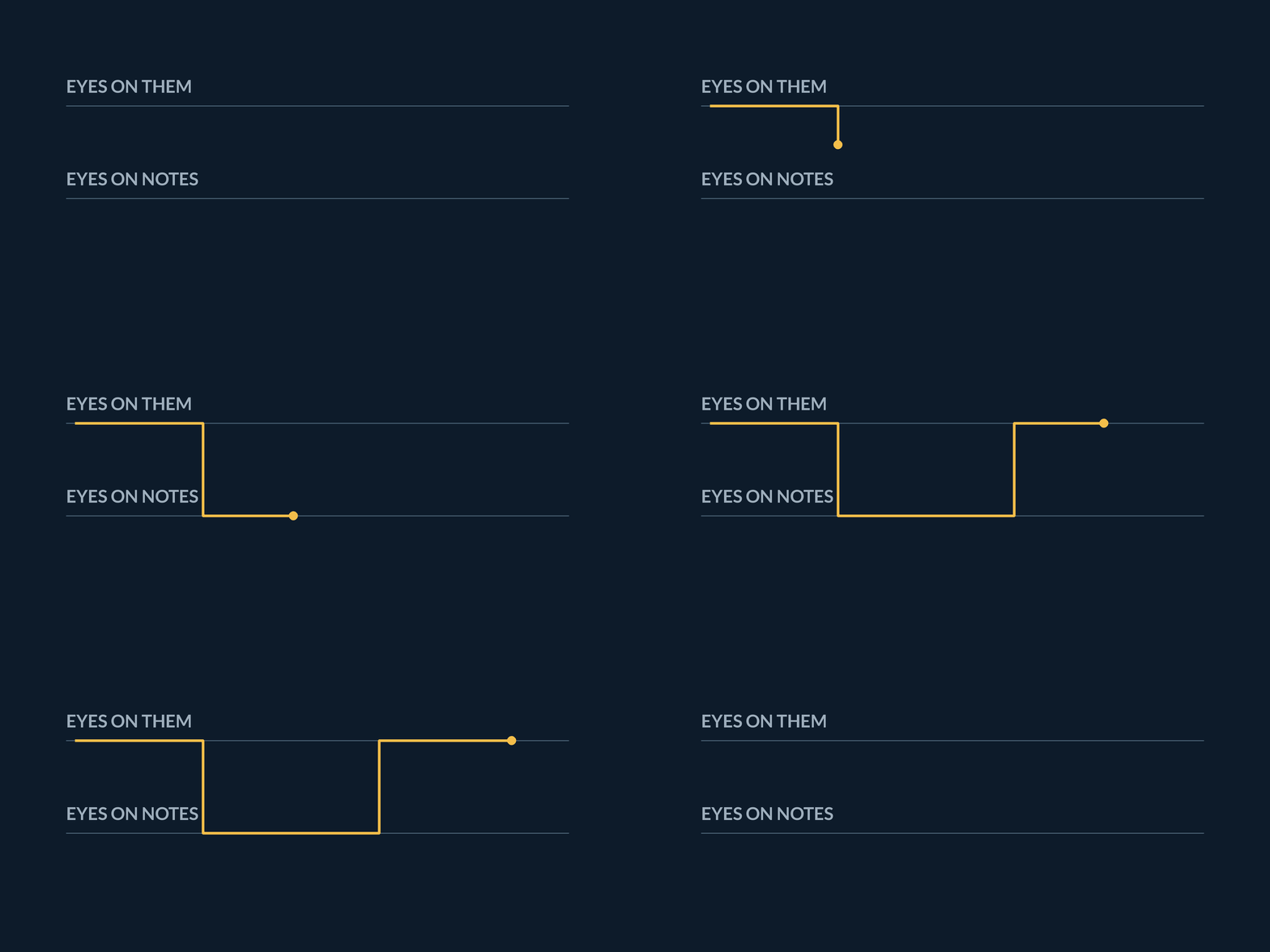
Using the eye-contact window
- Hold for the greetingMeet their eyes (or the camera) for the hello and your name — that is the window that decides first warmth.
- Release naturallyBreak to notes, a nod, or the shared screen so the hold does not become a stare.
- Return on your key pointsCome back for answers and asks; do not park on the laptop for the whole turn.
In a first in-person chat with a new teammate, which eye-contact pattern fits the window?
- Stare without blinking for the entire two-minute introduction
- Look at your phone while they speak, then glance up only when it is your turn
- Hold eye contact for the greeting and first sentence, release to a natural break, return for your reply
- Keep eyes on the floor out of politeness
It uses the short hold-then-release window that reads as warmth without intensity. Unbroken staring overshoots; phone-and-floor habits under-shoot and signal disengagement.
4Handshake and greeting register: match the room
The greeting has a register — handshake, namaste, a brief wave on video, a verbal-only hello — and mismatching it is what makes an otherwise fine introduction feel off. Match what the room is already doing, or what the most senior person offers, rather than forcing one default on every context.
In many Indian offices a firm, brief handshake still works in formal client settings; a warm namaste or a verbal greeting with a slight head nod is often cleaner in mixed or traditional rooms, and on video a clear verbal greeting plus a small wave beats reaching toward the camera as if to shake hands.
Do not invent intimacy you have not earned: a two-handed clasp, a shoulder pat, or 'yaar' on a first meeting with a senior client in Hyderabad reads as overfamiliar. Warm and brief beats warm and long.
No diagram — register is a social match, not a shape: offer what the room is already doing — handshake, namaste, or a verbal hello with a small wave on video — and keep it brief. The context table carries the defaults.
| Context | Default register | Avoid |
|---|---|---|
| Formal client, in person | Brief firm handshake or namaste if offered | Lingering two-handed clasp |
| Internal team, first day | Verbal hello + name; handshake if they offer | Forcing a handshake on someone who only nods |
| Video call | Clear verbal greeting + small wave if natural | Mimed handshake into the camera |
A senior client on a first Bengaluru visit offers a namaste rather than a hand. What should you do?
- Insist on a handshake because that is your usual greeting
- Return the namaste at the same warmth and keep the greeting brief
- Go for a shoulder pat to show friendliness
- Skip any greeting and sit down immediately
Matching the register they offered keeps the greeting comfortable. Forcing a handshake or escalating to a shoulder pat mismatches the room; skipping the greeting entirely wastes the open.
5The first-thirty-seconds trap: oversharing and over-apologising
Nervous energy in the first half-minute often spills into two traps: oversharing context nobody asked for, and apologising for being there. Both burn the open on self-management instead of on the other person's need.
Oversharing sounds like: 'Sorry I'm a bit late, traffic was crazy, and I wasn't sure if I had the right link, and also I only joined this project last week so I might not know everything...' — three disclaimers before a name. Over-apologising sounds like starting every first meeting with 'I hope I'm not interrupting' when you were invited.
The fix is a short script you can run under nerves: greet, name + role, one line on why you are here, then stop and let them respond. In a Mumbai agency intro, that script leaves room for them to steer; a thirty-second autobiography does not.
Figure. Two ways to spend the same thirty seconds, in seconds. The nervous spill burns all of it on self-management — the apology, the traffic story, the disclaimers — and rushes the name at the end. The clean open spends eighteen seconds on greet, name and purpose, then stops and hands the remaining time to them.
A clean first thirty seconds
- GreetOne clear hello matched to the room — no apology for existing.
- Name and roleWho you are and why you are relevant to this meeting, in one line.
- StopLeave a beat for them. Do not fill silence with disclaimers about traffic, late joining, or how new you are.
You enter a first sync slightly flustered after a late auto. Which open avoids the first-thirty-seconds trap?
- Sorry, traffic was terrible, I almost took the wrong floor, I'm still ramping on this project, and I hope this is useful...
- Good afternoon — I'm Meera from analytics. I'm here for the launch dashboard review.
- I hope I'm not wasting anyone's time — I don't know much yet.
- A long story about how you prepared for the meeting
It greets, names role, and states purpose without burning the open on disclaimers. Traffic apologies, hope-I'm-not-wasting-time, and prep stories all spend the first thirty seconds on self-management.
6Exit cleanly: close the impression on purpose
First impressions have an exit as well as an entrance. Trailing off with 'okay bye' while already walking away, or vanishing from a video call without a closing line, undoes a strong open. A clean exit is short: thank them, name the next step if there is one, and leave.
In person after a corridor intro: 'Good to meet you — I'll send that deck link after lunch' is a close. On a client call: 'Thanks for the time — I'll follow up with the revised timeline by Thursday' beats hanging up mid-silence.
Do not reopen the whole conversation in the goodbye. Adding 'and also one more thing about the architecture...' after you have already stood up is a second open, not an exit, and it often lands as poorly timed.
No diagram — an exit is one spoken close: thank them, name the next step, leave. 'Good to meet you — I'll send that deck link after lunch.' The situation-frame table carries the frames.
| Situation | Exit frame | Avoid |
|---|---|---|
| Corridor intro | Good to meet you — I'll [specific next step] | Walking away mid-sentence |
| Video call end | Thanks for the time — I'll send [X] by [day] | Leaving without a spoken close |
| After a first coffee chat | This was useful — shall I ping you next week on [topic]? | Reopening a long topic while standing to leave |
A first vendor call is wrapping up. Which close is cleanest?
- Okay bye. (and leave the call)
- Thanks for the time — I'll send the revised scope note by Wednesday.
- And also, while I have you, let me walk through our full company history...
- Silence until someone else hangs up
It thanks them and names a specific next step, which closes the impression on purpose. A bare bye, a reopened monologue, and silent hanging-up all waste the exit.
7Digital first impression: camera, name, and first line
On video, the first impression is assembled from three cheap signals before your content: whether the camera is on and stable, whether your display name is readable, and whether your first spoken line is clear. A dark silhouette labelled 'iPhone' with a mumbled unmute is a weak open even when your ideas are strong.
Before a Bengaluru-to-US standup, check frame (face and shoulders visible, light on your face), rename from a device default to 'Name — Team', and unmute a second before you speak so the first word is not clipped. None of that is vanity; it is removing friction so people can place you.
If camera-off is a team norm, your first impression shifts to audio and the chat rename: a clear greeting in the first turn and a human display name still do the job a face would have done.
No diagram — the open is a three-item checklist, not a figure: face lit and framed, display name readable, first line unmuted and clear. The checklist table carries the ready states.
| Signal | Ready state | Weak state |
|---|---|---|
| Camera / frame | Face lit, shoulders in frame, stable | Ceiling shot, backlight, or constant shake |
| Display name | Name — Team | iPhone, Galaxy, or a nickname nobody knows |
| First line | Unmute early; greet at full volume | First word clipped; 'can you hear me' as the whole open |
Joining a first video interview from home, which setup best supports a strong digital first impression?
- Camera off, display name still 'iPhone', first words clipped by late unmute
- Camera on with face lit, display name 'Sneha — Design', clear greeting on the first turn
- Camera pointed at the ceiling with a bright window behind you
- Joining five minutes late with no greeting because you were fixing headphones
It gets the three cheap signals right: visible face, readable name, clear first line. Camera-off with a device name, bad framing, and a late silent join all spend the open on avoidable friction.
Notes
- People form a usable read of you in the first half-minute; the job is to give them a clear, warm signal on purpose.
- Lead with name and role before your story, so the room knows who is speaking.
- Match greeting register to the room: formal handshake energy vs casual hello vs video smile-and-wave.
- A clean exit — thanks, next step, goodbye — locks the impression; trailing off undoes a strong open.
- Digital first impressions (camera height, lighting, mute discipline) count the same as in-person ones.
Formulas
- Name + role first
- Thirty-second window
- Exit with a next step
Exam traps & shortcuts
- Do not open with an apology for being there.
- On video, look at the lens when you say your name.
Reference tables
Each row is a recurring first-meeting moment, its load-bearing move, and the habit it replaces.
| Moment | Load-bearing move | Replaces |
|---|---|---|
| Open | Conversational volume from the first word, then a beat | Soft mumbled hello into a rush of background |
| Self-intro | Name + plain-language role for this room | Name only, or a CV dump |
| Eye contact | Hold for greeting, release, return on key points | Stare, or eyes parked on the laptop |
| Greeting register | Match what they offer — handshake, namaste, or verbal | Forcing one default on every room |
| First thirty seconds | Greet, name+role, purpose, stop | Traffic apologies and oversharing |
| Exit | Thanks + specific next step | Trailing bye, or reopening the topic while leaving |
| Video join | Lit face, Name — Team, unmute before speaking | Device name, clipped first word |
Recap
Seven lines that carry a first meeting from open to close.
- Energy on the greeting
- Listeners decide whether to listen in the hello — volume and clarity come before content.
- Name plus role
- One plain-language line on why you are in this room, not a CV.
- Eye-contact window
- Hold for the greeting, release naturally, return on key points — never a stare or a permanent break.
- Match the register
- Handshake, namaste, or verbal — follow what the room offers.
- No disclaimer open
- Greet, name+role, purpose, stop — do not burn thirty seconds on traffic and apologies.
- Exit with a next step
- Thanks plus who-does-what-by-when closes the impression on purpose.
- Digital three signals
- Lit face, readable display name, unmute before the first word.
Practise First Impression Hacks
Reading is free and needs no account. Practice, mocks and progress live in the app.
- A 5-question practice set that ends the chapter
- 7 quick checks with worked explanations
- Timed mocks scored with the real marking scheme
- Readiness tracked per topic, kept on your device