Retail Investing · Indian Securities Markets
IPOs: Going Public
Private vs listed, what an IPO is, fresh issue vs Offer for Sale vs hybrid, and how to apply without trusting GMP.
Thirteen concepts in two layers. First follow the core IPO journey from private company to listing: separate fresh issue from Offer for Sale, use the official ASBA path, and reject illegal grey-market activity and GMP promises. Then use five Deep dives to reconcile company proceeds, calculate ownership dilution, navigate DRHP/RHP/Prospectus stages, read risks and financial trends, and interpret selling shareholders and valuation context.
- Retail Investing
- Foundation level
- 13 concepts
- 36 practice questions
1Private company vs listed company
A private company has a closed set of owners—founders, family, funds, or employees—and no exchange order book where any outsider can place a market order for its shares.
A listed company has completed the regulatory and exchange path that makes its listed shares tradeable in a public market, subject to the shares actually available for trading and any lock-ins. Ownership can then change between investors without money from every trade entering the company.
Going public changes the ownership market and brings ongoing public-disclosure obligations. It does not by itself change the company's products, offices, profitability, or business quality.
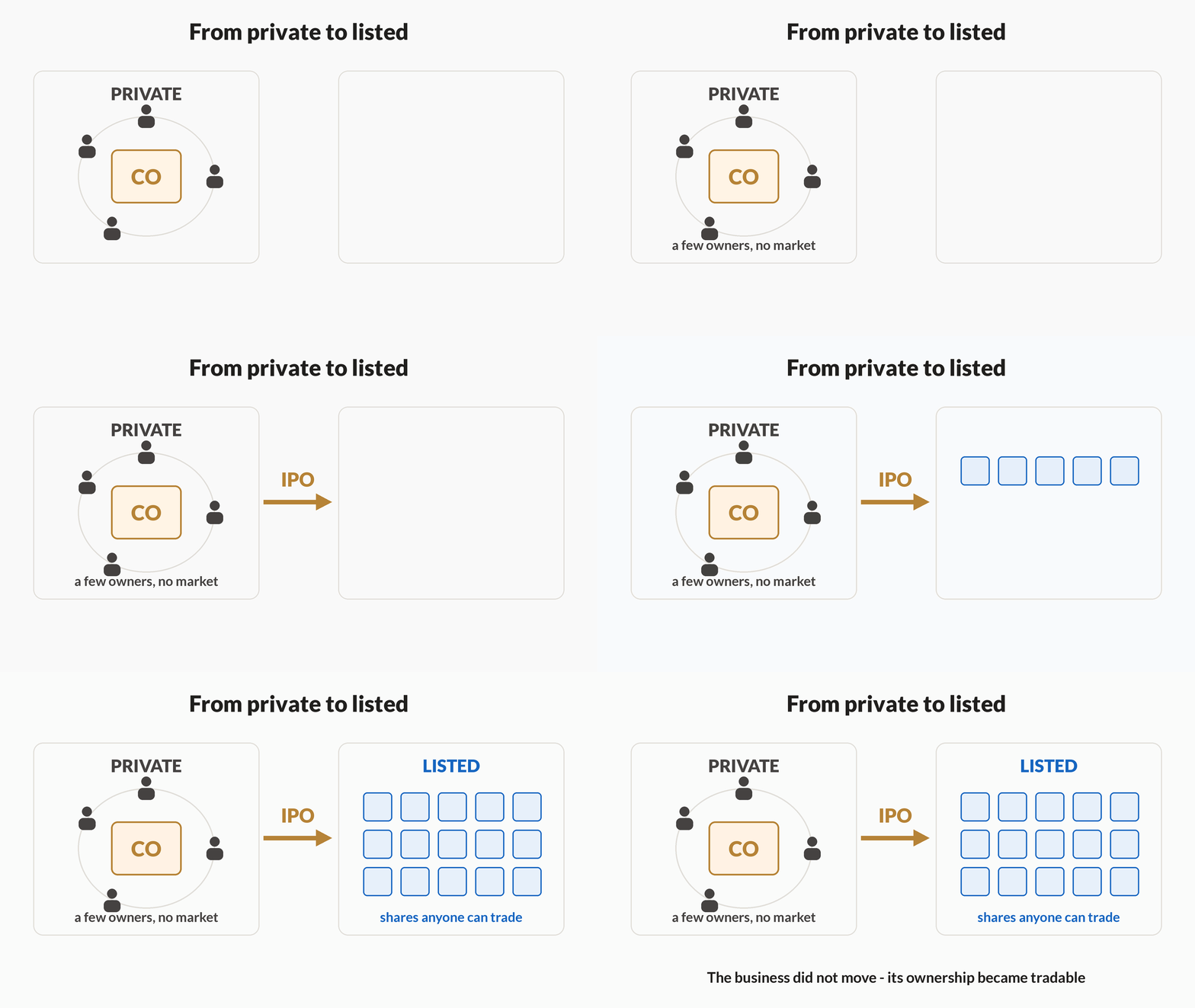
| Feature | Private company | Listed company |
|---|---|---|
| Ownership access | Invited or negotiated buyers | Public exchange access |
| Price discovery | Deal by deal | Continuous exchange quotes |
| Disclosure | Private-owner and lender needs | Ongoing public disclosures |
| Business itself | Operating company | Same business; wider ownership market |
A friend says you can buy shares of a neighbourhood bakery tomorrow morning on the exchange. What must be true?
- The bakery is private with three cousins as owners
- The bakery filed a GST return last year
- The bakery has listed shares on an exchange
- The bakery accepts UPI at the counter
Exchange trading requires listed shares. Private ownership alone, GST, or UPI do not open a public market order book.
2What an IPO actually is
An Initial Public Offer (IPO) is the company's first public offer of shares that enables listing. It can contain new shares, existing shares sold by current owners, or both.
The offer and allotment belong to the primary market: applicants apply to the issue under its terms. After listing, investors buy and sell listed shares with one another in the secondary market; those later trades are not fresh company fundraising.
Do not call every capital raise an IPO. Private placements, rights issues to existing holders, and later public issues by an already listed company are different transactions.
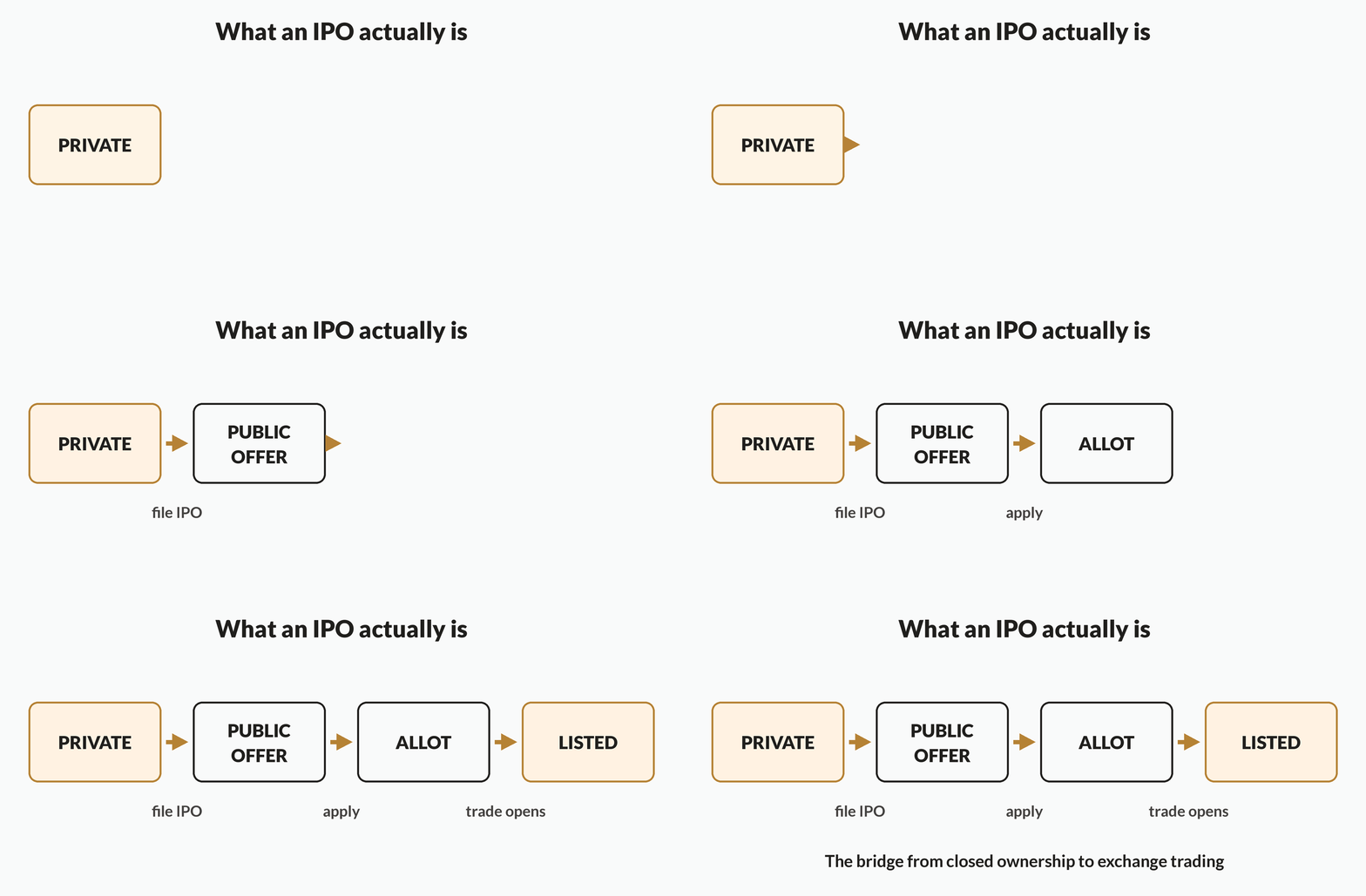
The going-public path
- PrivateOwnership sits with a closed set of holders.
- OfferThe first public share offer opens in the primary market.
- AllotSuccessful applicants receive shares under the issue process.
- ListExchange trading opens in the secondary market.
| Stage | What happens | Market |
|---|---|---|
| Private | Owners negotiate privately | Off-exchange |
| IPO offer | Public can apply to the issue | Primary |
| Listing day onward | Buy/sell among investors | Secondary |
3Fresh issue — new shares and company cash
In a fresh issue, also called a fresh offering of equity, the company creates new shares for the public. Total shares increase and the fresh portion of investor money is company proceeds.
Fresh issue describes the share route, not the final spend. Gross fresh proceeds are reduced by issue expenses to reach net proceeds; the separate Money Uses card follows those net proceeds through Objects of the Issue.
Because new shares enlarge the ownership denominator, existing holders can keep the same absolute shares while their percentage ownership falls. The Ownership Dilution card calculates that effect.
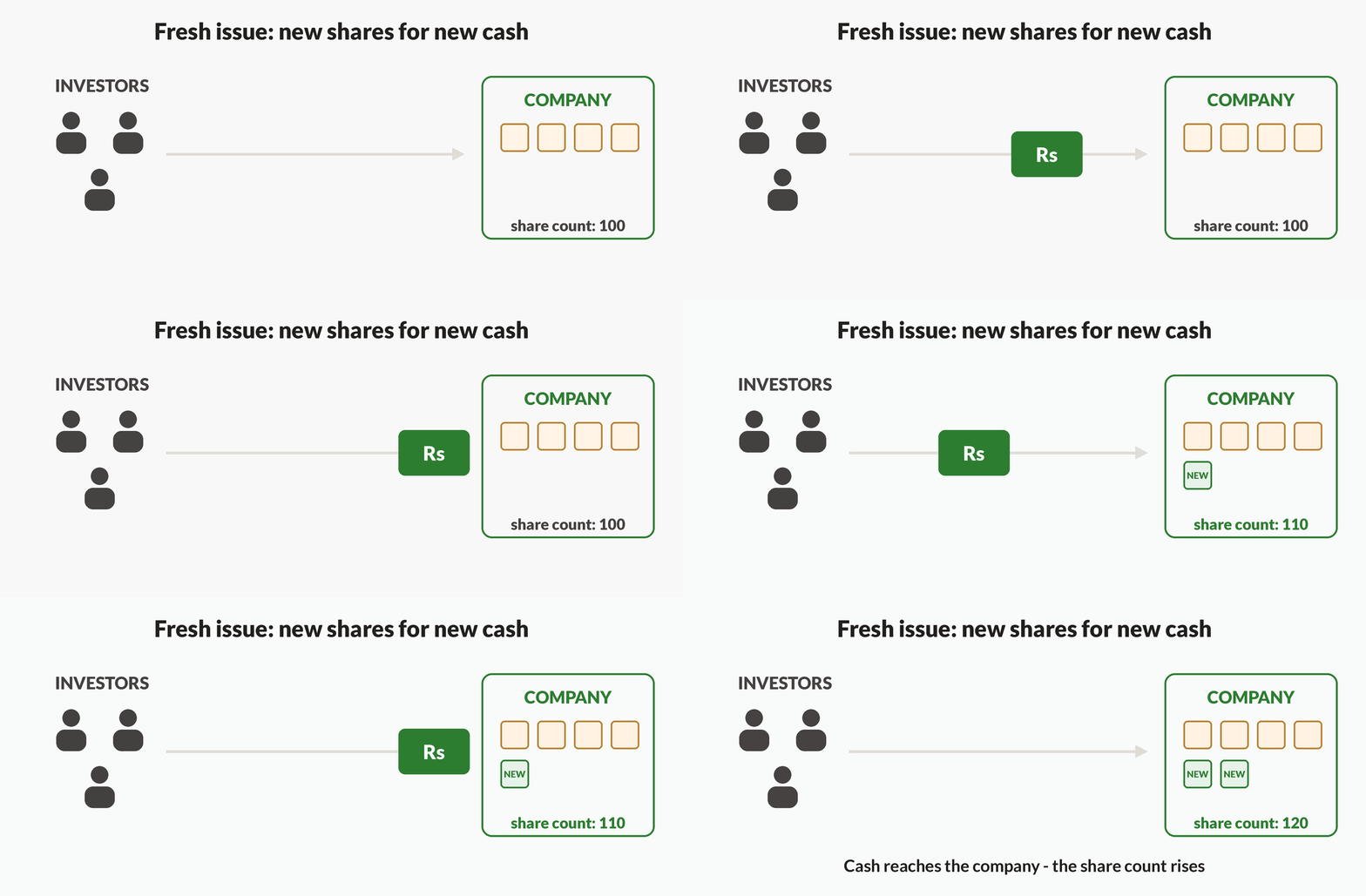
| Question | Answer |
|---|---|
| Shares | New shares are created |
| Total share count | Increases |
| Gross cash destination | Company |
| Next checks | Net money uses and ownership dilution |
A company issues 25 brand-new shares to the public. Which two follow-up questions belong on separate cards?
- Which seller receives OFS cash, and what GMP guarantees
- Whether secondary trades fund the company, and whether allotment is certain
- Only whether the listing opens above issue price
- How net proceeds will be used, and how the larger total affects ownership percentages
Fresh issue has both a cash-use question and a denominator question. Money Uses follows net company proceeds; Ownership Dilution recalculates stakes.
4Offer for Sale — existing shares, cash to sellers
In an Offer for Sale (OFS) inside an IPO, named existing shareholders sell shares they already own. No new shares are created for that portion and the total share count stays fixed.
The gross OFS consideration is attributable to the selling shareholders, not the company. A seller's eventual net cash can differ after allocated offer expenses, taxes and transaction terms, but OFS proceeds do not become company funding.
A seller's absolute shares and percentage ownership fall because shares move to the public, not because a fresh issue enlarged the denominator. Read each seller's pre-offer holding, shares offered and post-offer holding.
Seller identity, retention and sale size are evidence to interpret alongside the stated rationale and the rest of the filing. A large or small sale is not automatically a quality verdict.
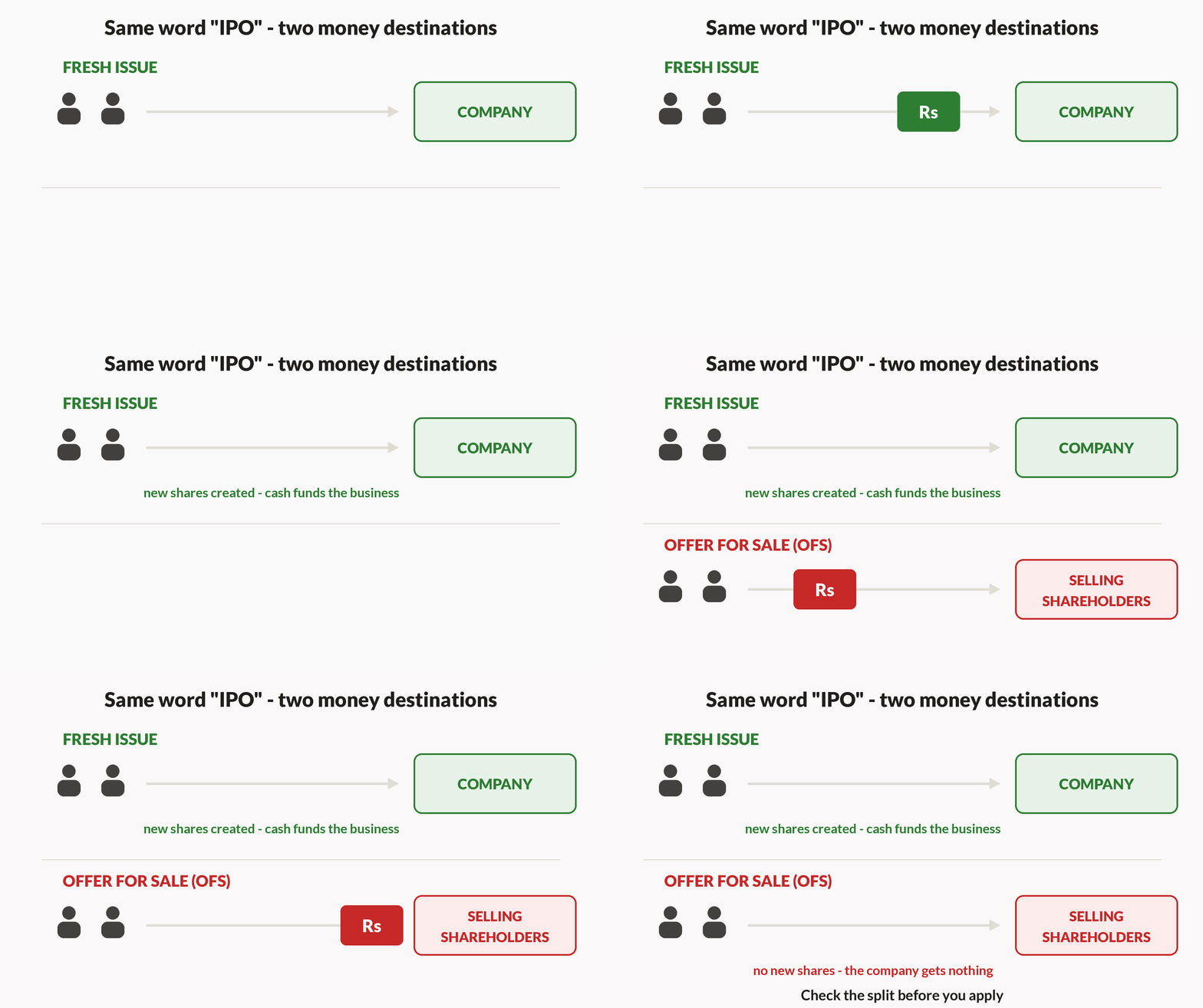
Read an OFS ownership transfer
- Fix totalNo new shares are created, so the total share count stays unchanged.
- Name sellersRead who sells, how many existing shares move, and each seller's post-offer holding.
- Move sharesSubtract sold shares from sellers and add the same shares to public ownership.
- Trace cashPublic cash for the OFS shares goes to sellers; company OFS proceeds are zero.
| Quantity | OFS effect | Why |
|---|---|---|
| Total shares | Unchanged | Existing shares transfer |
| Seller shares | Decrease | Seller parts with owned shares |
| Public shares | Increase | Public receives transferred shares |
| Company proceeds | Zero from OFS | Gross consideration belongs to sellers |
| Seller net cash | May differ from gross | Costs, taxes and terms may apply |
Transfer shares without changing the total
A 100-share company has promoter 60, PE fund 20, and others 20. In an OFS, the promoter sells 10 shares and the PE fund sells 5 to the public. Build the post-OFS ownership table.
- No new sharestotal stays 100
- Promoter: 60 − 1050 shares = 50%
- PE fund: 20 − 515 shares = 15%
- Public receives 10 + 5 existing shares15 shares = 15%
- Check: 50 + 15 + 20 + 15100 shares = fixed total
Pro tip. The sellers' stakes fell because they sold shares; OFS did not enlarge the denominator.
A pure OFS moves 15 existing shares to the public. Which statement is correct?
- The total share count rises by 15
- The company receives all buyer cash
- The total share count stays fixed and company OFS proceeds are zero
- Every non-selling holder is diluted by new shares
OFS transfers existing shares. It does not mint shares or enlarge the denominator, and its proceeds go to sellers.
5Hybrid offers — fresh plus OFS
A hybrid IPO combines a fresh issue and an OFS in one offer. Split the total before describing what it funds: fresh creates shares and company proceeds; OFS transfers existing shares and seller proceeds.
Keep cash and ownership as separate maps. Fresh expenses reduce gross fresh proceeds to net company proceeds; they do not turn the OFS portion into company cash.
For the cap table, add only newly issued fresh shares to the total. Move OFS shares from sellers to the public inside that total; adding them to the denominator again double-counts existing shares.
The Ownership Dilution card carries the full percentage formula and fresh/OFS/hybrid cap-table practice.
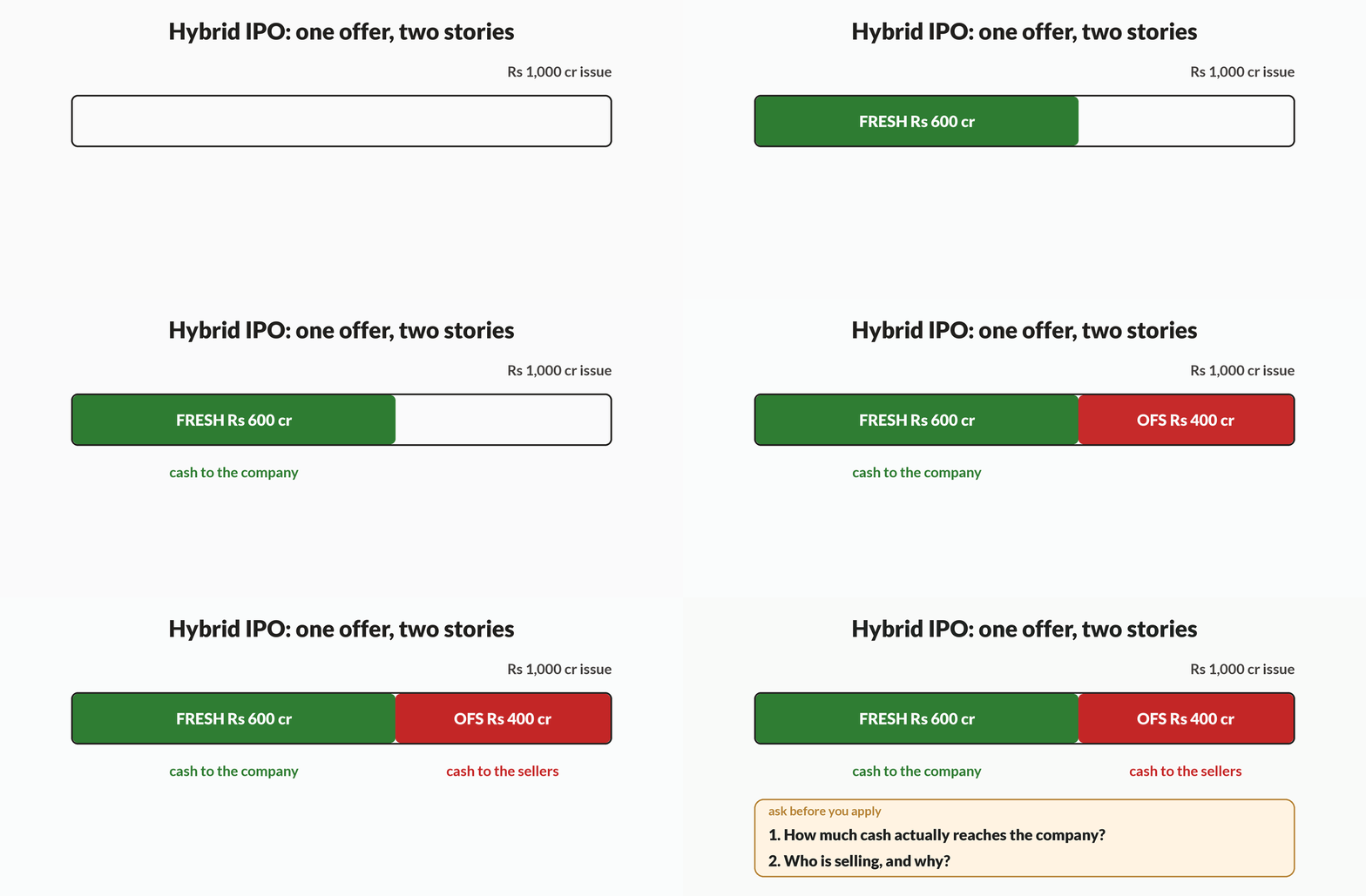
Two ledgers, one final offer
- Split cashFresh gross goes to company before costs; OFS gross is attributable to sellers.
- Build totalPost-offer shares = pre-offer shares + new fresh shares only.
- Move OFSTransfer sold existing shares to public ownership without increasing total.
- ReconcileCheck cash destinations, final share counts and ownership percentages separately.
| Route | Shares | Gross cash destination |
|---|---|---|
| Fresh | Creates shares; total rises | Company before issue expenses |
| OFS | Transfers shares; total fixed | Selling shareholders |
| Final cap table | Fresh enlarges total; OFS moves within it | Not the same as the cash map |
A ₹1,200 crore hybrid is not ₹1,200 crore of company money
An IPO contains ₹450 crore fresh and ₹750 crore OFS. Fresh-issue expenses are ₹30 crore. Objects allocate ₹260 crore to debt, ₹100 crore to expansion and ₹60 crore to GCP.
- Offer split: ₹450 crore fresh + ₹750 crore OFS₹1,200 crore total offer
- Net company proceeds: ₹450 crore − ₹30 crore₹420 crore
- Objects check: ₹260 + ₹100 + ₹60 crore₹420 crore
- OFS gross consideration₹750 crore attributable to sellers
Pro tip. State ₹420 crore net company proceeds and ₹750 crore gross OFS consideration; do not call the entire ₹1,200 crore company funding.
A hybrid starts with 100 shares, creates 25 fresh shares and transfers 15 existing OFS shares. What is the post-offer total?
- 115
- 125
- 140
- 100
Only the 25 newly created shares enlarge the denominator: 100 + 25 = 125. The 15 OFS shares already existed and move within that total.
6Offer documents — the disclosure gateway
The DRHP, RHP and final Prospectus form the structured offer-document path for an Indian IPO. They are sources for the business, offer structure, Objects of the Issue, selling shareholders, risks, financial information and price context—not tip screenshots.
Use this core card as a gateway. The Deep dives separately explain where fresh money goes, how new shares dilute ownership, how DRHP/RHP/Prospectus stages differ, and how to connect risks, financials, seller retention and valuation context.
Read the latest filed document available for the stage in front of you and compare changes. SEBI review is part of the disclosure and regulatory process, not an endorsement or a promise of future performance.
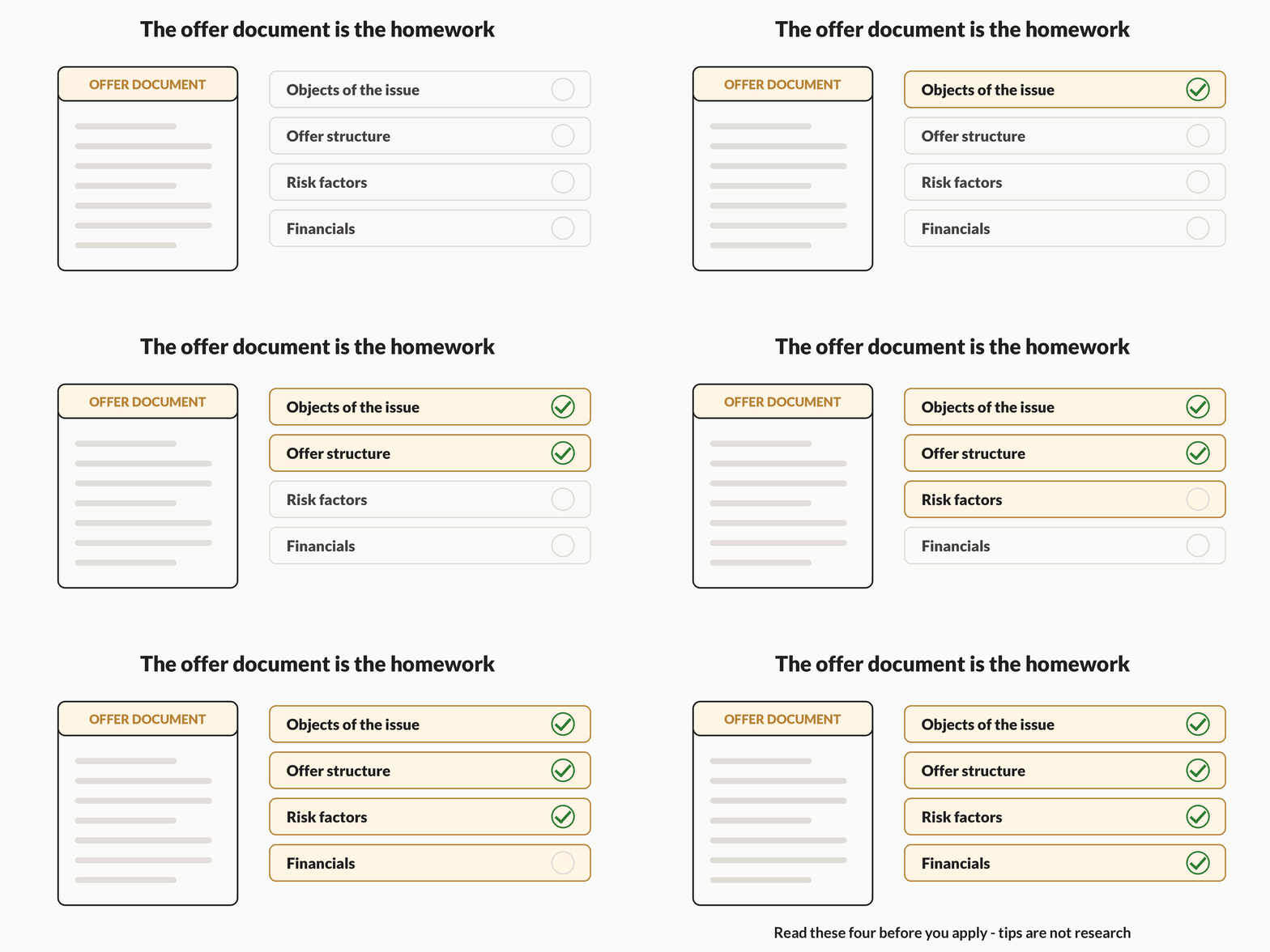
Open the right evidence
- MoneyOffer structure and Objects of the Issue.
- OwnershipNew shares, transferred shares and selling-shareholder retention.
- EvidenceBusiness, risks, litigation, financial trends and price context.
| Question | Deep dive |
|---|---|
| Where does fresh money go? | IPO money uses |
| How does ownership change? | Ownership dilution |
| Which filing stage and section? | DRHP, RHP and Prospectus anatomy |
| What evidence needs follow-up? | Risks, financials, sellers and valuation |
7Apply, allotment, listing — no promises
ASBA means Application Supported by Blocked Amount: the bank blocks the bid amount instead of transferring it to a promoter or tipster. For eligible retail applications made through intermediaries, UPI is a mechanism used to authorize that ASBA block; it is not an alternative to ASBA.
Before authorizing the block, verify the issue, category, bid quantity, minimum bid lot and any permitted multiples, price, PAN identity, bank account and demat details. A blocked amount is not an allotment and is not money already paid to the company.
For a successful retail individual investor allotment, SEBI's basis provides at least the minimum bid lot, subject to availability. Any remaining shares are allotted proportionately as applicable; some valid applicants may receive no allotment. Allotted shares are credited to demat, only their value is debited, and excess or no-allotment blocks are released through the official process.
After listing, shares enter secondary-market trading and the exchange price can open above or below the issue price. Neither application nor allotment creates a contractual listing-gain promise.
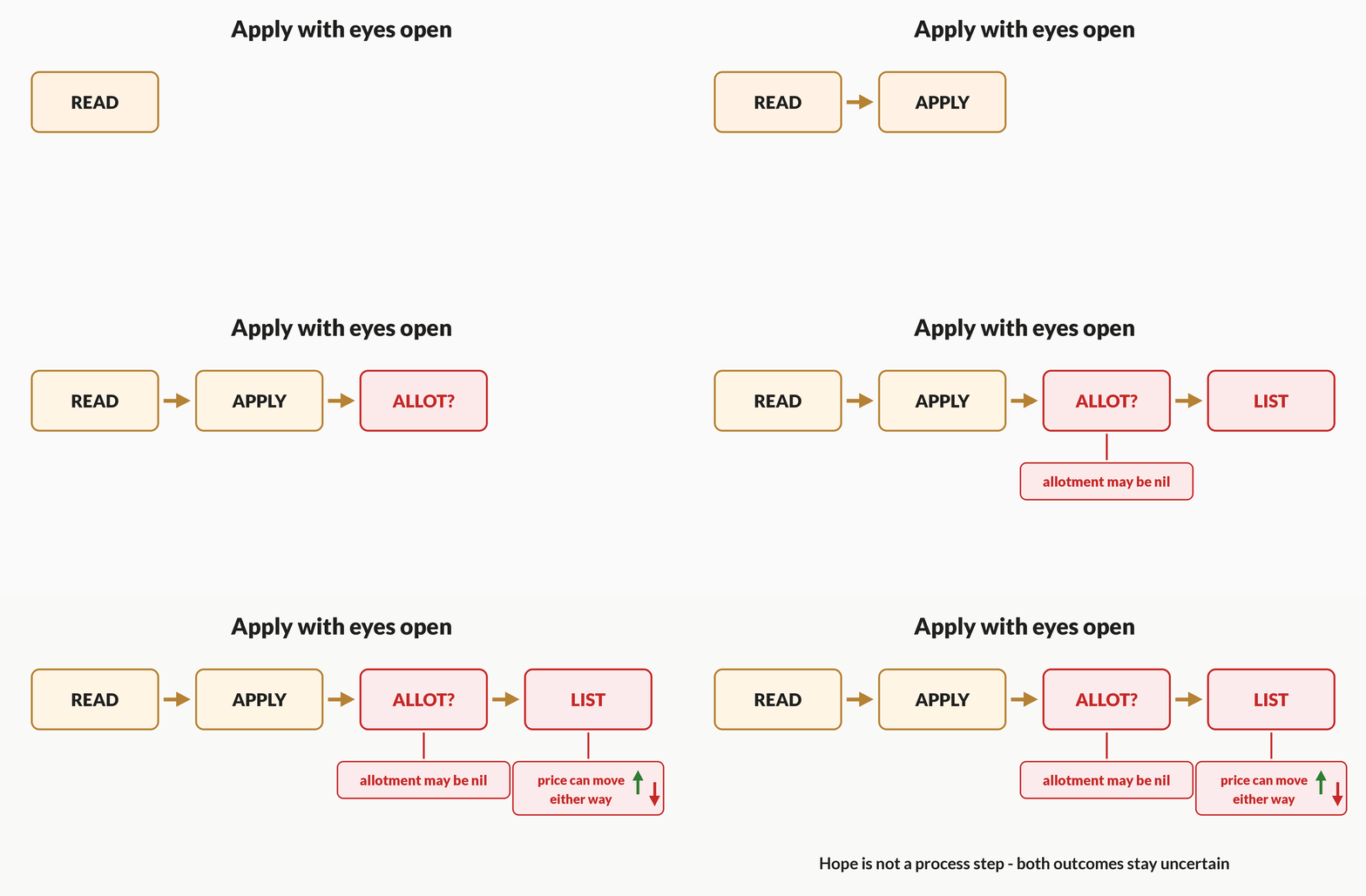
From document to listing
- ReadConfirm issue terms and the fresh/OFS structure.
- ApplyUse ASBA; where eligible through an intermediary, authorize the ASBA block with UPI after checking PAN, demat, lot, quantity and price.
- AllotA successful retail allotment is at least the minimum bid lot subject to availability; remaining shares are proportionate as applicable, while some valid bids receive none.
- ListOnly then does exchange trading begin, with no guaranteed opening price.
| Stage | What happens | Check |
|---|---|---|
| Read | Use the latest offer terms | Category, lot, price, dates |
| Apply | Use ASBA; eligible intermediary applications may authorize the block through UPI | PAN, bank, demat, bid lot |
| Block | Bid amount is reserved in bank | Money is blocked, not allotted |
| Allot | Minimum lot if successful, subject to availability; balance proportionate as applicable | Debit allotted value; release excess or no-allotment block |
| List | Secondary trading begins | Price may open above or below issue price |
Your ASBA application is accepted in an oversubscribed IPO. What has been guaranteed?
- Only that the bid entered the official blocked-funds process; allotment remains subject to the official basis
- A full allotment and listing gain
- Transfer of the blocked amount to a promoter
- An exchange opening above the issue price
ASBA blocks funds for a valid bid. UPI may authorize that block for an eligible application, but the official basis determines allotment and excess funds are released.
8GMP prohibition and regulatory protection
Pre-listing grey-market trades in IPO applications or shares are unauthorized and illegal. They operate outside the regulated market and carry no regulatory protection.
Grey Market Premium (GMP) is an unofficial quote from that grey market. It is not a DRHP, RHP or Prospectus term, not SEBI-approved pricing, and can change or disappear.
GMP does not guarantee allotment, a listing gain, or the price available when public exchange trading begins. A screenshot cannot replace offer structure, Objects, risks, financial trends and price context.
Rent money, emergency savings and borrowed funds are not surplus cash. Funding capacity does not establish that an IPO is suitable or will produce a return.
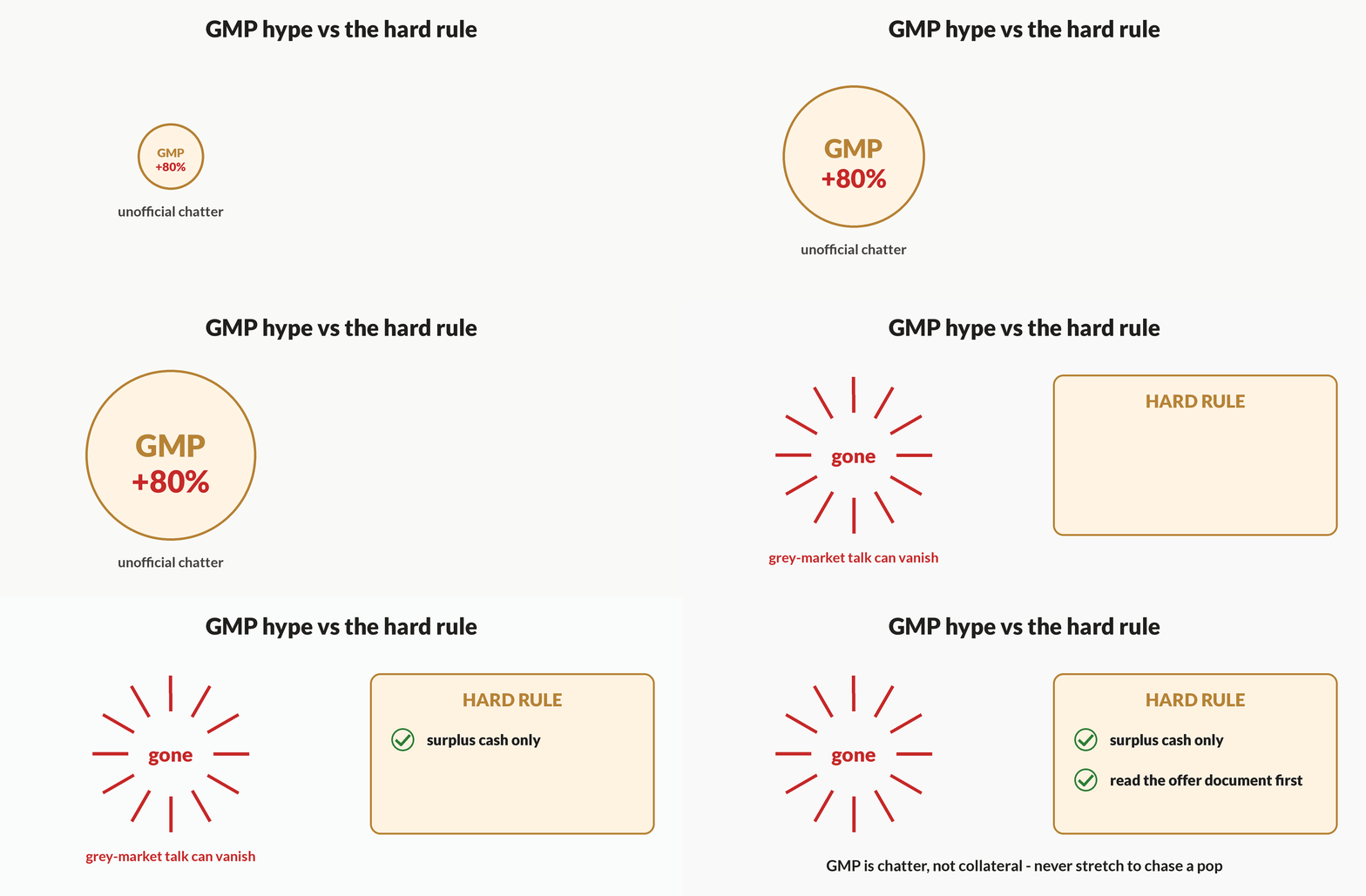
| Claim or resource | What it can tell you | What it cannot promise |
|---|---|---|
| Grey-market trade / GMP | Unauthorized, illegal and unprotected activity | Allotment or listing price |
| Tip-channel urgency | Someone wants action now | Investment merit |
| DRHP/RHP | Structured issuer disclosures | Future return or SEBI endorsement |
| Surplus-cash rule | Your funding guardrail | That the issue is suitable |
A channel offers a pre-listing grey-market trade and cites GMP +80% as a guaranteed listing gain. Which classification is accurate?
- Participate because GMP appears in the RHP
- Borrow because a high GMP guarantees allotment
- Treat SEBI filing as approval of the grey-market quote
- The trade is unauthorized, illegal and unprotected; GMP guarantees neither allotment nor listing gain
Grey-market trades are unauthorized and illegal and carry no regulatory protection. GMP is unofficial and guarantees neither allotment nor listing performance.
9Deep dive — proceeds-use taxonomy
Objects of the Issue traces fresh-issue money from gross proceeds through issue expenses to net proceeds, then into disclosed company uses. OFS seller proceeds stay outside this allocation.
Working capital funds the repeating operating cycle: cash → inventory → sale → receivable → cash. Cash pays for inventory, suppliers and wages; a receivable is customer money still owed. Working capital is not profit and is not a long-lived asset.
Capital expenditure, or capex, buys or builds assets used beyond one operating cycle, such as factories, machinery, stores or technology infrastructure. Expansion capex adds capacity; maintenance capex replaces or sustains existing capacity.
Debt repayment or prepayment reduces loan principal. A smaller principal can reduce future interest burden and cash outflow, subject to loan terms, but does not by itself prove better sales, margins, execution, valuation or business quality.
An acquisition is inorganic growth through buying a business or selected assets. It may add customers, products, technology or capacity; price, approvals, execution and integration remain risks.
General corporate purposes (GCP) is a disclosed flexible bucket, but its limit depends on the IPO segment. In a main-board IPO, GCP may be up to 25% of the amount raised by the issuer. In an SME IPO, GCP is limited to 15% of the amount raised by the issuer or ₹10 crore, whichever is lower. Read the issue's segment, amount, basis, governance and exact wording.
Filings may separately name research and development, product or brand activity, investment in a subsidiary, and issue expenses. Classify each line by what the filing actually says, then inspect timing, estimates, approvals and later deployment evidence.
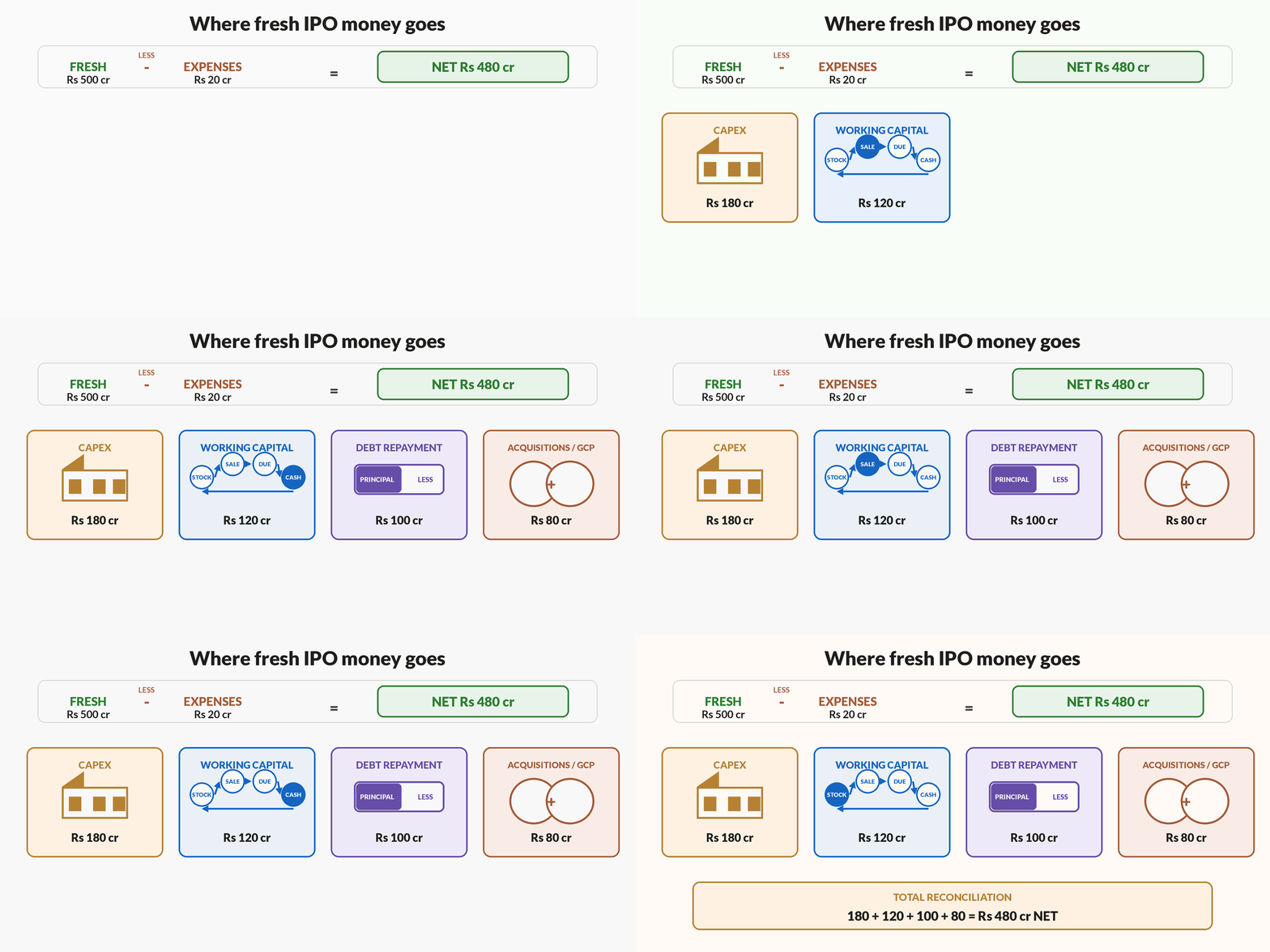
Reconcile the Objects allocation
- GrossStart with the fresh amount before costs; do not include OFS seller proceeds.
- NetSubtract issue expenses to find money available for stated company uses.
- AllocateMatch every net-proceeds rupee to named uses and the disclosed flexible bucket.
- VerifyCheck amount, horizon, estimates, approvals, risks and later deployment evidence.
| Purpose | Business effect | Question to ask |
|---|---|---|
| Working capital | Repeating operating cycle | What need and estimate support it? |
| Capex | Long-lived asset; expansion or maintenance | What, when, cost and approvals? |
| Debt repayment | Lower principal; possible interest/cash effect | Which facility and loan terms? |
| Acquisition | Purchased growth plus integration | Target, price, status and risks? |
| GCP | Flexible effect depends on deployment | How specific is the disclosure? |
Main-board example: reconcile a ₹1,000 crore fresh issue
A main-board IPO has gross fresh proceeds of ₹1,000 crore and issue expenses of ₹40 crore. Objects allocate ₹350 crore to capex, ₹220 crore to working capital, ₹250 crore to debt repayment and the balance to GCP. Does it reconcile, and is the GCP amount within the main-board limit?
- Net proceeds = ₹1,000 crore − ₹40 crore₹960 crore
- After capex: ₹960 crore − ₹350 crore₹610 crore remains
- After working capital: ₹610 crore − ₹220 crore₹390 crore remains
- After debt repayment: ₹390 crore − ₹250 crore₹140 crore remains for GCP
- Check: ₹350 + ₹220 + ₹250 + ₹140 crore₹960 crore = net proceeds
- Main-board GCP share of amount raised by issuer = ₹140 crore ÷ ₹1,000 crore × 10014%, within the 25% main-board limit
- SME comparison: lower of 15% of ₹1,000 crore and ₹10 crore₹10 crore; the ₹140 crore example must not be applied to an SME IPO
Pro tip. This is a main-board example. Always identify the segment before testing GCP: main-board uses the 25% issuer-raise limit; SME uses the lower of 15% of the issuer raise and ₹10 crore.
A main-board IPO raises ₹1,000 crore for the issuer and assigns ₹140 crore to GCP. Which reading is accurate?
- GCP is 14% of the issuer raise, within the 25% main-board limit; this does not establish SME compliance
- ₹140 crore is valid for every SME IPO
- GCP has no segment-specific limit
- The OFS amount determines the issuer's GCP limit
₹140 crore is 14% of the ₹1,000 crore issuer raise, within the 25% main-board limit. SME issues use the lower of 15% or ₹10 crore.
10Deep dive — ownership dilution
Absolute shares and percentage ownership are different units. Ownership percentage = shares held ÷ total shares × 100.
Fresh-issue dilution is a denominator change. If a promoter owns 60 of 100 shares, the stake is 60%. After 25 new public shares, the promoter can still own the same 60 shares while the total becomes 125 and the stake becomes 48%.
An OFS is different: total shares stay fixed while a seller's existing shares move to the public. In a hybrid, first add fresh shares to the denominator, then transfer OFS shares inside that enlarged total.
Always name the unit: share count, ownership percentage or cash. A fall from 60% to 48% is 12 percentage points; relative to the old 60% stake, it is 12 ÷ 60 = 20% relative dilution.
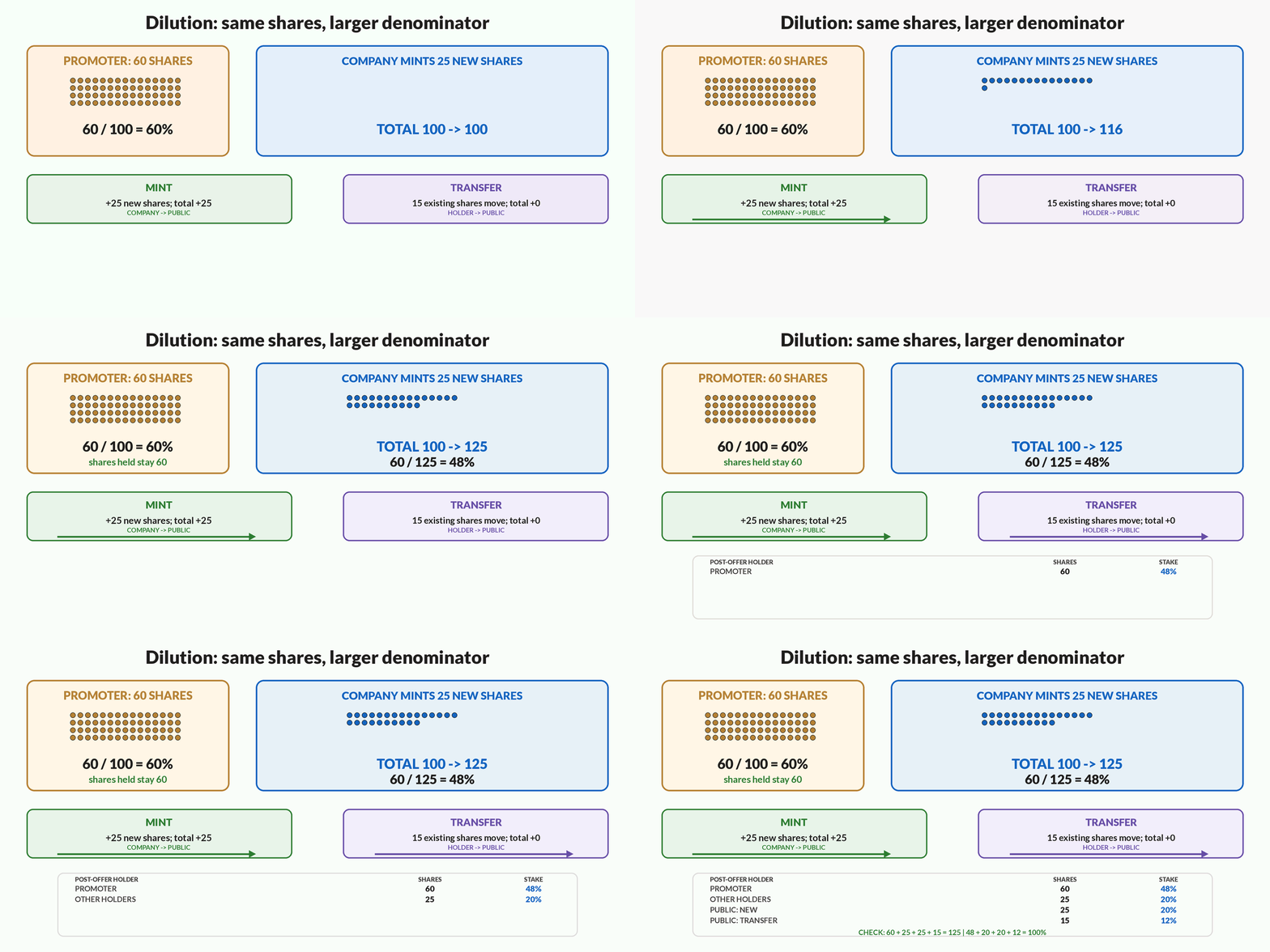
Build any post-offer cap table
- FreezeRecord each holder's absolute shares before any sale.
- EnlargePost total = pre total + new fresh shares; OFS shares add zero.
- TransferSubtract OFS shares from sellers and add those same shares to public.
- DivideFinal stake = final shares ÷ post total × 100; percentages must sum to 100%.
| Route | Absolute shares | Ownership percentage |
|---|---|---|
| Fresh, non-seller | Can stay unchanged | Can fall as total rises |
| OFS seller | Falls by shares sold | Falls within fixed total |
| Public via fresh | Receives new shares | Rises through issuance |
| Public via OFS | Receives existing shares | Rises through transfer |
Fresh dilution plus OFS transfer
Before the IPO: promoter 60, PE fund 20, others 20; total 100. The hybrid creates 25 new public shares and transfers 10 promoter plus 5 PE shares to the public.
- Fresh lane: 100 existing + 25 new125 total shares
- OFS lane: 10 promoter + 5 PE transfertotal remains 125
- Final counts: promoter 50, PE 15, others 20, public 25 + 1550 + 15 + 20 + 40 = 125
- Divide final counts by 12540%, 12%, 16%, 32%
- Check: 40 + 12 + 16 + 32100%
Pro tip. Public's 40 shares contain 25 new and 15 transferred shares; only the 25 enlarge the denominator.
11Deep dive — filing-stage anatomy
The Draft Red Herring Prospectus (DRHP) is the detailed draft offer document filed during SEBI's disclosure process. It starts the structured public record, but issue terms can still change.
The Red Herring Prospectus (RHP) is filed before the issue opens. It still omits the final issue price and final issue size. The price band may be disclosed in the RHP or separately announced, as applicable.
After book building determines the final issue price and final issue size, the issuer files the final Prospectus containing those particulars with the Registrar of Companies (RoC). Read the latest document available for the stage in front of you and compare material changes.
Use contents and search instead of reading hundreds of pages like a novel. Navigate through Business, Objects of the Issue, Offer and selling shareholders, Risks and litigation, Financial information, Basis for Issue Price, and document changes.
SEBI oversees the disclosure and regulatory process and may issue observations on a DRHP. That is not an endorsement of the business, investment merit, forecasts, valuation or future market outcome. The filing is a structured source, not a quality badge.
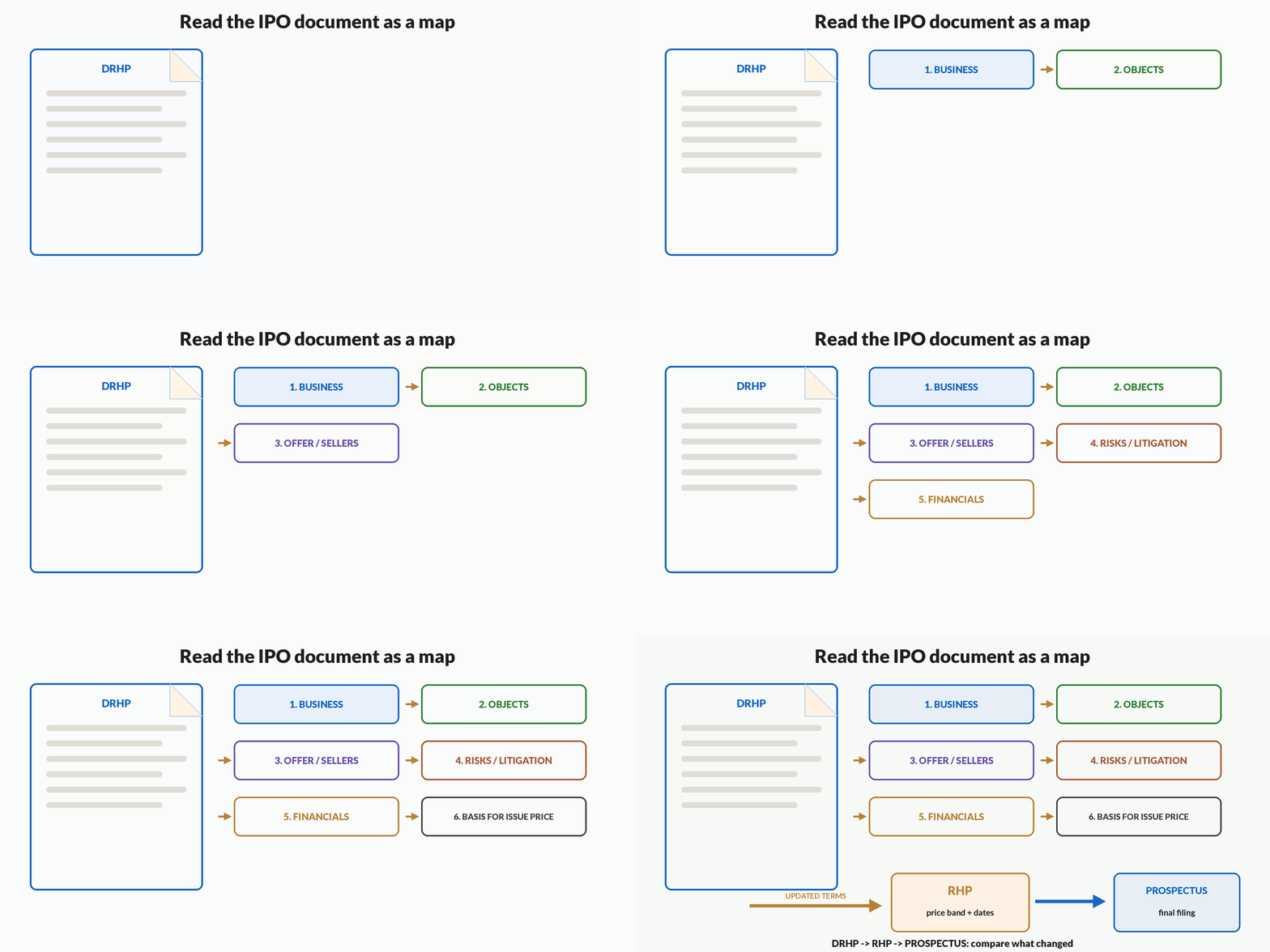
Seven-stop filing route
- StageIdentify DRHP, RHP or final Prospectus and note the filing date.
- NavigateSearch Business, Objects, Offer and sellers, Risks, Financials and Issue Price.
- CompareTrack changed disclosures, applicable price-band information, dates and offer terms.
- QualifyRHP lacks final price and size; final Prospectus carries them after book building.
| Document | Stage | What remains important |
|---|---|---|
| DRHP | Draft disclosure review | Terms may change |
| RHP | Before issue opens | Final price and final size are absent |
| Price band | RHP or separate announcement | Check the applicable disclosure |
| Final Prospectus | After book building; filed with RoC | Contains final price and issue size |
Book building is complete and the final issue price and final issue size are known. Where are those final particulars filed?
- Only in the DRHP
- In the final Prospectus filed with RoC
- In a GMP message
- In the ASBA mandate
The RHP still omits the final issue price and final issue size. After book building, the final Prospectus containing those particulars is filed with the Registrar of Companies.
12Deep dive — specificity and trend divergence
Risk Factors is management's disclosed map of what can go wrong, not a ceremonial warning page. Group risks by business dependence, regulation, customers or suppliers, operations, finance and the offer itself.
Rank a risk by possible severity and company-specific detail rather than page count. Read outstanding litigation beside it: parties, exposure where stated, current stage and possible business consequence. A long list is not automatically worse than a short one.
Write the business model in one sentence—who pays, for what, and why revenue repeats or fluctuates—then compare several years of revenue, profit, operating cash flow and debt together.
Rising revenue with falling profit can signal margin pressure; reported profit with weak operating cash flow deserves investigation; rising debt changes financing resilience. Direction, consistency and the filing's explanation matter more than one isolated number.
Separate recurring performance from one-time items. A one-off gain can lift profit without improving ordinary operations, while a one-off expense can depress one period without necessarily repeating. Read the notes before treating either as the ongoing run rate.
Customer or supplier concentration can make one relationship disproportionately important. Read the percentage, contract or dependency detail, alternatives and disclosed consequence instead of treating the number alone as a verdict.
After completing this evidence read, use the Selling Shareholders and Valuation deep dive for retained holdings and issue-price comparability.
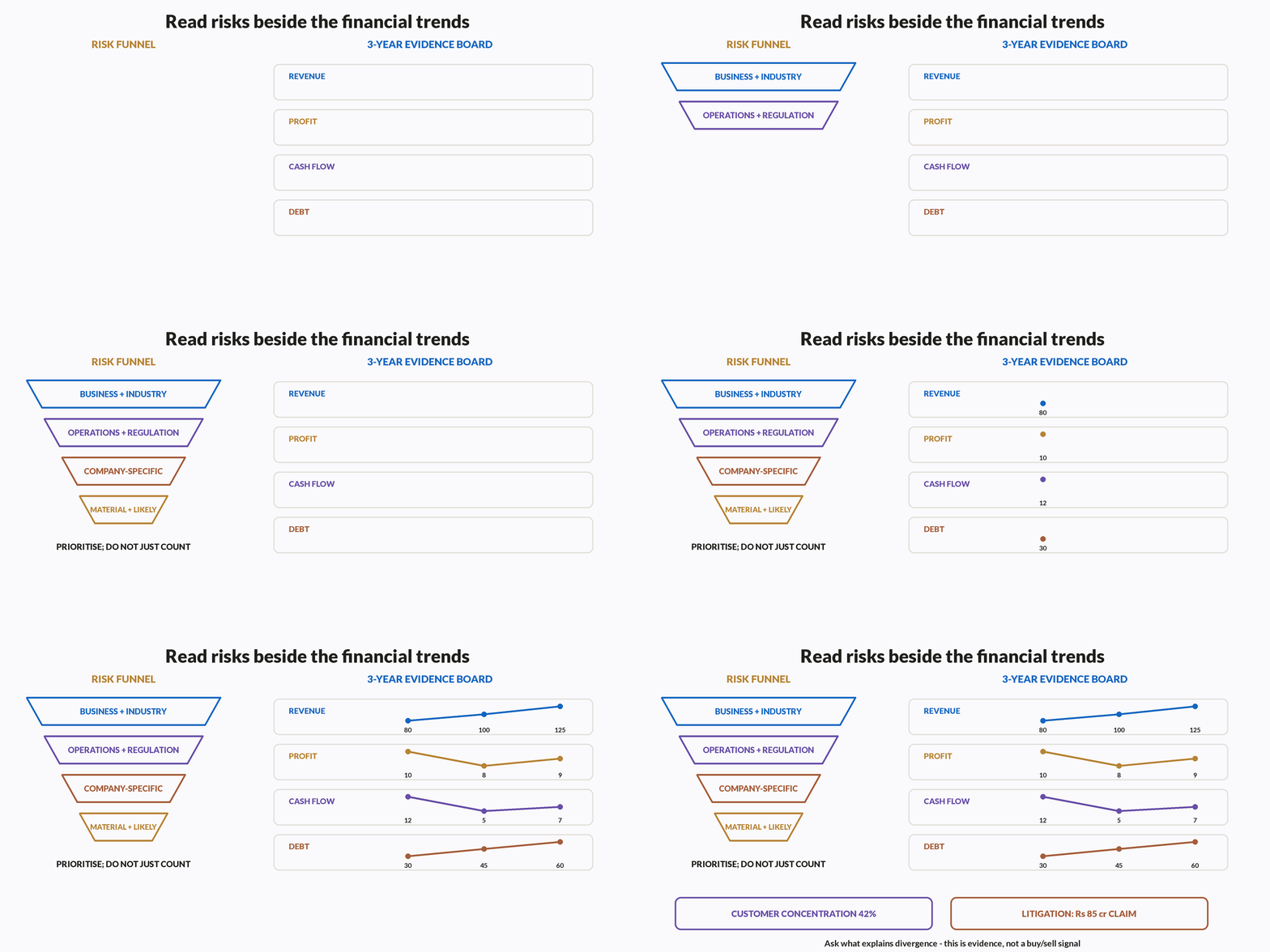
Turn disclosures into follow-up questions
- SpecifyName the company-specific event, dependency or litigation rather than counting generic risk pages.
- TrendCompare revenue, profit, operating cash flow and debt over several periods.
- NormalizeSeparate recurring operations from disclosed one-time gains or expenses.
- ConnectLink concentration, litigation and trend divergences to notes, severity and possible business effects.
| Observation | Follow-up | Do not conclude |
|---|---|---|
| Revenue up; profit down | Margins or cost mix? | Growth settles every concern |
| Profit up; cash flow weak | Cash conversion and working-capital notes? | Profit always equals cash |
| Debt rising | Purpose, cost, maturity and repayment capacity? | Debt alone decides quality |
| One-time gain or expense | What recurs after this period? | Reported profit is the run rate |
| Concentration or litigation | Dependency, exposure, stage and consequence? | A count alone decides materiality |
Revenue rises; profit and operating cash flow fall; debt rises; one customer supplies 42%; a tax appeal and one-time gain are disclosed. What deserves follow-up?
- Flag margins, cash conversion, leverage, concentration, litigation and the one-time gain for note-level follow-up without forcing a verdict
- Revenue growth and the one-time gain cancel every other disclosure
- Count the risk pages and ignore the financial notes
- Treat the filing as proof that every exposure is harmless
The disclosures create linked questions about recurring profitability, cash conversion, financing resilience, dependency and legal exposure. The excerpt alone does not settle the outcome.
13Deep dive — retention and metric alignment
The selling-shareholder table names each holder selling through the OFS, the number of shares offered, and pre-offer versus post-offer holdings. A fresh issue creates company shares and company proceeds; an OFS transfers named holders' existing shares and gross consideration belongs to those sellers.
Always distinguish the fraction of the seller's own holding sold from the seller's share of the total offer. Selling one quarter of a holding is not a full exit: calculate the retained post-offer holding before describing the transaction.
Seller identity, retained stake, lock-ins where disclosed, sale size and stated rationale provide ownership context. They do not by themselves prove confidence, distress, fair value or future performance.
Basis for Issue Price explains how the issuer presents price context. Common measures include earnings per share (EPS), return on net worth (RONW), net asset value (NAV), and price-to-earnings ratio (P/E), which compares price per share with EPS.
Align periods and definitions before comparing metrics. Check whether EPS is basic or diluted, whether a return measure uses comparable equity figures, and whether NAV and P/E use consistent dates and share counts.
A listed peer is useful only when its business model, scale, growth profile, leverage, profitability and accounting period are genuinely comparable. The section explains the issuer's price case; it does not certify that the price is cheap, fair or expensive.
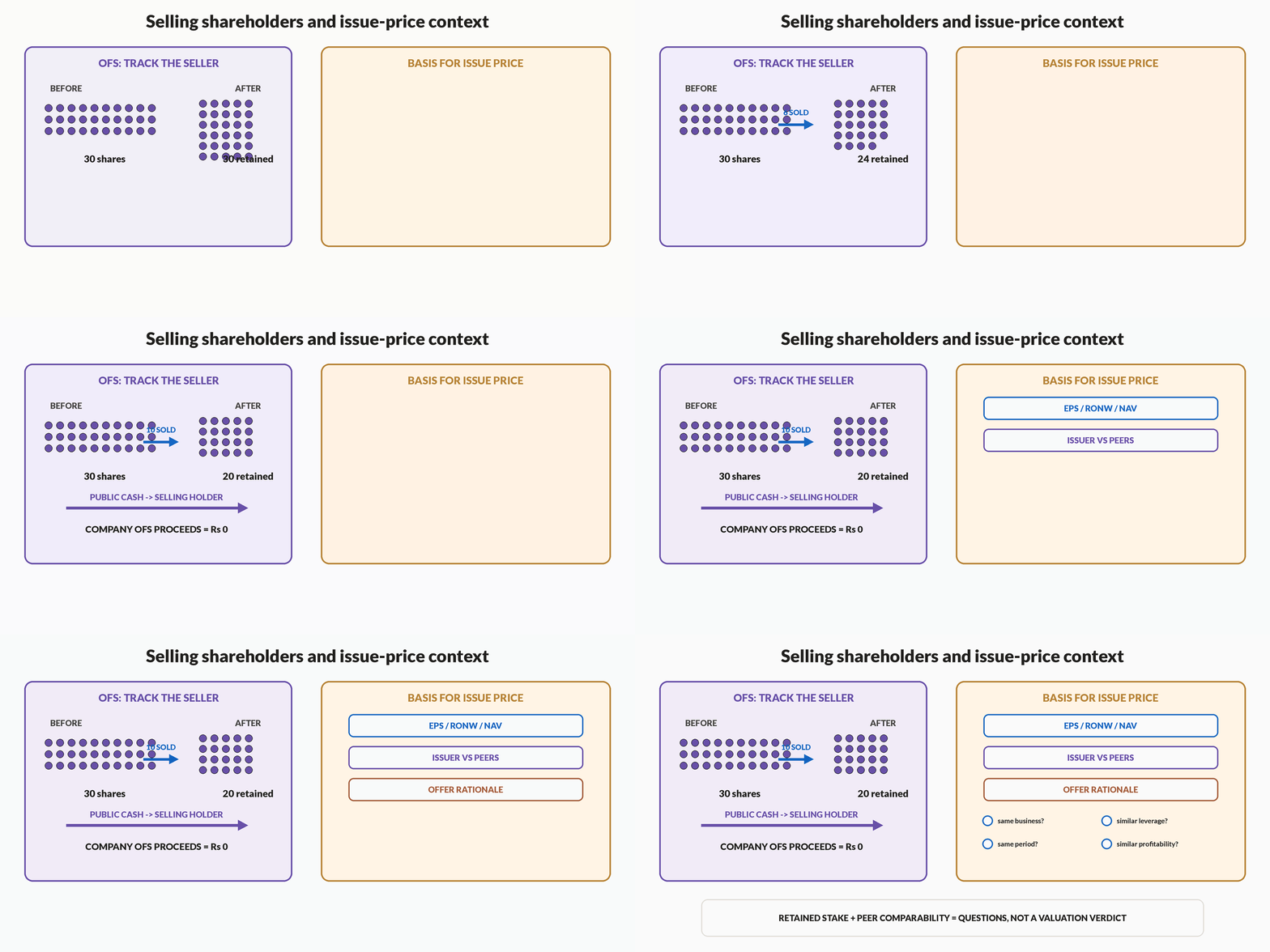
Read seller retention and price context
- Name sellersExtract each seller's pre-offer holding and the existing shares offered through OFS.
- Calculate retentionPost-offer holding = pre-offer holding − shares sold; state both the fraction sold and retained.
- Align metricsExpand EPS, RONW, NAV and P/E, then match periods, definitions and share-count bases.
- Test peersCompare business, scale, growth, leverage and profitability before treating a listed company as a peer.
| Disclosure | Extract | Avoid claiming |
|---|---|---|
| Selling shareholders | Pre, sold, post and retained fraction | Any sale means full exit |
| Fresh versus OFS | Company proceeds versus seller consideration | Total IPO size funds company |
| EPS / RONW / NAV / P/E | Definition, period and share-count basis | One metric certifies value |
| Peer comparison | Comparable business and financial profile | Any listed company is a valid peer |
Describe a partial seller exit precisely
A promoter owns 30 shares before the IPO and sells 10 existing shares through OFS. What remains, and what fractions were sold and retained?
- Post-offer holding = 30 − 1020 shares retained
- Retained fraction = 20 ÷ 30 × 10066.7% of the original holding retained
- Sold fraction = 100% − 66.7%33.3% of the original holding sold
Pro tip. Say “sold one-third and retained two-thirds,” not “the promoter exited.” OFS changes seller ownership; it does not become company proceeds.
Notes
- IPO = first public offer that enables listing; primary market first, secondary after listing.
- Fresh issue: new shares, cash to company. OFS: existing shares, cash to selling shareholders.
- Hybrid IPOs mix both — always read Objects of the Issue and the OFS table.
- Allotment is not guaranteed; listing can be below issue price; GMP is unofficial.
Exam traps & shortcuts
- Follow the money: fresh → company; OFS → sellers.
- GMP screenshot ≠ prospectus promise.
- Surplus cash only — never rent money.
Reference tables
| Route | Shares | Gross cash destination | Ownership effect |
|---|---|---|---|
| Fresh | New | Company before costs | Total rises; percentages may dilute |
| OFS | Existing | Selling shareholders | Fixed total; ownership transfers |
| Hybrid | Both | Split company and sellers | Add fresh once, then transfer OFS |
| Deep dive | What it adds |
|---|---|
| IPO money uses | Gross-to-net allocation and segment-specific GCP limits |
| Ownership dilution | Fresh, OFS and hybrid cap-table arithmetic |
| DRHP, RHP and Prospectus | Document stages, seven-stop route and SEBI qualification |
| Risk and financial reading | Specific risks, trends, one-time items and follow-up questions |
| Selling shareholders and valuation | Retention, issue-price metrics and peer comparability |
Recap
Core journey first; then use the five Deep dives.
- Private → listed
- The ownership market opens.
- Primary → secondary
- Apply to the issue; trade after listing.
- Fresh
- New shares; company receives gross proceeds before costs.
- OFS
- Existing shares transfer; gross consideration belongs to sellers.
- Hybrid
- Add fresh shares once; transfer OFS shares inside the total.
- Documents
- Use filed disclosures; SEBI review is not endorsement.
- ASBA + UPI
- UPI may authorize an eligible ASBA block; it is not an alternative.
- Allotment
- Successful retail allotment starts at the minimum lot subject to availability; remaining shares are proportionate as applicable.
- Deep dive: money
- Reconcile gross, expenses, net and uses; apply the correct GCP segment limit.
- Deep dive: ownership
- Name shares, percentage points and relative dilution precisely.
- Deep dive: filings
- RHP lacks final price and size; final Prospectus follows book building.
- Deep dive: evidence
- Connect specific risks, trends, one-time items, concentration and litigation.
- Deep dive: sellers + value
- Calculate retention; align EPS, RONW, NAV, P/E and genuine peers.
- Grey market
- Unauthorized, illegal and without regulatory protection.
Practise IPOs: Going Public
Reading is free and needs no account. Practice, mocks and progress live in the app.
- 36 exam-style questions on this topic, with explanations
- A 8-question practice set that ends the chapter
- Timed mocks scored with the real marking scheme
- Readiness tracked per topic, kept on your device