Retail Investing · Indian Securities Markets
Orders and Settlement Basics
Market vs limit orders, and the T+1 settlement idea for equity cash trades.
Seven concepts. Order types control price behaviour; settlement timing controls when cash and securities finally complete. Retail mistakes often confuse a fill with completed settlement.
- Retail Investing
- Easy level
- 7 concepts
- 6 practice questions
1Market orders
A market order says: buy or sell now at the best available prices in the order book. You prioritise speed of execution over a guaranteed price.
In thin stocks, market orders can slip badly; in liquid names, ordinary retail size usually fills near the touch.
Figure. Illustrative slippage on the same market order: a market order buys speed, and in a thin book that speed is paid for in price.
| Market order | Trait |
|---|---|
| Priority | Get filled quickly |
| Price | Not guaranteed in advance |
| Risk | Slippage in illiquid names |
A market order prioritises
- Immediate execution over a fixed price
- A guaranteed limit price with possible no-fill
- Skipping the exchange entirely
Market = speed; price can slip.
2Limit orders
A limit order sets the worst price you will accept: buy at or below your limit; sell at or above your limit. You may get no fill if the market never reaches you.
Limits protect against bad prices; they do not guarantee that the trade happens.
Figure. The order rests until price comes to you: it fills at the touch of the limit line - and a dip that never happens is a fill that never happens.
| Limit order | Trait |
|---|---|
| Buy limit | At or below your price |
| Sell limit | At or above your price |
| Trade-off | Price control vs possible no-fill |
A buy limit order at ₹100 means you
- Will not buy above ₹100 (order rules permitting)
- Must buy immediately at any price
- Are lending overnight call money
Buy limit caps the purchase price.
3The order book idea
The order book shows resting bids and offers. Your limit order joins that book; market orders consume liquidity from it.
You do not need to become a market-microstructure expert; you do need to respect that someone must be on the other side.
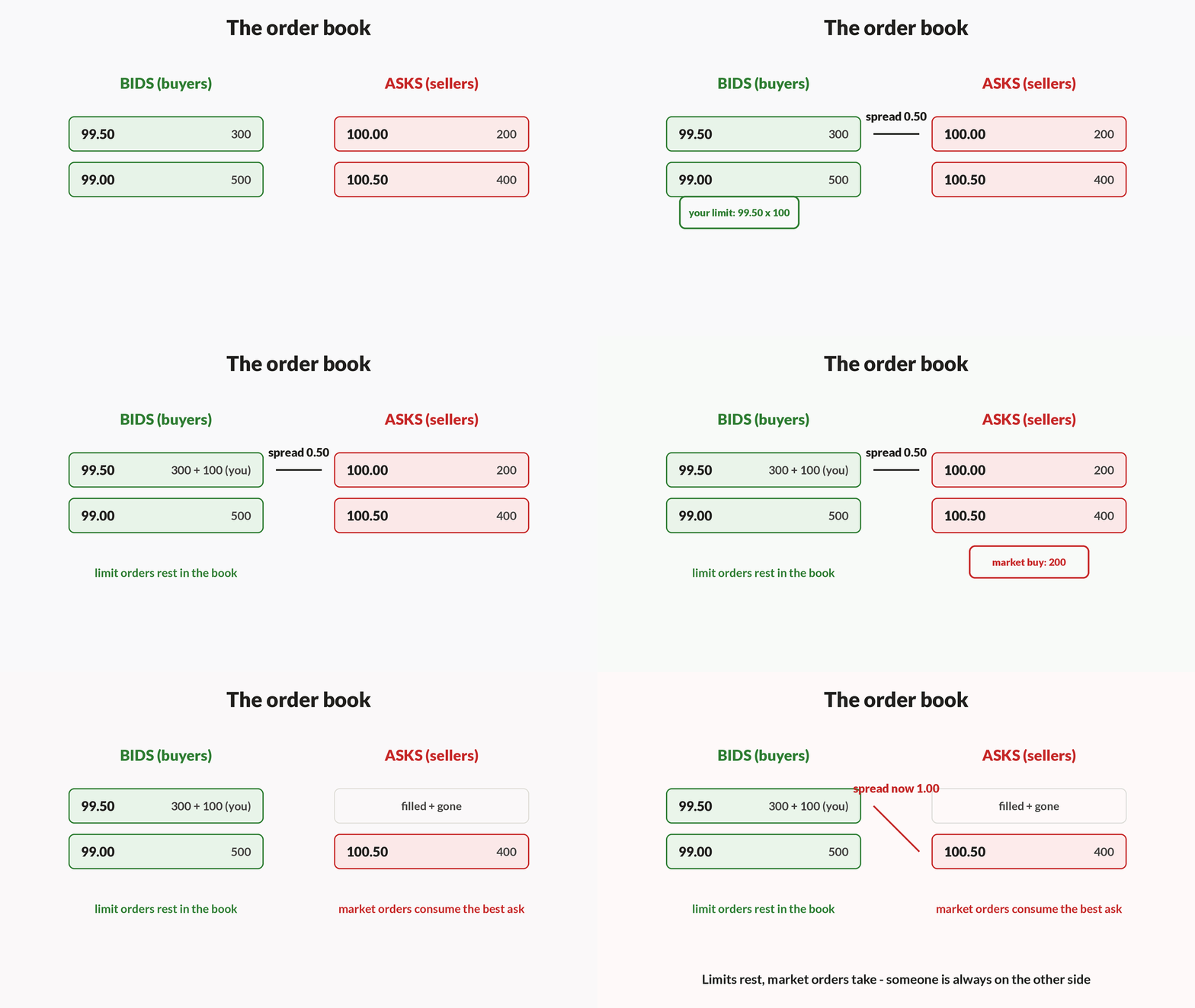
| Side | Meaning |
|---|---|
| Bid | Buy interest resting or hitting |
| Ask / offer | Sell interest |
| Spread | Gap between best bid and ask |
The gap between the best bid and best ask is called the
- Spread
- Sensex divisor
- KYC hold
Bid-ask spread.
4T+1 settlement (equity cash)
For Indian equity cash market trades, settlement follows a T+1 cycle in the current regime: trade day T, completion on the next working day as per settlement calendars.
Exact cut-offs and holidays follow exchange calendars — check official notices when timing matters for funds.
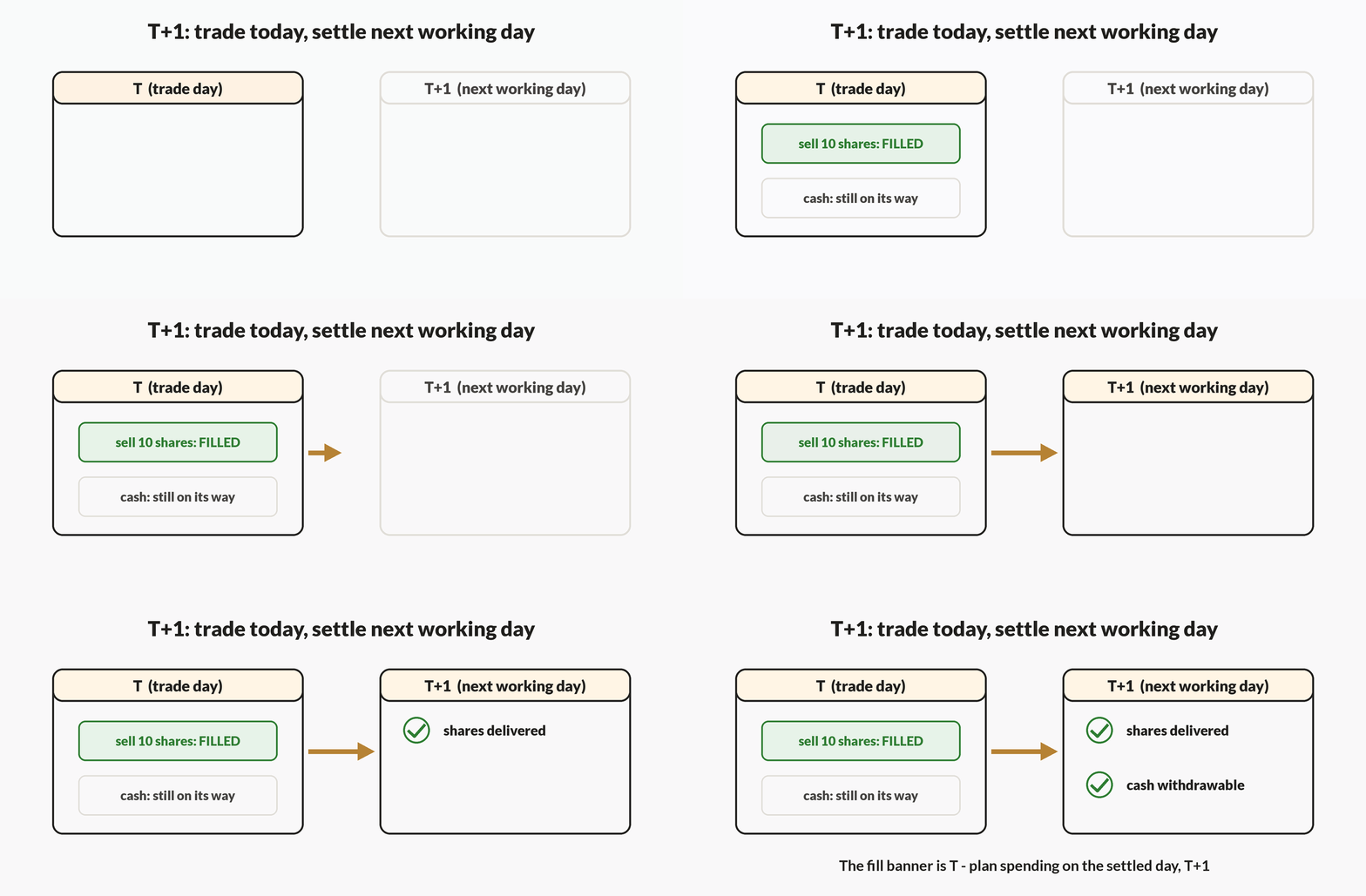
| Day | Idea |
|---|---|
| T | Trade date — orders match |
| T+1 | Settlement completion for equity cash (current regime) |
| Holiday | Follow exchange settlement calendar |
Under T+1 equity cash settlement, completion is aimed for
- The next working day after the trade (per calendar rules)
- One year later only
- Never — trades are only notional
T+1 = next working day settlement cycle for equity cash.
5Fill versus settlement
A fill means your order traded. Settlement is when securities and funds obligations complete under clearing rules.
Do not spend sale proceeds as if settled until your broker's available balance reflects completed settlement.
Figure. Two different moments: the fill banner and the settled balance. Spending connects only to the second.
| Moment | Meaning |
|---|---|
| Fill | Trade matched |
| Settlement | Obligations completed |
| Available cash | Follow broker's settled/withdrawable figures |
Seeing an immediate trade confirmation means
- The order filled — settlement still follows the cycle
- SEBI has credited guaranteed profit
- KYC is optional forever
Fill ≠ full settlement completion.
6Charges that reduce proceeds
Brokerage, exchange fees, taxes, and other levies reduce what you keep. Know the all-in cost before high-frequency trading fantasies.
Contract notes itemise charges — read them once instead of guessing.
Figure. At an illustrative all-in 0.25% per round trip, churn compounds into a real drag: 50 trips a year burns 12.5% of capital before any market move.
| Cost type | Cue |
|---|---|
| Brokerage | Broker's fee schedule |
| Statutory / exchange | Non-broker market charges |
| Net proceeds | What remains after all costs |
All-in trading costs
- Reduce your net returns versus the headline price move
- Are illegal on every trade
- Are paid by SEBI to you as a rebate always
Costs matter to net returns.
7Cash equity before complex products
Master cash equity orders and settlement before leverage, F&O, or exotic products. Complexity multiplies mistakes when the basics are fuzzy.
This course keeps the foundation on cash markets and mutual funds.
Figure. Complexity multiplies mistakes - leverage waits until the cash-market basics are boring.
| Sequence | Why |
|---|---|
| Cash equity + MF first | Learn fills, settlement, costs |
| Derivatives later | Leverage amplifies errors |
| Course scope | Fundamentals before complexity |
A beginner should first become comfortable with
- Cash equity orders, demat, and settlement basics
- Maximum leverage overnight options
- Unregistered crypto tips only
Foundation before leverage.
Notes
- Market orders seek speed; limit orders seek price control.
- Spread is the bid-ask gap.
- Equity cash settlement follows T+1 in the current regime.
- Fill is not the same as completed settlement.
- Costs and product complexity deserve respect.
Formulas
- Buy limit ≤ limit price; sell limit ≥ limit price.
- T = trade date; T+1 = settlement day (working-day calendar).
Exam traps & shortcuts
- Use limits in illiquid names.
- Check withdrawable balance, not just the fill banner.
Reference tables
| Peg | Fact |
|---|---|
| Market | Speed now; price not guaranteed. |
| Limit | Price cap/floor; may not fill. |
| Spread | Best ask minus best bid. |
| T+1 | Equity cash settlement next working day (regime cue). |
| Fill ≠ settle | Wait for settled balances before spending proceeds. |
| Costs | Brokerage and levies cut net returns. |
Recap
Keep these pegs.
- Market
- Speed now; price not guaranteed.
- Limit
- Price cap/floor; may not fill.
- Spread
- Best ask minus best bid.
- T+1
- Equity cash settlement next working day (regime cue).
- Fill ≠ settle
- Wait for settled balances before spending proceeds.
- Costs
- Brokerage and levies cut net returns.
Practise Orders and Settlement Basics
Reading is free and needs no account. Practice, mocks and progress live in the app.
- 6 exam-style questions on this topic, with explanations
- A 6-question practice set that ends the chapter
- Timed mocks scored with the real marking scheme
- Readiness tracked per topic, kept on your device