Retail Investing · Mutual Funds & SIPs
ETFs (Exchange-Traded Funds)
Wrapper, trading route, creation/redemption and liquidity mechanics.
ETFs (Exchange-Traded Funds) is taught as investor education, not a recommendation. Use the mandate, current disclosures and your own horizon; regulatory facts are stated as of 4 Aug 2026.
- Retail Investing
- Easy level
- 5 concepts
- 5 practice questions
1ETF as a fund wrapper
An ETF is a collective investment scheme whose units are listed and trade on an exchange during market hours.
The wrapper can hold equity, debt, commodity or other permitted exposures; ETF does not itself mean one asset class.
Figure. Read the rails as separate decision lenses; no label alone determines return, risk, or tax.
| Lens | What to read |
|---|---|
| Portfolio | Underlying basket or strategy |
| Unit | A claim on the fund |
| Venue | Listed exchange trading |
ETF primarily describes
- A fund wrapper traded on exchange
- Only an equity strategy
- A fixed deposit
ETF is the exchange-traded wrapper.
2Retail exchange route
Retail investors normally place orders through a broker, receive units in demat and face the available order book.
Order type, spread and market hours therefore matter in addition to the scheme's NAV and expense ratio.
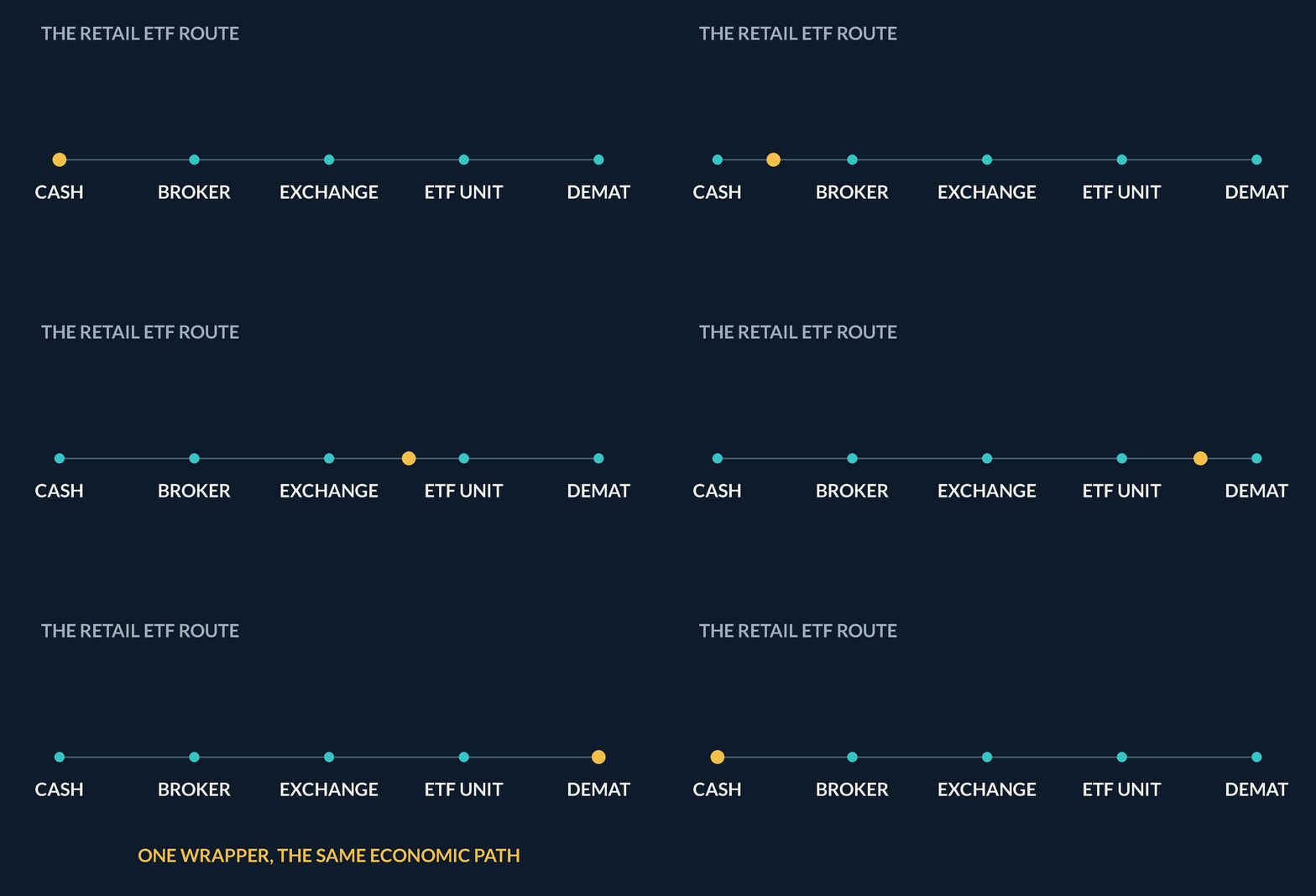
| Lens | What to read |
|---|---|
| Order | Broker to exchange |
| Execution | Available bid and ask |
| Holding | ETF units in demat |
A retail ETF purchase normally executes
- On the exchange order book
- Directly with the index committee
- At a guaranteed NAV
Retail uses the secondary market.
3Creation and redemption mechanism
Authorised participants and large counterparties can exchange prescribed security baskets or cash for creation units, and reverse the process on redemption.
That primary-market mechanism helps connect ETF supply and price with portfolio value, but it does not promise a zero premium or discount.
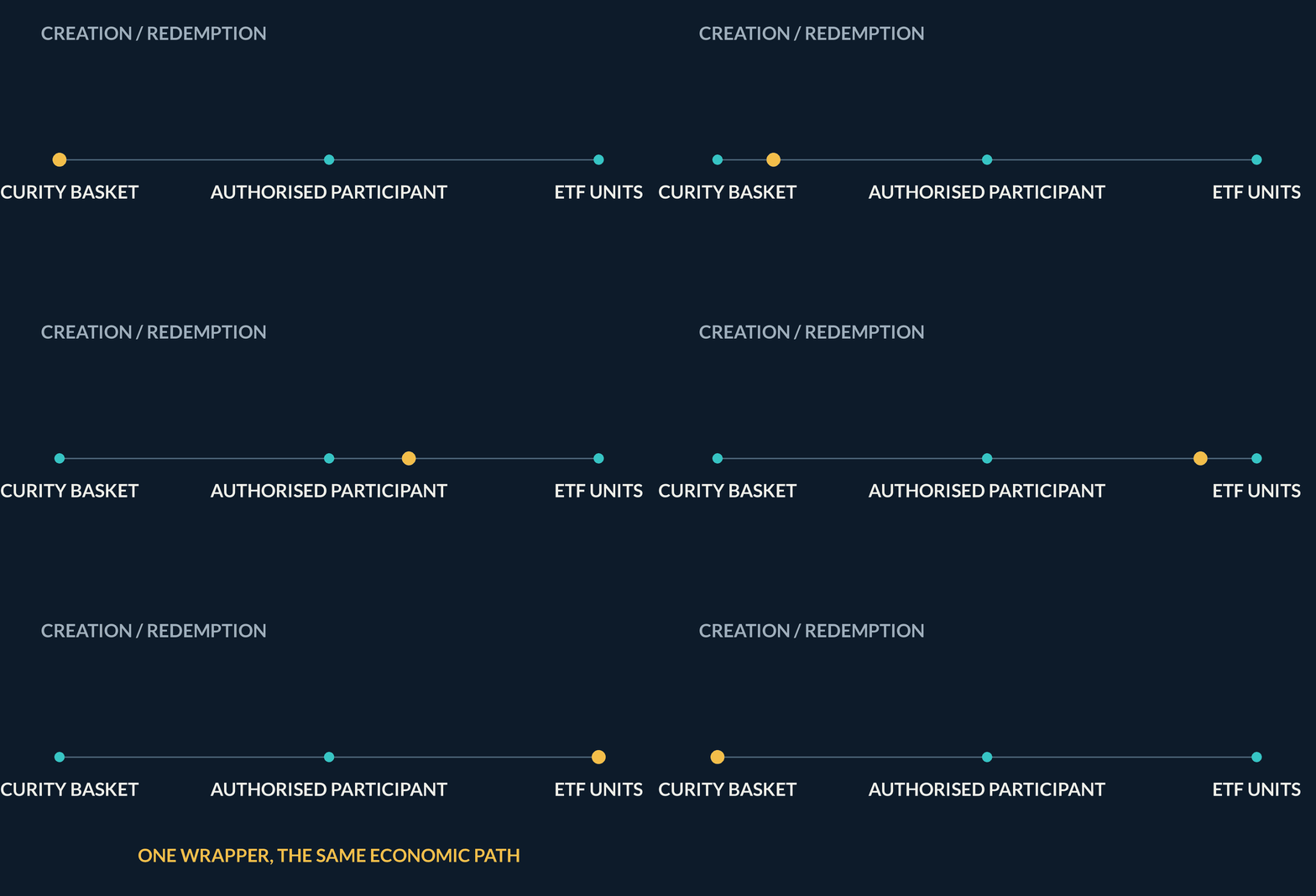
| Lens | What to read |
|---|---|
| Create | Basket or cash becomes ETF units |
| Redeem | ETF units return basket or cash |
| Link | Arbitrage can align price and value |
Creation/redemption mainly helps
- Connect ETF supply with portfolio value
- Guarantee daily profit
- Remove market closures
The mechanism supports price alignment.
4Spread and displayed depth
The bid-ask spread is the immediate gap between available buy and sell quotes; displayed depth shows quantity near those prices.
A narrow quote with little depth can still move on a larger order, so inspect both and consider limit orders.
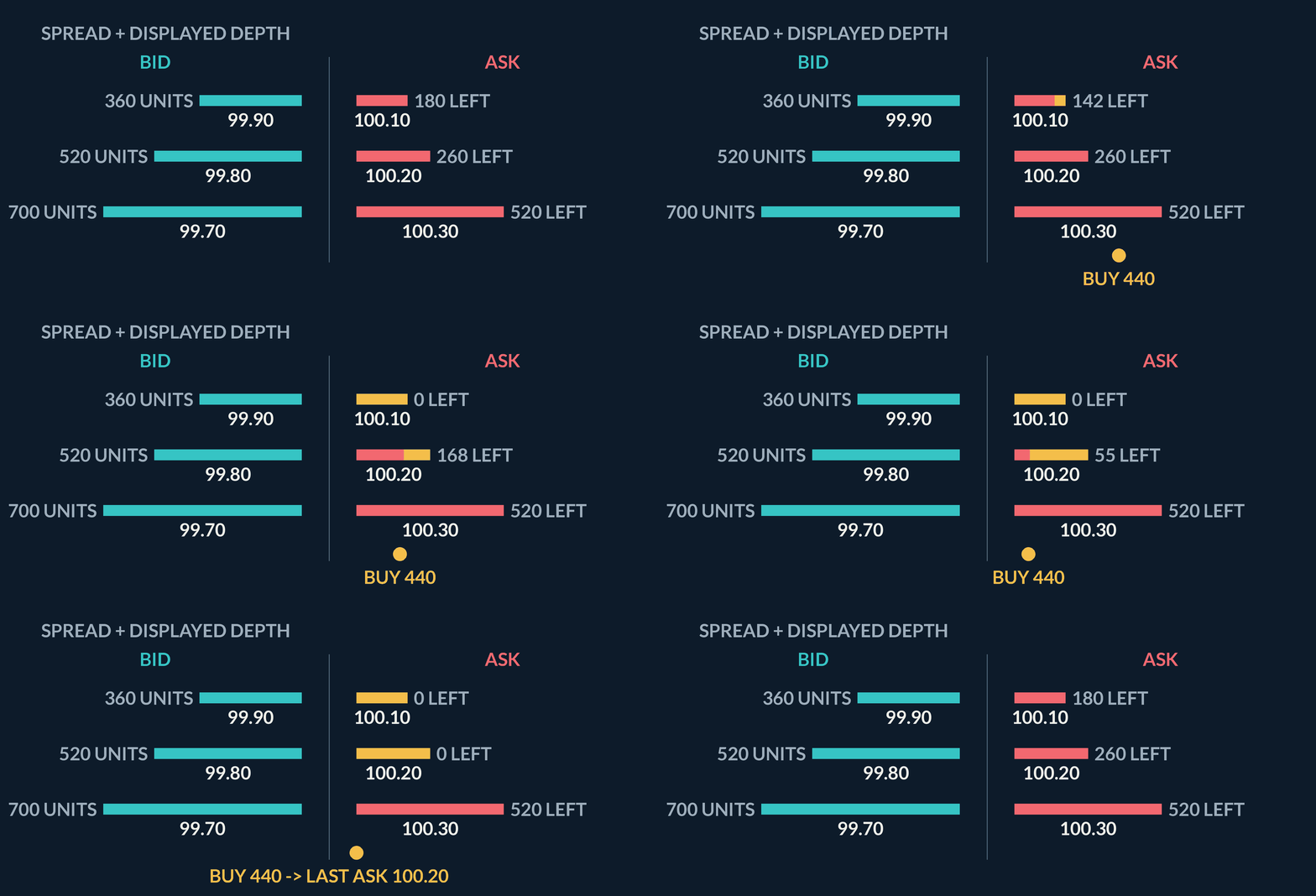
| Lens | What to read |
|---|---|
| Bid | Best displayed buyer |
| Ask | Best displayed seller |
| Depth | Quantity available near quotes |
A narrow spread with thin depth means
- A larger order may still move price
- Unlimited liquidity
- NAV cannot change
Depth matters beyond the top quote.
5Two liquidity layers
ETF liquidity comes from secondary-market trading and from the liquidity of the underlying basket through creation/redemption.
Screen volume alone can understate accessible liquidity, while an illiquid or closed underlying market can weaken the second layer.
Figure. Read the rails as separate decision lenses; no label alone determines return, risk, or tax.
| Lens | What to read |
|---|---|
| Secondary | Investors trade ETF units |
| Primary | Basket creation/redemption |
| Constraint | Underlying market conditions |
ETF liquidity depends on
- Both unit trading and underlying basket liquidity
- Screen volume only
- NAV publication only
There are two connected layers.
Notes
- An ETF is a collective investment scheme whose units are listed and trade on an exchange during market hours.
- Retail investors normally place orders through a broker, receive units in demat and face the available order book.
- Authorised participants and large counterparties can exchange prescribed security baskets or cash for creation units, and reverse the process on redemption.
- The bid-ask spread is the immediate gap between available buy and sell quotes; displayed depth shows quantity near those prices.
- ETF liquidity comes from secondary-market trading and from the liquidity of the underlying basket through creation/redemption.
Formulas
- Category name ≠ economic exposure ≠ tax classification
- Read mandate + portfolio + costs + liquidity
Exam traps & shortcuts
- Separate the product wrapper, investment strategy and tax classification.
- Treat every dated regulatory fact as reviewable, not permanent.
Reference tables
Use this map before comparing scheme names or trailing returns.
| Concept | Primary question |
|---|---|
| ETF as a fund wrapper | Underlying basket or strategy |
| Retail exchange route | Broker to exchange |
| Creation and redemption mechanism | Basket or cash becomes ETF units |
| Spread and displayed depth | Best displayed buyer |
| Two liquidity layers | Investors trade ETF units |
Recap
Keep the axes separate and re-check dated documents.
- ETF as a fund wrapper
- An ETF is a collective investment scheme whose units are listed and trade on an exchange during market hours.
- Retail exchange route
- Retail investors normally place orders through a broker, receive units in demat and face the available order book.
- Creation and redemption mechanism
- Authorised participants and large counterparties can exchange prescribed security baskets or cash for creation units, and reverse the process on redemption.
- Spread and displayed depth
- The bid-ask spread is the immediate gap between available buy and sell quotes; displayed depth shows quantity near those prices.
- Two liquidity layers
- ETF liquidity comes from secondary-market trading and from the liquidity of the underlying basket through creation/redemption.
Practise ETFs (Exchange-Traded Funds)
Reading is free and needs no account. Practice, mocks and progress live in the app.
- 5 exam-style questions on this topic, with explanations
- A 5-question practice set that ends the chapter
- Timed mocks scored with the real marking scheme
- Readiness tracked per topic, kept on your device