Retail Investing · Mutual Funds & SIPs
International / Overseas Funds
Access routes, wrapper layers, currency and concentration limits.
International / Overseas Funds is taught as investor education, not a recommendation. Use the mandate, current disclosures and your own horizon; regulatory facts are stated as of 4 Aug 2026.
- Retail Investing
- Easy level
- 5 concepts
- 5 practice questions
1Indian access routes to overseas assets
Indian mutual-fund investors can obtain overseas exposure through domestic schemes that buy foreign securities, overseas funds or overseas ETFs, subject to mandate and available limits.
The route can be an index fund, active fund, ETF or FoF; wrapper and strategy must be identified separately.
Figure. Read the rails as separate decision lenses; no label alone determines return, risk, or tax.
| Lens | What to read |
|---|---|
| Direct portfolio | Domestic scheme buys foreign securities |
| Feeder/FoF | Buys overseas fund or ETF units |
| ETF/index | Rule-based overseas exposure |
Overseas exposure can arrive through
- Several wrappers and strategies
- Only one mandatory FoF
- A guaranteed currency hedge
Read the actual access route.
2Wrapper layers and pass-through risk
A feeder or FoF adds an Indian wrapper above an overseas fund or ETF, while a direct overseas portfolio has fewer fund layers.
Layers affect costs, valuation timing, liquidity and operational dependencies even when the final equity exposure looks similar.
Figure. Read the rails as separate decision lenses; no label alone determines return, risk, or tax.
| Lens | What to read |
|---|---|
| Indian wrapper | Investor transaction and NAV |
| Overseas vehicle | Underlying portfolio process |
| Pass-through | Costs and risks travel through |
Two overseas schemes with similar holdings can differ because
- Their wrapper layers differ
- Currency stops moving
- All costs are identical
Structure changes implementation.
3The currency round trip
An unhedged Indian investor's INR return combines the overseas asset's local-currency return with the INR movement against that currency.
Currency appreciation can add to or subtract from the asset result; hedged share classes or derivatives introduce hedge cost and basis risk.
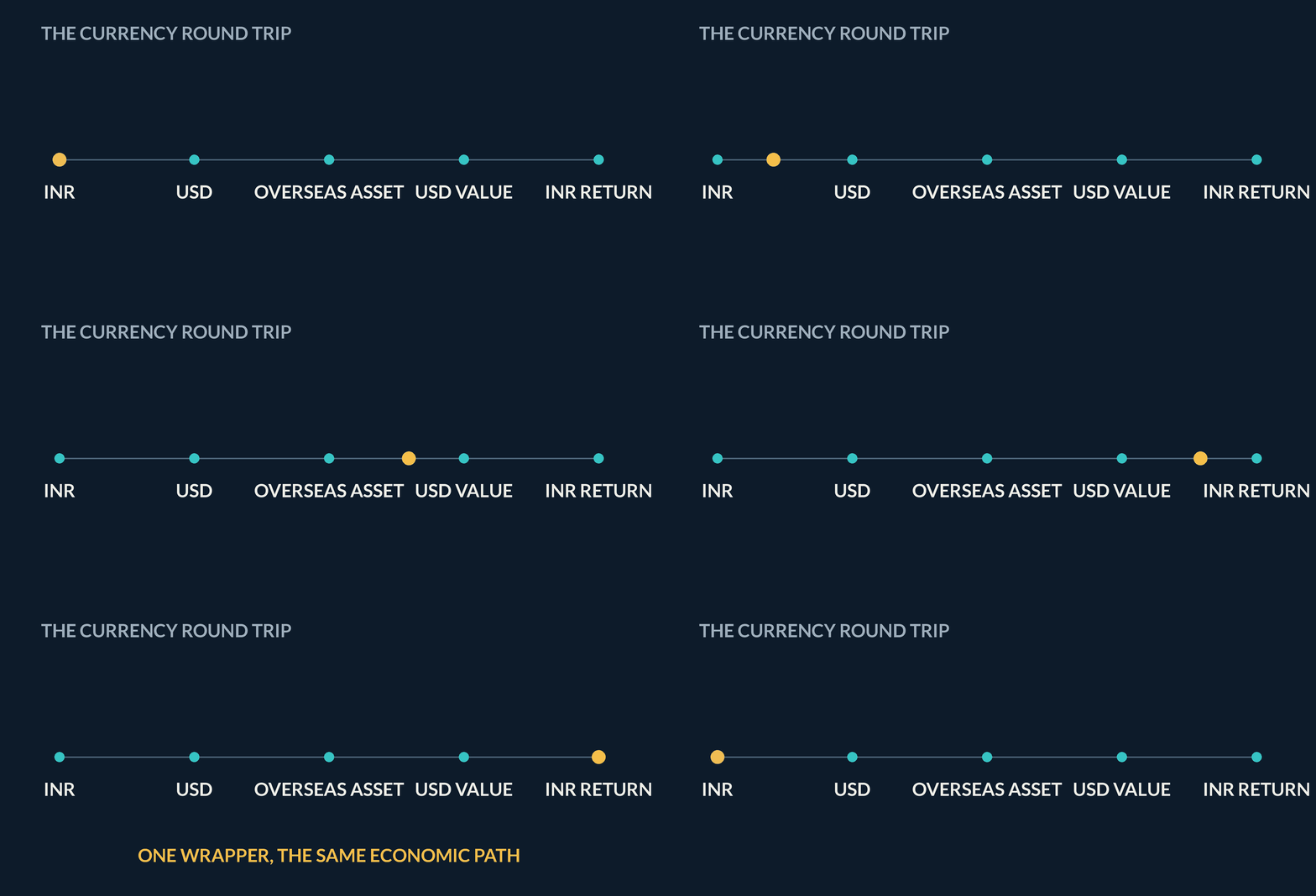
| Lens | What to read |
|---|---|
| Asset | Local-market return |
| FX | Currency translation into INR |
| Hedge | Cost and basis risk if used |
If the asset rises but its currency weakens versus INR, INR return can be
- Lower than the local-currency return
- Guaranteed higher
- Unaffected in every scheme
Currency translation changes the result.
4Geography, sector and index concentration
A country, region or technology index can be less diversified than the word international suggests.
Inspect constituent count, sector weights, mega-cap concentration and overlap with Indian holdings rather than treating foreign as a single asset class.
Figure. Read the rails as separate decision lenses; no label alone determines return, risk, or tax.
| Lens | What to read |
|---|---|
| Geography | Country or regional scope |
| Sector | Technology or other tilts |
| Holdings | Constituent and mega-cap concentration |
International automatically means broadly diversified?
- No; inspect scope and concentration
- Yes, by definition
- Only for FoFs
Foreign exposure can still be narrow.
5Industry limits and subscription gates
As of 4 Aug 2026, broad overseas investment limits are USD 7 billion industry-wide and USD 1 billion per mutual fund; the separate overseas-ETF limits are USD 1 billion industry-wide and USD 300 million per mutual fund.
Capacity allocation and AMC notices can make scheme subscriptions open, capped, paused or reopened at different times; never generalise one notice to all schemes.
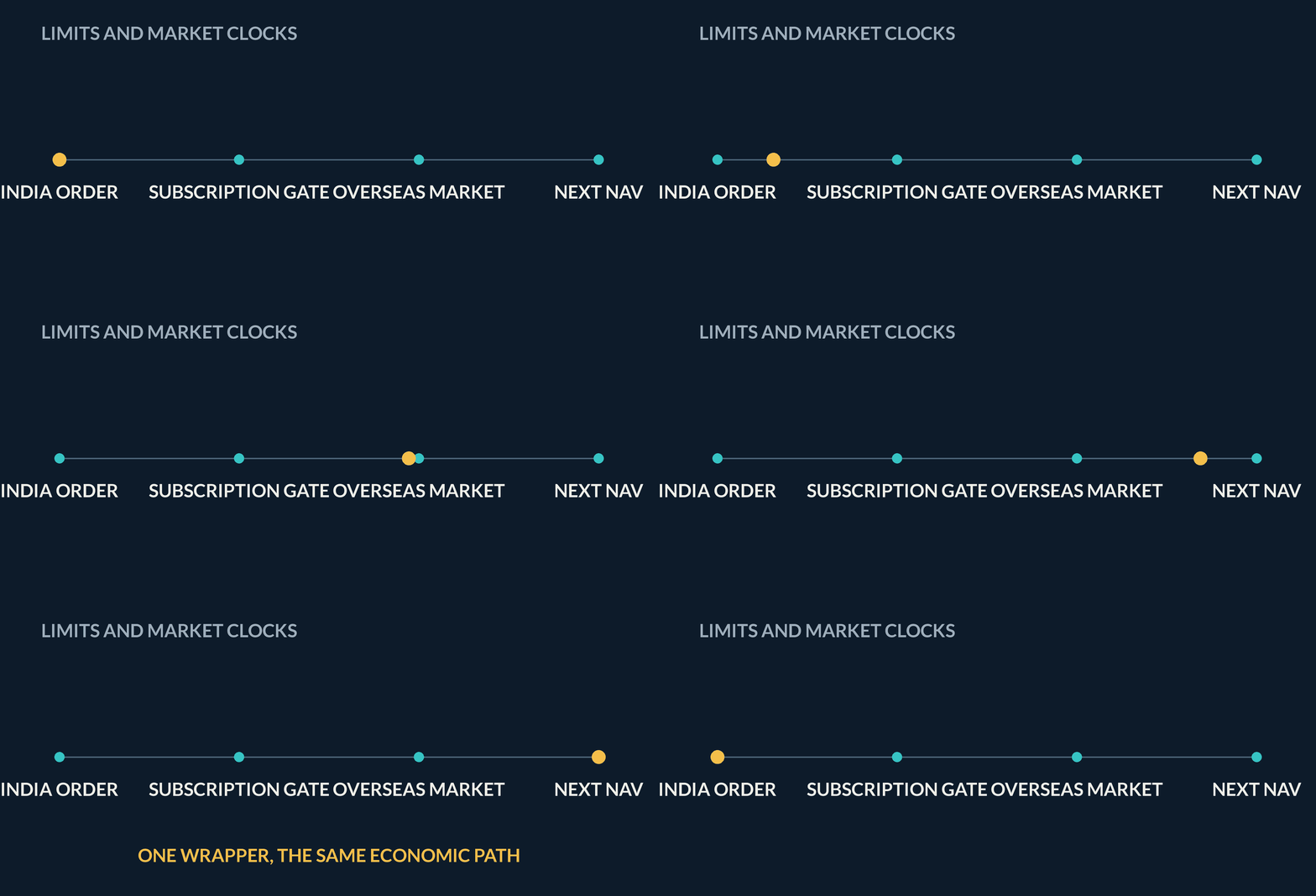
| Lens | What to read |
|---|---|
| Broad overseas | USD 7bn industry / USD 1bn per MF |
| Overseas ETF | USD 1bn industry / USD 300m per MF |
| Investor action | Check current scheme notice |
Can one assume every overseas scheme is open?
- No; check the current AMC notice
- Yes, limits never bind
- Only based on its name
Availability is scheme- and date-specific.
Notes
- Indian mutual-fund investors can obtain overseas exposure through domestic schemes that buy foreign securities, overseas funds or overseas ETFs, subject to mandate and available limits.
- A feeder or FoF adds an Indian wrapper above an overseas fund or ETF, while a direct overseas portfolio has fewer fund layers.
- An unhedged Indian investor's INR return combines the overseas asset's local-currency return with the INR movement against that currency.
- A country, region or technology index can be less diversified than the word international suggests.
- As of 4 Aug 2026, broad overseas investment limits are USD 7 billion industry-wide and USD 1 billion per mutual fund; the separate overseas-ETF limits are USD 1 billion industry-wide and USD 300 million per mutual fund.
Formulas
- Category name ≠ economic exposure ≠ tax classification
- Read mandate + portfolio + costs + liquidity
Exam traps & shortcuts
- Separate the product wrapper, investment strategy and tax classification.
- Treat every dated regulatory fact as reviewable, not permanent.
Reference tables
Use this map before comparing scheme names or trailing returns.
| Concept | Primary question |
|---|---|
| Indian access routes to overseas assets | Domestic scheme buys foreign securities |
| Wrapper layers and pass-through risk | Investor transaction and NAV |
| The currency round trip | Local-market return |
| Geography, sector and index concentration | Country or regional scope |
| Industry limits and subscription gates | USD 7bn industry / USD 1bn per MF |
Recap
Keep the axes separate and re-check dated documents.
- Indian access routes to overseas assets
- Indian mutual-fund investors can obtain overseas exposure through domestic schemes that buy foreign securities, overseas funds or overseas ETFs, subject to mandate and available limits.
- Wrapper layers and pass-through risk
- A feeder or FoF adds an Indian wrapper above an overseas fund or ETF, while a direct overseas portfolio has fewer fund layers.
- The currency round trip
- An unhedged Indian investor's INR return combines the overseas asset's local-currency return with the INR movement against that currency.
- Geography, sector and index concentration
- A country, region or technology index can be less diversified than the word international suggests.
- Industry limits and subscription gates
- As of 4 Aug 2026, broad overseas investment limits are USD 7 billion industry-wide and USD 1 billion per mutual fund; the separate overseas-ETF limits are USD 1 billion industry-wide and USD 300 million per mutual fund.
Practise International / Overseas Funds
Reading is free and needs no account. Practice, mocks and progress live in the app.
- 5 exam-style questions on this topic, with explanations
- A 5-question practice set that ends the chapter
- Timed mocks scored with the real marking scheme
- Readiness tracked per topic, kept on your device