Retail Investing · Mutual Funds & SIPs
SIP vs Lumpsum
Systematic investing versus deploying a lump sum — trade-offs, not slogans.
5 concepts. Foundation literacy for retail investors.
- Retail Investing
- Easy level
- 5 concepts
- 5 practice questions
1What a SIP is
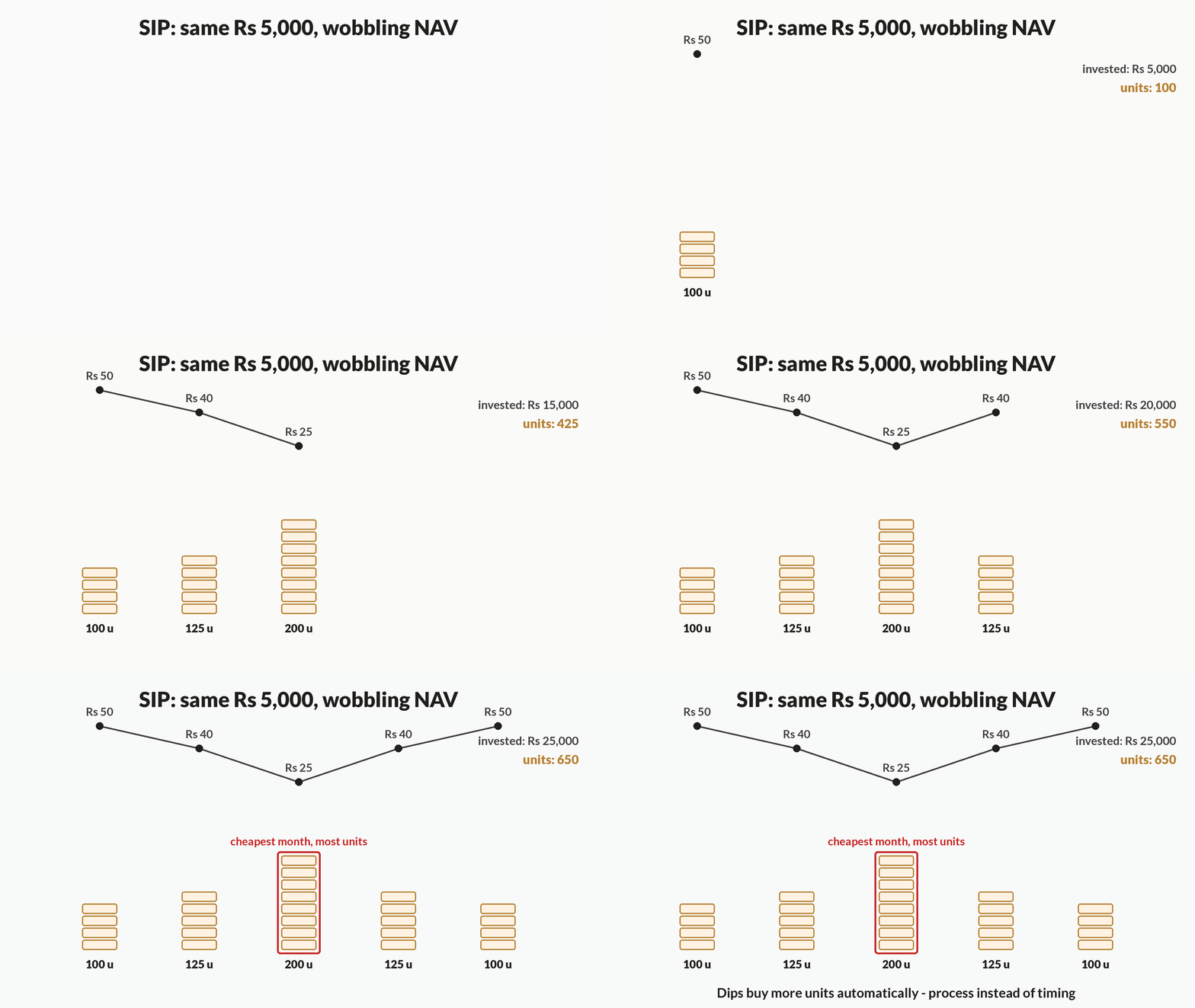
A Systematic Investment Plan invests a fixed amount at regular intervals, buying more units when NAV is lower and fewer when higher.
It is a behaviour tool as much as a maths tool.
| Item | Fact |
|---|---|
| SIP | Fixed amount, regular times |
| Unit effect | More units when NAV lower |
| Goal | Process over timing bravado |
A SIP primarily means
- Investing a fixed sum at regular intervals
- A guaranteed IPO allotment
- A free F&O tip
Regular fixed investing.
2Rupee-cost averaging intuition
Averaging buys more units in weak markets. It does not eliminate losses if markets fall for years and you need money soon.
It reduces the need to perfect a single entry day.
Figure. Each bar is the same ₹5,000: it buys 100 units at ₹50 but 200 at ₹25, so weak months quietly lower the average cost. That eases entry timing - it does not stop a long fall from hurting if the money is needed soon.
| Item | Fact |
|---|---|
| Benefit | Less entry-timing pressure |
| Not magic | Can still lose |
| Horizon | Needs time |
Rupee-cost averaging via SIP
- Reduces reliance on one perfect entry day
- Guarantees profit in three months
- Removes market risk
Timing pressure down, risk remains.
3When lumpsum can fit
If you already hold cash meant for long-term equity and markets are not your only concern, lumpsum deployment into a chosen allocation can be rational.
Fear of investing lumpsum often leads to idle cash forever — also a decision.
Figure. Both lines start with the same long-term money. Deployment rides real wobbles to real growth; 'waiting for the crash' is also a market call - one that often just earns savings interest for years.
| Item | Fact |
|---|---|
| Lumpsum | Deploy available long-term money |
| Idle cash | Also a stance |
| Plan | Match to allocation |
Cash left idle for years because of entry fear
- Is also an investment decision with consequences
- Earns Sensex returns automatically
- Is required by SEBI
Idle cash is a choice.
4Staged deployment
You can stage a lumpsum via a short schedule of purchases if it helps you execute without panic.
The best plan is the one you will follow.
Figure. A ₹6 lakh lumpsum staged as three planned tranches: the schedule is short, fixed in advance, and ends fully invested - unlike 'waiting for clarity', which has no last step.
| Item | Fact |
|---|---|
| Staged | Multiple tranches |
| Goal | Execution |
| Avoid | Endless waiting for perfection |
Staging a lumpsum into equity over a few months is mainly about
- Improving odds you actually invest the plan
- Eliminating all volatility
- Avoiding KYC
Execution tool.
5SIP discipline beats SIP branding
Stopping SIPs at the bottom and restarting at the top destroys the benefit.
Automate and review allocation yearly, not weekly charts.
Figure. Stopping at the bottom skips the cheapest units and restarting after the recovery buys the dearest - the exact opposite of what the SIP existed to do. Automate it; review the plan yearly instead.
| Item | Fact |
|---|---|
| Bad | Stop at bottoms |
| Good | Keep process; review plan |
| Noise | Weekly NAV obsession |
Cancelling equity SIPs only after a crash often
- Locks in the behavioural mistake SIPs were meant to reduce
- Maximises rupee-cost averaging benefits
- Is identical to a debt fund
Don't stop at the bottom.
Notes
- A Systematic Investment Plan invests a fixed amount at regular intervals, buying more units when NAV is lower and fewer when higher.
- Averaging buys more units in weak markets. It does not eliminate losses if markets fall for years and you need money soon.
- If you already hold cash meant for long-term equity and markets are not your only concern, lumpsum deployment into a chosen allocation can be rational.
- You can stage a lumpsum via a short schedule of purchases if it helps you execute without panic.
- Stopping SIPs at the bottom and restarting at the top destroys the benefit.
Formulas
- Fixed amount, regular times
- Less entry-timing pressure
- Deploy available long-term money
Exam traps & shortcuts
- Revise the table pegs before any quiz.
Reference tables
| Peg | Fact |
|---|---|
| 1.What | Fixed amount, regular times |
| 2.Rupee-cost | Less entry-timing pressure |
| 3.When | Deploy available long-term money |
| 4.Staged | Multiple tranches |
| 5.SIP | Stop at bottoms |
Recap
Keep these pegs.
- 1.What
- Fixed amount, regular times
- 2.Rupee-cost
- Less entry-timing pressure
- 3.When
- Deploy available long-term money
- 4.Staged
- Multiple tranches
- 5.SIP
- Stop at bottoms
Practise SIP vs Lumpsum
Reading is free and needs no account. Practice, mocks and progress live in the app.
- 5 exam-style questions on this topic, with explanations
- A 5-question practice set that ends the chapter
- Timed mocks scored with the real marking scheme
- Readiness tracked per topic, kept on your device