Retail Investing · Equity & Fundamental Analysis
Financial Statements Overview
P&L, balance sheet, and cash flow — what each answers for an investor.
5 concepts. Foundation literacy for retail investors.
- Retail Investing
- Easy level
- 5 concepts
- 5 practice questions
1Profit and loss
The P&L (statement of profit and loss) shows revenues, expenses, and profit over a period.
It answers: did the business earn accounting profit in this period?
Figure. The P&L covers a period: everything earned (revenue), everything spent (expenses), and profit - which is literally the difference between the two lengths above it, 100 minus 70.
| Item | Fact |
|---|---|
| Revenue | Top line |
| Expenses | Costs of the period |
| Profit | Bottom line (various levels) |
The P&L primarily covers
- Performance over a period
- Only the company's cash in the bank today
- The order book spread
Period performance.
2Balance sheet
The balance sheet shows assets, liabilities, and equity at a point in time.
It answers: what does the company own and owe on that date?
Figure. The balance sheet's two columns are always the same height: everything the company owns on that date is financed by someone's claim - lenders' liabilities first, and the owners' equity is the residual that makes the columns balance.
| Item | Fact |
|---|---|
| Assets | What it owns/controls |
| Liabilities | What it owes |
| Equity | Owners' residual |
The balance sheet is best described as
- A point-in-time snapshot of assets, liabilities, and equity
- Only last week's share price ticks
- A mutual fund SID
Snapshot.
3Cash flow statement
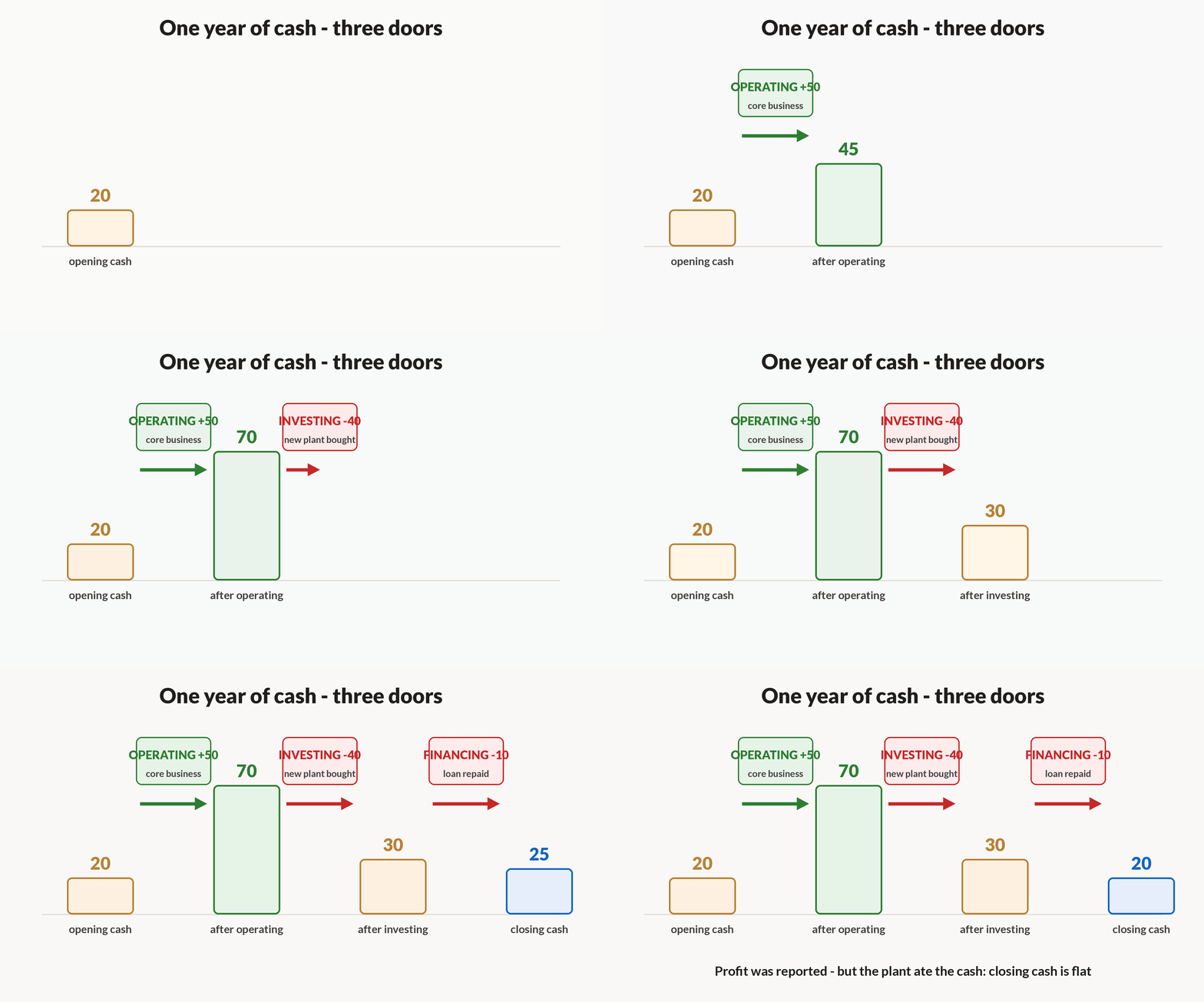
The cash flow statement explains cash from operations, investing, and financing.
Profits without cash can be a warning; cash flow bridges accounting profit and cash reality.
| Item | Fact |
|---|---|
| Operating | Cash from core business |
| Investing | Capex and investments |
| Financing | Debt/equity/dividends |
If accounting profit is strong but operating cash is persistently weak, investors should
- Investigate — cash and profit can diverge for important reasons
- Ignore cash forever
- Assume SEBI will top up cash
Watch cash.
4How the three link
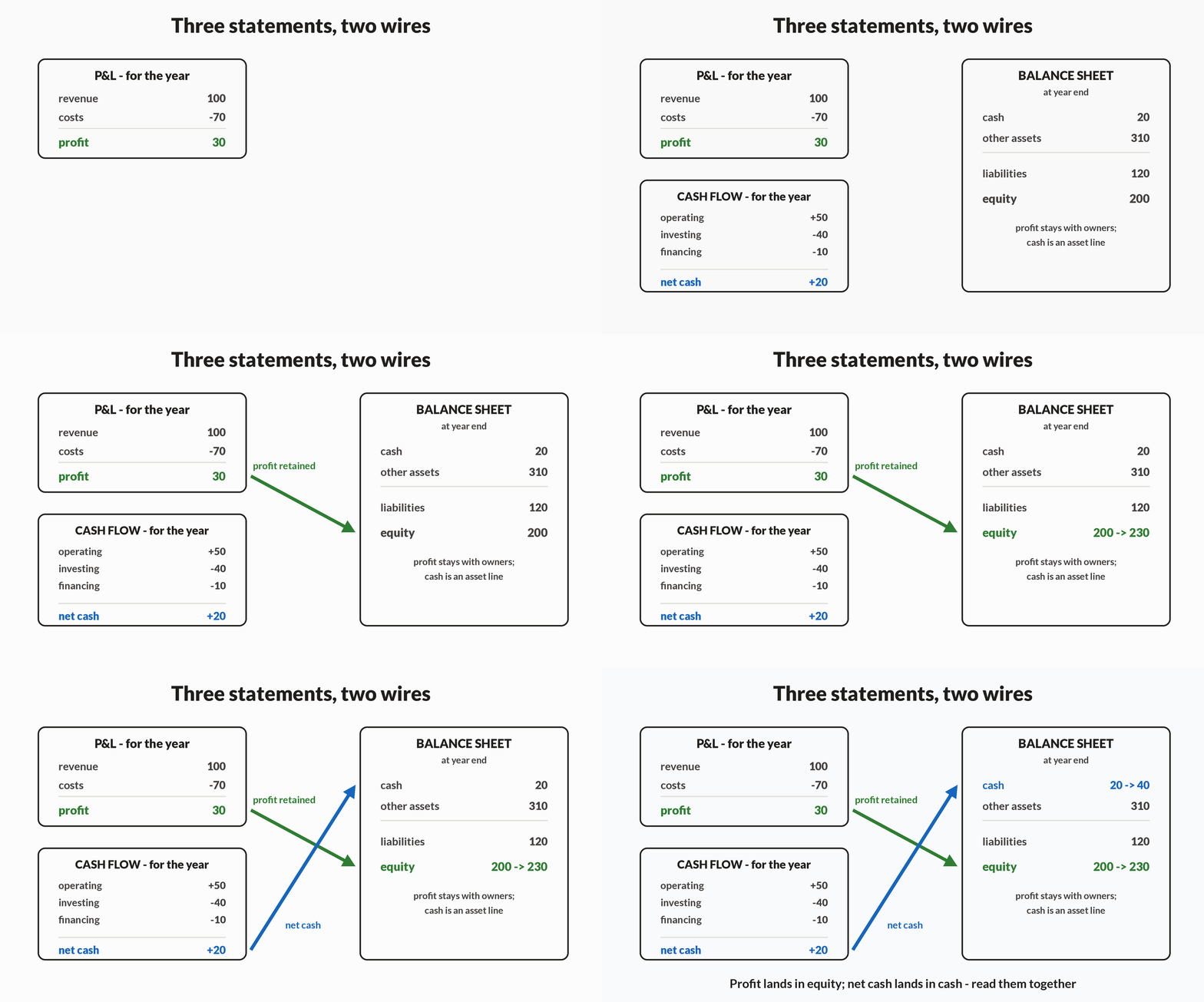
Profits feed equity; cash flows change cash on the balance sheet; investing and financing reshape assets and claims.
Read them together, not as three unrelated PDFs.
| Item | Fact |
|---|---|
| P&L → equity | Retained results |
| CF → cash | Cash balance moves |
| Together | Fuller picture |
Financial statements are most useful when
- Read together
- Only the logo page is opened
- Replaced by tip screenshots
Read together.
5Notes and quality
Written notes, accounting policies, and auditor remarks matter. One-time gains can flatter a year.
Quality of earnings beats raw "profit grew" headlines.
Figure. The headline 100 includes a one-time gain of 40 - a land sale, not the business. The repeatable base is the 60 of core profit, and the notes are where that split is disclosed.
| Item | Fact |
|---|---|
| Notes | Explain policies and contingencies |
| One-time items | Can distort a year |
| Habit | Ask what is repeatable |
A large one-time gain in profit should make you
- Ask whether earnings are repeatable
- Assume forever growth at that rate
- Skip the cash flow statement
Repeatability.
Notes
- The P&L (statement of profit and loss) shows revenues, expenses, and profit over a period.
- The balance sheet shows assets, liabilities, and equity at a point in time.
- The cash flow statement explains cash from operations, investing, and financing.
- Profits feed equity; cash flows change cash on the balance sheet; investing and financing reshape assets and claims.
- Written notes, accounting policies, and auditor remarks matter. One-time gains can flatter a year.
Formulas
- Top line
- What it owns/controls
- Cash from core business
Exam traps & shortcuts
- Revise the table pegs before any quiz.
Reference tables
| Peg | Fact |
|---|---|
| 1.Profit | Top line |
| 2.Balance | What it owns/controls |
| 3.Cash | Cash from core business |
| 4.How | Retained results |
| 5.Notes | Explain policies and contingencies |
Recap
Keep these pegs.
- 1.Profit
- Top line
- 2.Balance
- What it owns/controls
- 3.Cash
- Cash from core business
- 4.How
- Retained results
- 5.Notes
- Explain policies and contingencies
Practise Financial Statements Overview
Reading is free and needs no account. Practice, mocks and progress live in the app.
- 5 exam-style questions on this topic, with explanations
- A 5-question practice set that ends the chapter
- Timed mocks scored with the real marking scheme
- Readiness tracked per topic, kept on your device