Retail Investing · Equity & Fundamental Analysis
PAT vs Cash: Why Profit Is Not Cash
Why PAT is accrual, not cash in the bank — depreciation, receivables, inventory, payables, and the walk to operating cash.
Five concepts. Helio Sensors Ltd is a teaching company used in this lesson and the two that follow — not a live stock tip. Cedar Tools Ltd is a second teaching company used in one worked example so the walk is not only Helio's numbers. All figures are ₹ crore unless a per-share price is named. Helio has 10 crore shares; Cedar has 5 crore. The job here is to see why profit after tax is not cash in the bank, and to walk the four usual adjustments that turn PAT into operating cash flow.
- Retail Investing
- Medium level
- 5 concepts
1PAT is an accounting residual
Profit after tax (PAT) is what remains on the profit-and-loss statement after a period's revenues and expenses, including tax. Helio's Year 1 sales are 100. After cash-like operating costs of 70, EBITDA is 30. Depreciation 8, interest 2, and tax 4 then leave PAT of 16.
That 16 is a residual of accounting rules for the period. It is not a pile of 16 sitting in Helio's bank account. Some of the sales have not been collected; some of the costs never left cash this year; some of the costs have not been paid yet.
Figure. Each bar is what survives the next cut: 100 of sales, 30 of EBITDA, 16 of PAT. The missing height is costs, depreciation, interest, and tax — not a statement that 16 of cash arrived.
How it works
- Name the periodPAT answers how much accounting profit the year produced, not how much cash arrived.
- Walk the P&LSales down through costs, depreciation, interest, and tax to the residual.
- Refuse the shortcutDo not treat the residual as cash until the cash-flow statement agrees.
| Line | Rs crore |
|---|---|
| Sales | 100 |
| Cash operating costs | 70 |
| EBITDA | 30 |
| Depreciation | 8 |
| Interest then tax | 2 then 4 |
| PAT | 16 |
Walk Helio from sales to PAT
Helio's Year 1 sales are 100. Cash-like operating costs are 70, depreciation 8, interest 2, tax 4. Compute PAT.
- 100 - 7030 EBITDA
- 30 - 822 EBIT
- 22 - 220 before tax
- 20 - 416 PAT
Pro tip. The 16 is the year's residual. The next concepts ask how much of it was cash.
2Depreciation cut PAT without leaving the bank
Depreciation spreads the cost of a plant over the years it is used. Helio charged 8 of depreciation in Year 1, which reduced PAT, but no 8 left the bank for that line. The cash went out in some earlier (or this year's) capex, which lives on the cash-flow statement as investing, not as this P&L charge.
So the usual first repair when walking from PAT toward cash is to add depreciation back. Helio: PAT 16 plus depreciation 8 is 24 before working-capital moves.
Figure. The 8 of depreciation is restored because it never left cash this year. 16 plus 8 is the 24 subtotal before receivables, inventory, and payables move.
How it works
- See the chargeDepreciation reduced this year's PAT.
- Ask about cashDid cash leave this year for this line? Usually no.
- Add it backPAT plus depreciation is the first cash-flow repair.
Add Helio's depreciation back
Helio Year 1 PAT is 16 and depreciation is 8. What is PAT plus depreciation, and what did the 8 do to cash this year?
- PAT16
- Add depreciation16 + 8 = 24
- Cash left the bank for this P&L line0 this year
Pro tip. The 8 already left as capex in some year. Do not subtract it twice.
3Receivables: sold, not yet collected
When Helio books a sale on credit, PAT can rise on the invoice date. Cash rises only when the customer pays. Helio started Year 1 with receivables 12 and ended with 18, so 6 of this year's sales are still sitting with customers.
Cash collected from customers is opening receivables plus sales minus closing receivables: 12 + 100 − 18 = 94, not the 100 of sales. The extra 6 of receivables is why PAT overstates cash until you subtract the increase.
Figure. Helio booked 100 of sales and collected 94. The 6 still owed is the receivables increase — in PAT, not yet in cash.
How it works
- Read both datesOpening 12, closing 18 — receivables rose 6.
- Translate the riseSix of Year 1 sales have not arrived as cash.
- Subtract the riseOn the PAT-to-cash walk, rising receivables reduce operating cash.
How much cash did Helio actually collect?
Helio Year 1 sales 100. Receivables opened at 12 and closed at 18. Compute collections, then the cash-flow adjustment.
- Collections 12 + 100 - 1894
- Sales minus collections100 - 94 = 6
- Adjustment on the PAT walksubtract 6
Pro tip. A rising receivable is a sale that PAT already counted and the bank has not.
4Inventory ties cash; payables delay the outflow
Inventory is product Helio has paid to make or buy and has not yet sold. Helio's inventory rose from 10 to 14, so 4 of extra cash is sitting in the warehouse. That 4 reduced operating cash even though it is an asset, not a P&L loss.
Payables are the mirror: Helio delayed paying suppliers, from 8 to 11. That +3 is cash Helio has not yet sent, so it helps operating cash. Rising inventory consumes cash; rising payables provide it — until suppliers must be paid.
Figure. Helio tied up 4 in extra stock and delayed 3 of supplier payments. The pair drained 1 of cash — on top of the receivables rise already counted.
How it works
- Inventory upMore stock means cash already spent, not yet recovered by a sale.
- Payables upA delayed supplier payment is a short-term cash loan from the supplier.
- Net the pairHelio: inventory consumed 4, payables provided 3, net −1 of cash.
| Item | Open | Close | Cash effect |
|---|---|---|---|
| Receivables | 12 | 18 | minus 6 |
| Inventory | 10 | 14 | minus 4 |
| Payables | 8 | 11 | plus 3 |
Cedar Tools Year 1: PAT versus OCF
Cedar Tools Ltd is a second teaching company, not a live tip. Year 1 statements (Rs crore). P&L: sales 60, cash operating costs 40, depreciation 4, interest 1, tax 3. Working capital: receivables 8 to 22, inventory 6 to 13, payables 5 to 6. Compute PAT, then OCF. Is the profit cash?
- 60 - 4020 EBITDA
- 20 - 416 EBIT
- 16 - 115 before tax
- 15 - 312 PAT
- Receivables 22 - 814 uncollected
- Inventory 13 - 67 extra stock
- Payables 6 - 51 delayed
- 12 + 4 - 14 - 7 + 1-4 OCF
Pro tip. Cedar printed PAT of 12 and consumed 4 of operating cash. Inventory plus receivables soaked the profit — the same four-line walk as Helio, different numbers.
5The PAT-to-OCF bridge
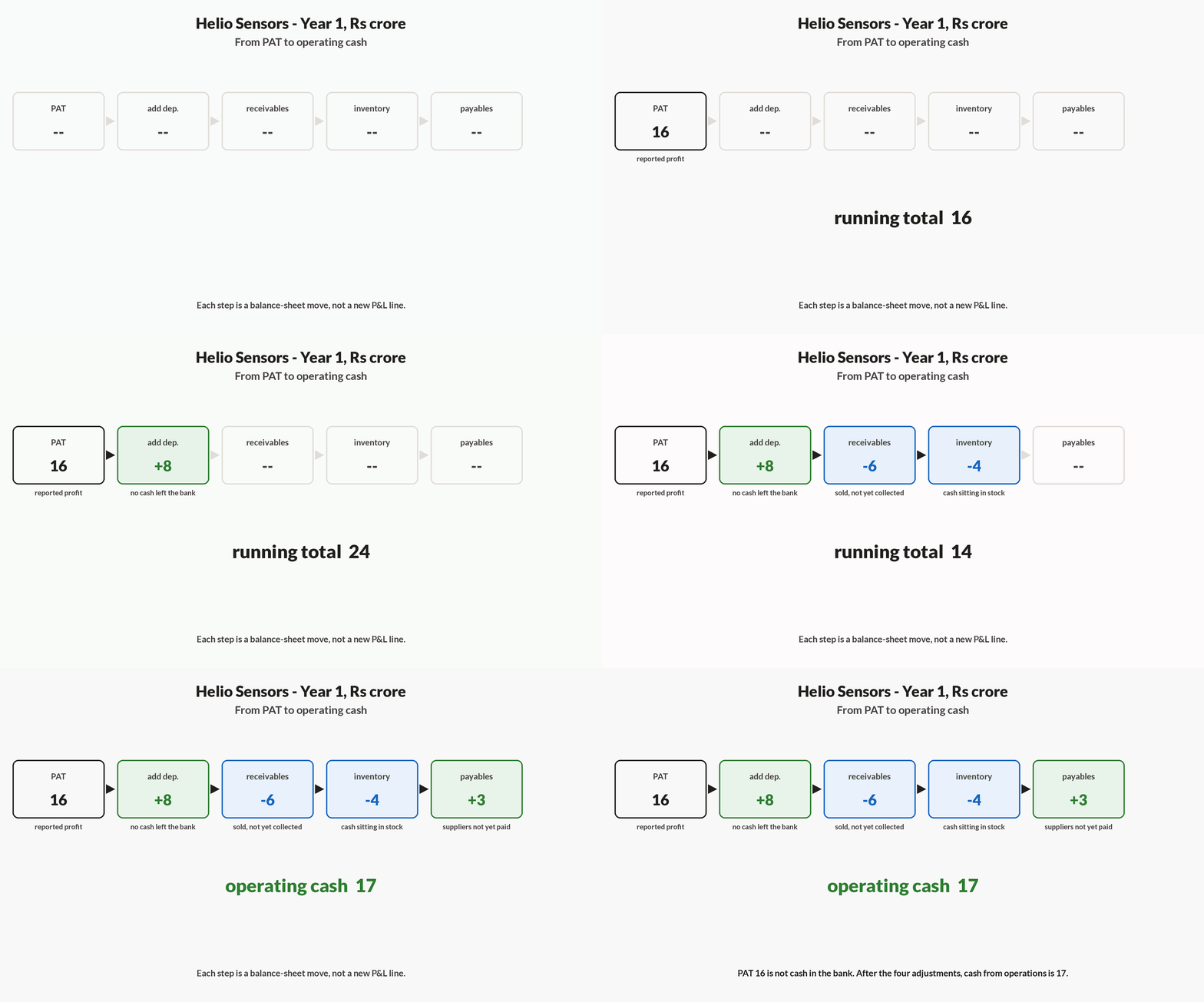
Operating cash flow (OCF) is cash generated or consumed by the core business in the period. The common indirect walk starts at PAT and repairs it: add depreciation, subtract increases in receivables and inventory, add increases in payables.
Helio Year 1: 16 + 8 − 6 − 4 + 3 = 17. PAT was 16; cash from operations was 17. They are close this year. They will not stay close — Year 2 in the next topic is the divergence. PAT is not cash in the bank; OCF is the cash the operations actually moved.
How it works
- Start at PATHelio 16.
- Add non-cash chargesDepreciation 8.
- Adjust working capitalReceivables −6, inventory −4, payables +3.
- Read OCF16 + 8 − 6 − 4 + 3 = 17.
Helio Year 1: P&L snippet to PAT versus OCF
Helio Sensors Ltd Year 1 statements (teaching company; all figures Rs crore). P&L: sales 100, cash operating costs 70, depreciation 8, interest 2, tax 4. Working capital: receivables +6, inventory +4, payables +3. Compute PAT, then operating cash flow, and compare the two.
- 100 - 7030 EBITDA
- 30 - 822 EBIT
- 22 - 220 before tax
- 20 - 416 PAT
- 16 + 824
- 24 - 618
- 18 - 414
- 14 + 317 OCF
Pro tip. PAT is 16; cash from operations is 17. Write the four adjustments in this order every time so a missed line is obvious.
Notes
- PAT is an accounting residual for a period, not cash in the bank.
- Depreciation reduced PAT without a matching cash outflow this year — add it back.
- Rising receivables and inventory consume operating cash; rising payables provide it.
- Helio Year 1: PAT 16 + dep 8 − rec 6 − inv 4 + pay 3 = OCF 17.
Formulas
- OCF ≈ PAT + depreciation − Δreceivables − Δinventory + Δpayables
- Collections = opening receivables + sales − closing receivables
Exam traps & shortcuts
- If PAT and OCF diverge for years, read working capital before celebrating earnings.
- Never subtract depreciation from cash after you have already used PAT — it is already in PAT.
Reference tables
The same toy company is reused in Operating cash and the growth loop and in ROE vs the price you pay.
| Line | Year 1 |
|---|---|
| Sales | 100 |
| EBITDA | 30 |
| PAT | 16 |
| OCF | 17 |
| Opening book equity | 80 |
| Opening cash | 20 |
| Shares | 10 crore |
Recap
Keep Helio's Year 1 walk.
- PAT
- Accounting residual 16 — not cash in the bank
- Depreciation
- Add back 8 — no cash left for that line
- Receivables
- Rise of 6 is sales not yet collected
- Stock and suppliers
- Inventory −4, payables +3
- OCF
- 16 + 8 − 6 − 4 + 3 = 17
Practise PAT vs Cash: Why Profit Is Not Cash
Reading is free and needs no account. Practice, mocks and progress live in the app.
- Timed mocks scored with the real marking scheme
- Readiness tracked per topic, kept on your device